What Are Updated Games?
Updated games are browser titles that continue to receive fresh adjustments, refinements, or new content while keeping the core loop familiar. In practice, that often means a game has been tuned for better pacing, balanced mechanics, cleaner controls, or expanded modes without abandoning the style that made it work in the first place. The category spans very different formats, from quick reflex challenges like Fruit Ninja and Bricks Breaker to strategy-forward games such as Dice Wars and Classic Backgammon, but they share one useful trait: they stay playable through iteration.
That matters because updated games usually appeal to players who want something stable but not stale. A familiar loop can become more useful when the game has been sharpened over time. Run 3, Vex 4, and Raze 3 rely on movement, timing, and repetition, while Cookie Clicker and Doge Miner 2 focus on incremental growth and accumulation. The updates around these kinds of games tend to reinforce the core idea rather than replace it, which is why they remain approachable for newcomers and still interesting for returning players.
Common Gameplay Patterns
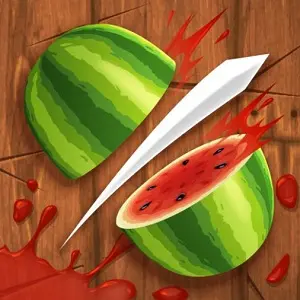
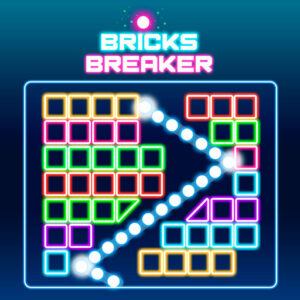
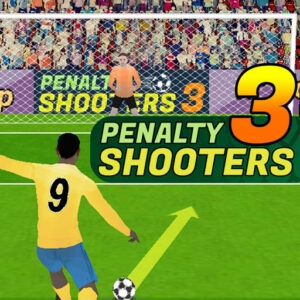
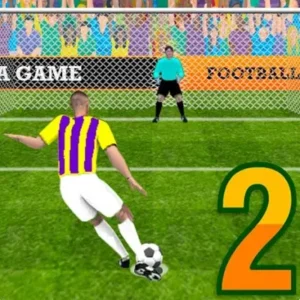
One strong pattern in updated games is the emphasis on short, repeatable actions that reward accuracy and rhythm. Fruit Ninja asks for clean swipes and split-second recognition. Bricks Breaker turns angle control and rebound planning into a loop of constant correction. Table Tennis World Tour and Penalty Shooters 2 or Penalty Shooters 3 use timing in a different way, but the logic is similar: success depends on reading movement, choosing the right moment, and committing to an input.
Another pattern is the use of progression that comes from compounding small gains. Cookie Clicker and Pizza Clicker are built around slow expansion, while Doge Miner 2 uses upgrades and resource flow to create a sense of steady escalation. These games do not ask for the same reflex precision as Vex 4 or Run 3; instead, they reward patience and planning. That difference helps explain why the updated category can include both action-heavy and idle-oriented designs without feeling inconsistent.
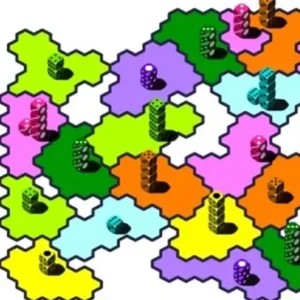
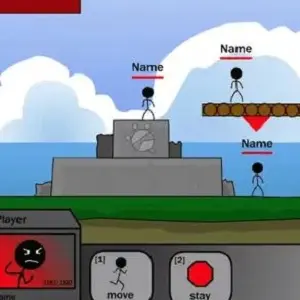
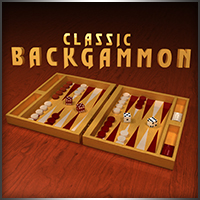
Strategy also appears in more compressed forms. Dice Wars focuses on territory control and probabilistic decision-making, which is quite different from the direct action of Territory War, even though both involve contested spaces. Classic Backgammon adds a structured board-game layer where forward progress depends on dice outcomes, positioning, and risk management. In all three, the update-friendly appeal comes from a ruleset that is easy to understand but capable of supporting many small decisions.
How Different Games Approach The Same Idea
Several updated games build around the same broad concept but solve it in different ways. Penalty Shooters 2 and Penalty Shooters 3 both center on penalty kicks, yet the appeal is not just scoring goals. The challenge lies in reading patterns, picking directions under pressure, and managing a sequence of attempts. By contrast, Volley Random takes the volleyball idea and introduces unpredictability, shifting attention away from precise sports simulation and toward adaptation. The player is still competing for points, but the feel is looser and more reactive.
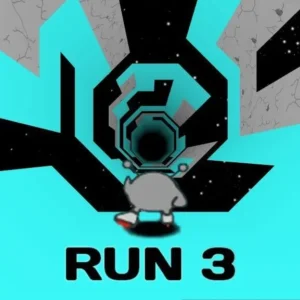
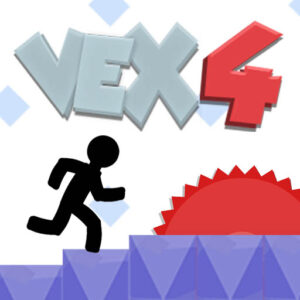
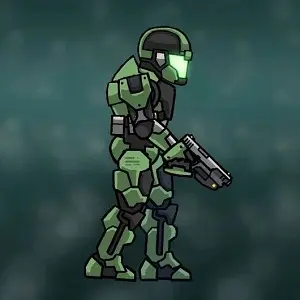
Run 3, Vex 4, and Raze 3 also show how updated games can diverge within action-platforming. Run 3 emphasizes continuous forward movement and spatial awareness. Vex 4 leans harder on obstacle navigation, trap timing, and repeated retries. Raze 3 shifts toward shooting and combat, so movement matters alongside aim and threat response. They all ask players to stay alert, but the skill expression is different: route memory in one, precision platforming in another, and combat control in the third.
The same contrast appears in competitive arcade formats. Worms Zone and Narwhale.io both use growth-based arena play, but they are not built the same way. The former is about gathering size and avoiding risk in a crowded field, while the latter uses a more unusual movement fantasy and a similar survival loop. Updated games in this lane often succeed because they make a simple objective, become larger than opponents, easy to understand but hard to master in practice.
Skill Progression and Mastery
Updated games often reward a player’s improvement in visible ways. In reaction games like Fruit Ninja and Table Tennis World Tour, the main skill is control under pressure. New players may rely on instinct, but advanced players start to read motion more efficiently and waste fewer actions. In platformers such as Run 3 and Vex 4, mastery means learning the environment, anticipating hazards, and reducing hesitation. A missed jump or late movement is usually more costly than a slow decision in a clicker game, which makes these action titles feel sharper and more demanding.
At the other end of the spectrum, Cookie Clicker, Doge Miner 2, and Pizza Clicker shift mastery toward optimization. The player is not chasing reflex perfection so much as better upgrade choices, more efficient production, and smarter pacing. That gives updated incremental games a different kind of depth. They can look simple at first, but the real question becomes how quickly the system can be accelerated and where resources should go next.
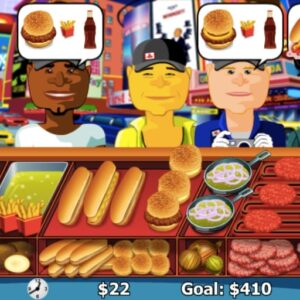
There is also a player motivation difference worth noting. Some people return to updated games for the satisfaction of improvement, especially where failure is immediate and visible. Others return for the comfort of a familiar loop that still offers small surprises through new tuning or content. The Idiot Test plays with expectations in a more puzzle-like way, while Hot Dog Bush uses time management and multi-tasking. Both depend on the player understanding the rules quickly, then applying them with better efficiency on later attempts.
Beginner-Friendly Design and Deeper Challenge
Many updated games are easy to start because the first objective is obvious. Clickers ask you to tap or invest. Sports games ask you to score. Arcade games ask you to survive. That simplicity is a major reason the category works well in a browser setting. Flags Quiz and The Idiot Test are especially direct in how they present challenges, but their replay value comes from how quickly players can understand the format and then improve at it.
Deeper challenge appears when systems overlap. Territory War combines movement, positioning, and contest control. Dice Wars layers probability on top of strategy. Raze 3 adds combat decisions to movement. In each case, the core idea is accessible, but success depends on stacking several small advantages. That is often the defining strength of updated games: they preserve clarity while allowing refinement, which keeps the same game useful over a longer period of play.
Frequently Asked Questions
- Are updated games always sequels? No. They can also be older browser games that have been revised or maintained over time.
- Do updated games favor action or strategy? They include both, from Fruit Ninja and Vex 4 to Dice Wars and Classic Backgammon.
- Why do players return to them? Familiar rules, clearer tuning, and steady progression make them easy to revisit.
 Fruit Ninja
 Dice Wars
 Territory War
 Run 3
Run 3
 Vex 4
Vex 4
 Raze 3
 Worms Zone
 Flags Quiz
 Narwhale.io
 Cookie Clicker
 The Idiot Test
 Bricks Breaker
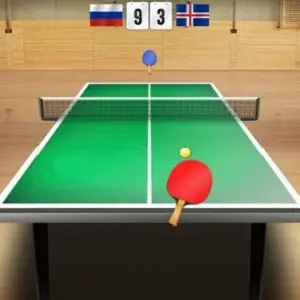 Table Tennis World
 Hot Dog Bush
 Penalty Shooters 3
 Doge Miner 2
 Volley Random
 Classic Backgammon
 Penalty Shooters 2
 Pizza Clicker
 Vex 7
Vex 7
 Time Shooter 3:
 Tentrix
 Grindcraft
 Worms Io
 Mineclicker
 Dragon Simulator 3D
 Duck Life
 Minecraft Classic
 The Skull Kid
 Candy Clicker
 N Game
 Mahjong Titans
 Bloons Tower Defense
 Fortnite
 Money Clicker
 Murderer
 State.io: Conquer the
 Hide N Seek
 99 Balls
 Idle Breakout
 Return Man 2
 Car Drawing
 Magic Piano Tiles
 Taming.io
 Mahjongg Dimensions
 Apple Shooter
 Pixel Warfare
 Little Alchemy
 Elastic Man
 Outspell
 8 Ball Pool
 Bouncing Balls
 Construct a Bridge
 Madalin Cars Multiplayer
 Butterfly Kyodai
 Basketball Legends 2020
 Checkers Online
 Highway Racer
 Riddle School 4
 Tap Tap Shots
 Block Puzzle
 Sandtrix
 Ships 3d
 Color Tunnel
 Snowball.io
 Mahjong Dark Dimensions
 Wings.io
 Bomb It
 Madalin Stunt Cars
 Fishy
Fishy
 Lordz.io
 Paper Minecraft
 Krunker Io
 Blob Opera
 Short Life
 Flip Bottle
 Super Fighters
 X Trench Run
 Electric Man
 Gulper.io
 Ludo King
 Text Twist 2
 Big Tower Tiny
 Idle Dice
 Mope.io
 Snake Io
 Bloons Tower Defense
 Spank the Monkey
 Mini Putt
 Planet Clicker 2
 Crazy Roll 3d
 Word Wipe
 Digdig.io
 Deeeep.io
 Sprinter
 Escaping the Prison
 Vex 5
Vex 5
 Learn to Fly
 Bloxorz
 Penguin Diner
 Vex 3
Vex 3
 Ovo
Ovo
 Mahjong Connect
 Robot Unicorn Attack
 Motherload
 Bonk.io
 Riddle School 3
 Riddle School 5
 Cat Mario
 the Impossible Game
 Riddle School
 Madalin Stunt Cars
 Worlds Hardest Game
 Akinator Online
 Guess Who Multiplayer
 Starblast.io
 Papas Cheeseria
 Copter Io
 Clicker Heroes
 Geometry Dash Online
 Friday Night Funkin
 Basket Random
 Yohoho Io
 Duck Hunt
 Scary Maze
 Wheely
 Papa’s Burgeria
 Gold Miner
 Powerline.io
 Swing Monkey
 Jelly Mario Bros
 Soccer Legends 2021
 We Become What
 Funny Shooter 2
 Tank Trouble 2
 Bullet Force Multiplayer
 Color by Number
 Flyordie.io
 Rooftop Snipers
 Whack Your Boss
 Stick War
 Awesome Tanks 2
 Narrow One
 Diep.io
 Snail Bob
 Gun Mayhem 2
 Tiny Fishing
 Mahjong Classic
 Time Shooter 2
 Papas Pizzeria
 Tic Tac Toe
 Fancy Pants Adventure
 Diner Dash
 Planet Clicker
 Google Feud
 Moto X3m 4
 Territorial Io
 Bloons Tower Defense
 Tag 2 3
 Leek Factory Tycoon
 Wormate.io
 Hexanaut Io
 Love Tester 3
 Slither.io
 Atari Breakout
 Ducklife 4
 Buildnow Gg
 House of Hazards
 Chrome Dino
 Basketbros
 8 Ball Billiards
 Lolbeans Io
 Getting Over It
 Candy Riddles
 Moto X3m Spooky
 Bloons
 Bloxdhop Io
 Google Pacman
 Yahtzee
 Basketball Stars 2019
 Agario
 Getaway Shootout
 Text Twist
 ZombsRoyale.io
 Shell Shockers
 Fireboy and Watergirl
 Racing in City
 Moto X3m
 Uno Online
 Merge Master Tanks
 The Witchling
 1v1.Lol
 Drift Hunters
 Smash Karts
 Drift Boss