What Are Skill Games?
Skill games are built around execution. The rules are usually simple to understand, but success depends on timing, precision, rhythm, patience, and the ability to recover quickly after mistakes. The collection here shows how broad that idea can be. World’s Hardest Game and World’s Hardest Game 2 test careful movement under pressure, while QWOP turns basic locomotion into a balancing act. Tunnel Rush and Tunnel Rush 2 focus on fast reactions, and Crossy Road asks for clean decision-making in short, repeated bursts. Even games that look playful, such as Candy Jump or Eggy Car, still depend on measured control rather than chance.
What defines the skill category is not a single mechanic but the demand for consistency. One run may last only seconds, another may stretch much longer, but the player is always being judged on how accurately they respond to the game’s demands. That can mean steering through narrow spaces, keeping momentum without overcorrecting, or learning the exact pace needed to survive a difficult layout. The appeal comes from gradual improvement: the more familiar the player becomes with a game’s rhythm, the more clearly progress shows.
Precision, Timing, and Error Recovery
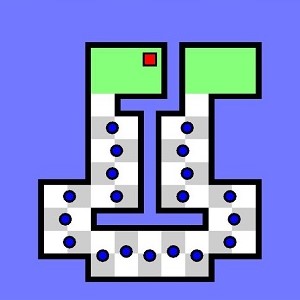
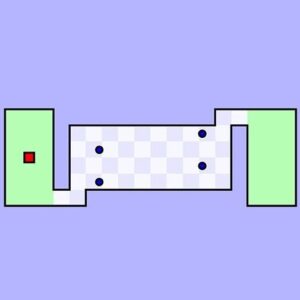
A large part of the category revolves around games that leave very little room for error. World’s Hardest Game is the clearest example: it relies on tight movement routes, memorization, and the discipline to repeat a level until the safe path becomes second nature. World’s Hardest Game 2 follows the same logic, but the interest comes from how the challenge is sustained over multiple stages rather than resolved in one difficult moment. These games reward players who are willing to study patterns instead of forcing quick progress.
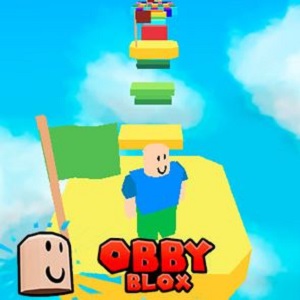
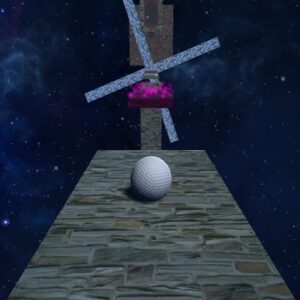
Roller Baller belongs to the same family of precision games, although it shifts the feel toward careful balance and spatial control. Rather than dodging hazards at speed, the focus is on maintaining composure while moving through a structured obstacle course. Obby Blox Parkour also fits this pattern, with platforming that asks players to judge jumps accurately and keep momentum without slipping into repeated mistakes. In both games, failure is not random; it usually comes from a missed input, a rushed decision, or an imperfect angle.
CircloO approaches precision from a different direction. The movement revolves around circular motion and level geometry rather than straight platforming, which gives it a puzzle-like quality. The player is still relying on timing and control, but the challenge feels more about understanding how movement systems interact with the environment. That makes it a useful contrast to the more direct obstacle-course structure of Obby Blox Parkour and Roller Baller.
Speed Games That Demand Fast Reactions
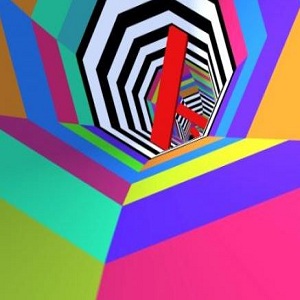
Some skill games raise the pressure by increasing speed instead of complexity. Tunnel Rush and Tunnel Rush 2 are built around rapid obstacle avoidance in a narrow tunnel, where the player has only a fraction of a second to read the layout and adjust course. These games strip away extra systems and put all the emphasis on reflexes. The result is a very different kind of skill challenge from World’s Hardest Game; one is about thoughtful route planning, the other about immediate response.
Candy Jump also belongs in this more reactive group, though it softens the presentation. The structure still depends on precise taps and careful pacing, because even simple-looking jumping patterns become difficult when the timing window is strict. Crossy Road sits somewhere between reaction and planning. The player is constantly moving forward, but every step has to be read against traffic, gaps, and changing lanes. Unlike the tunnel games, it introduces more moment-to-moment judgment about when to wait and when to move.
These games attract players who like short retries and clear feedback. Failure is usually immediate, which makes improvement easy to notice. A better run often comes down to cleaner reactions, steadier input timing, or a more disciplined pace rather than a new strategy.
Physics and Control as the Main Challenge
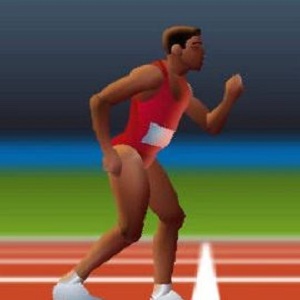
Not every skill game is about dodging obstacles. Some use awkward controls or unusual physics to make simple actions difficult. QWOP is the standout example in this group because the challenge comes from controlling a runner whose movement is intentionally unstable. Success depends on coordinating inputs that would normally be invisible in a standard sports game, and the comedy of failure is part of its lasting appeal. Progress feels earned because even basic movement requires concentration.
Eggy Car uses a different kind of control challenge. The goal is not speed but balance, since the player has to keep the vehicle moving without losing the fragile cargo. That creates a careful, stop-start rhythm that is very different from the relentless pace of Tunnel Rush 2. Both games test consistency, but they ask for opposite kinds of control: one wants steady restraint, the other rewards quick steering under pressure.
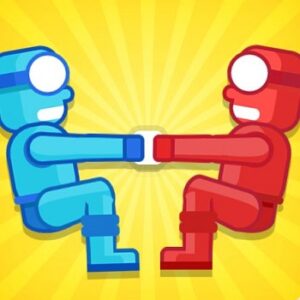
Tug the Table adds a competitive physics layer. Rather than navigating a course, the player is fighting direct opposition, and the challenge comes from timing pulls, maintaining leverage, and reacting to the opponent’s movements. Compared with solo precision games, it introduces a stronger sense of matchup and momentum. The mechanics are simple enough to understand immediately, yet the outcome still depends on reading the situation correctly.
Short Bursts, Repetition, and Mastery
A defining trait of skill games is how often they turn failure into a learning tool. Crossy Road, Candy Jump, and Tunnel Rush all encourage repeated attempts because each run teaches something about spacing, timing, or route selection. The best performance often comes after several resets, once the player has internalized the rhythm of the challenge. That makes these games easy to approach casually while still leaving room for dedicated improvement.
This repeat-friendly structure is also why such different games can sit under the same category. A player might spend one session with the careful platforming of Obby Blox Parkour, then switch to the awkward movement of QWOP or the balancing act in Eggy Car. The mechanics are not similar in surface terms, but they all hinge on the same underlying habit: learning through mistakes. The category rewards attention, adaptation, and the willingness to try again immediately.
Different Ways to Test Skill
The games in this category do not all test the same ability, and that variety is part of the appeal. World’s Hardest Game and Roller Baller are about precision and route control. Tunnel Rush 2 and Candy Jump stress reflexes. QWOP and Eggy Car focus on awkward control systems, while Tug the Table adds a direct competitive twist. CircloO stands out for turning movement itself into a spatial puzzle.
Because the challenge is expressed in so many different ways, skill games can appeal to players with different strengths. Some prefer the calm concentration needed for difficult obstacle layouts. Others enjoy reacting quickly to hazards. A different group is drawn to physics-based games precisely because they are difficult to control cleanly. In each case, the common thread is not theme or presentation, but the satisfaction of improving a technique that the game makes deliberately hard.
Why These Games Stay Popular
Skill games stay memorable because they create clear, personal goals. Beating a level in World’s Hardest Game 2, surviving longer in Crossy Road, or finally making progress in QWOP all feel like direct proof of better control. The feedback is immediate, and the player always knows why a run ended. That transparency makes these games easy to read even when they are difficult to master.
The strongest entries in the category also avoid unnecessary complexity. Tunnel Rush does not rely on systems layered on top of the movement challenge. Eggy Car does not need elaborate rules to make balance interesting. Obby Blox Parkour uses familiar platforming ideas, but tight execution gives it structure. Across the category, the emphasis stays on player input, and that is what keeps the topic distinct from broader action or puzzle pages.
FAQ
Are skill games always hard?
Not always. Some, like Crossy Road and Candy Jump, are easy to understand but hard to master.
What makes a game a skill game?
The main factor is that success depends on timing, precision, reflexes, or control rather than luck.
Which skill games here are the most unusual?
QWOP, CircloO, and Eggy Car stand out because they make movement itself the challenge.
 Chameleon Hideout
 Obby: Paint and
 +1 Speed ASMR
 Meccha Chameleon
 Red Face Horror
 Plants Vs Zombies
 JustBuild.LOL
 Tanks
Tanks
 Bloons Tower Defense
 Gold Miner Special
 Desktop Tower Defense
 Obby Blox Parkour
 CircloO
 Roller Baller
 Candy Jump
 Eggy Car
 Tug the Table
 World’s Hardest Game
 QWOP
QWOP
 Tunnel Rush
 Crossy Road
 Tunnel Rush 2
 World’s Hardest Game