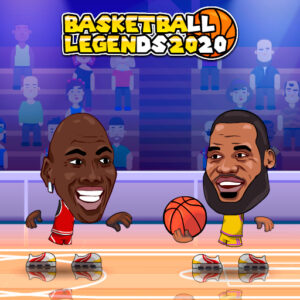
 Basketball Legends 2020









What Basketball Games Are About
Basketball games on browser platforms tend to split into a few clear traditions: precise shot timing, physics-driven trick shots, arcade-style matchups, and exaggerated head-to-head competition. The tag covers more than standard five-on-five rules. In games like Tap Tap Shots and Basketball FRVR, the core challenge is repetition and rhythm, with every attempt asking for cleaner timing and better control of trajectory. Other games, such as Basketball Stars 2019, Basketbros, and Basketball Legends 2020, shift the focus toward direct competition, where movement, positioning, and quick reactions matter as much as making the shot itself.
What connects these games is that basketball works well as a skill test. The appeal often comes from a simple rule set that can still support a wide range of outcomes. A player can be learning basic angles in Dunk Shot, chasing distance and consistency in Basket Monsterz, or adapting to unpredictable movement in Basket Random. The same sport can become a precision puzzle, a fast arcade duel, or a physics toy depending on how the game frames the ball, the hoop, and the player’s control over each attempt.
Timing, Angles, and Repetition
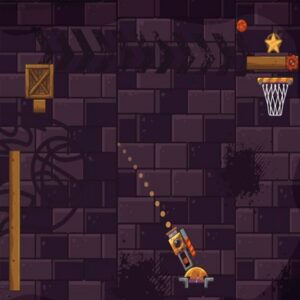
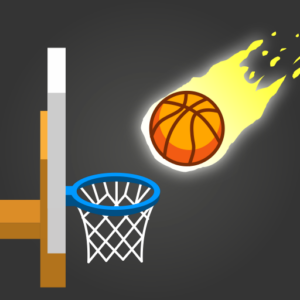
A large part of the tag revolves around shot execution. Tap Tap Shots is built around a compact loop of tapping at the right moment, while Dunk Shot emphasizes clean launches and controlled rebounds. Cannon Basketball and Basket and Ball push the idea further by treating the court less like a sports arena and more like a physics environment, where rebounds, obstacles, and trajectory become the real problem. These games reward players who read motion carefully and learn how strength, arc, and bounce interact.
That structure creates a strong progression curve without needing complex systems. The player improves by recognizing patterns: how high a release needs to be, how much force carries the ball to the rim, and how a missed angle can still be salvaged by a lucky bounce. In Basketball FRVR, the loop is stripped down even further, turning consistency into the main objective. These games are less about dramatizing basketball and more about compressing it into a repeatable test of precision.
Arcade Rivalries and Multiplayer Energy
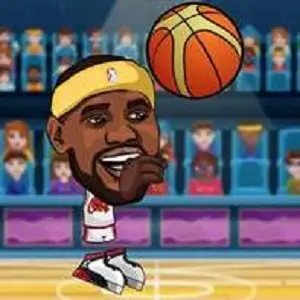
Another major branch of basketball games is built around direct competition. Basketball.io uses the sport as a framing device for territory and possession, while Basketball Stars 2019 and Basketbros lean into one-on-one duels where offense and defense are both active problems. Basketball Legends 2020 sits in the same space, pairing recognizable basketball action with exaggerated arcade pacing. These games are usually less interested in simulation and more interested in momentum swings, steals, blocks, and sudden changes of control.
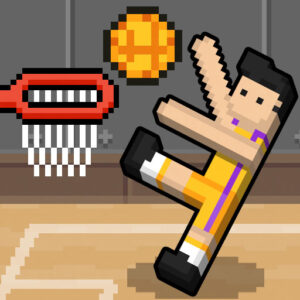
Basket Random is a good contrast point because it keeps the same competitive spirit but makes the outcome far less predictable. Instead of polished control, it uses awkward movement and surprise to turn each match into a scramble. That randomness changes the skill ceiling in an interesting way: players are not only learning to perform, but also learning to adapt when the game refuses to behave consistently. Dude Perfect 2 sits nearby in spirit, although it emphasizes stunt-shot accuracy rather than direct multiplayer pressure, showing how the tag can branch from competitive sports into trick-based challenge design.
How Basketball Games Build Skill
The strongest basketball browser games usually teach through repetition. A beginner can start with the basic loop of aiming, releasing, and reacting, then gradually pick up more advanced habits such as judging bounce angles, anticipating opponent movement, or controlling space near the hoop. That is why the tag remains readable across so many forms: Basket Champs and Dunk Shot reward clean mechanics, while Basketball Legends 2020 and Basketball Stars 2019 ask players to combine offense and defense under pressure.
- Precision games focus on release timing, arc, and consistency.
- Physics-based games add rebounds, obstacles, and improvised solutions.
- Arcade competition games emphasize duels, steals, and fast scoring changes.
- Unpredictable variants like Basket Random test adaptation as much as execution.
This range explains why basketball games attract different kinds of players. Some want short, skill-based sessions with clear improvement, while others prefer the chaos of one-on-one rivalry or the satisfaction of mastering a tricky shot system. Even when the presentation changes, the underlying motivation stays similar: read the situation quickly, commit to a move, and try to make each attempt count.