What Are io Games?
io games are built around short-session competition, simple controls, and clear goals that can be understood within seconds. The category has expanded far beyond the early arena formula, but the core idea remains familiar: enter a shared environment, grow stronger through direct action or territory control, and try to outlast the other players on the map. The supplied games show how broad the genre has become. Worms Zone, Agario 3D, and Germs.io focus on growth through movement and collection. Repuls.io, BlockTanks.io, and Castlesiege.io lean into combat and positioning. State.io and State.io: Conquer the World turn the format toward map control and expansion. Others, such as Modd.io and Craftnite.io, borrow ideas from sandbox and building games, showing how flexible the io label has become.
What ties the category together is not a single mechanic but a shared pace. Matches usually start with modest power and quickly become tests of awareness, route planning, and timing. A player might be collecting food in Worms Io, avoiding larger threats in Hungry Shark Arena, or coordinating attacks in Hordes.io, yet the pressure is similar: survive long enough to grow, then use that growth to create more space on the board. That constant shift from vulnerability to dominance is central to the appeal of io games.
Popular Types of io Games
The category splits naturally into several subgenres, each with a different kind of tension. Growth-and-survival games like Worms Zone, Agario 3D, Germs.io, and Superhex.io reward careful movement and incremental gains. Arena fighters such as Repuls.io, Superhero.io, and TheLast.io place more emphasis on combat timing, positioning, and the ability to escape when a fight turns bad. Territory and strategy games like State.io and State.io: Conquer the World shift the focus from reflexes to expansion routes, resource commitment, and map pressure.
There is also a strong construction and sandbox branch in the category. Craftnite.io and Modd.io suggest a more open-ended style of play, where players are not only competing but also shaping the space they are fighting in. That makes them feel different from a pure collection game such as Fidget Spinner.io, where the loop is simpler and more direct. Even within the same category, the objectives can range from territory absorption to tactical destruction to creative building.
Some io games also use unusual themes to reframe familiar systems. Narwhale.io and Ducklings.io rely on lighter subject matter, but underneath that presentation they still follow the same pattern of movement, expansion, and threat management. Fishing.io and Hungry Shark Arena use aquatic settings in different ways: one centers on progression through catching and upgrading, while the other uses predatory survival under pressure from other players. The setting changes, but the logic of the category remains recognizable.
Common Gameplay Patterns
Growth is the most consistent pattern across the listed games. In Worms Zone, Agario 3D, and Germs.io, success depends on gaining mass while avoiding more dangerous opponents. That creates a steady risk-reward cycle. Move too cautiously and growth stalls; move too aggressively and a larger opponent can end the run quickly. Superhex.io adds a territory layer to this same logic, where expansion must be balanced against the danger of exposing your route back to safety.
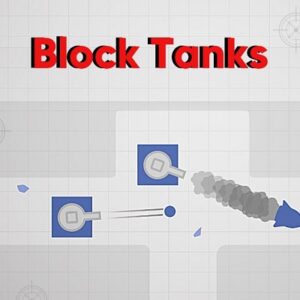
Another pattern is direct control of the battlefield. BlockTanks.io and Castlesiege.io make positioning matter as much as raw firepower. In those games, surviving often means understanding angles, line of sight, and the map’s open spaces. Repuls.io also fits this pattern, though it tends to emphasize fluid movement and weapon handling in a way that feels closer to an action arena than a pure territory game. The skill set changes, but the player still has to read the environment quickly.
Progression by conquest is especially important in the strategy-heavy titles. State.io and State.io: Conquer the World are less about surviving a single duel and more about managing expansion across a wider board. That means players are constantly deciding where to commit forces, which regions to contest, and when to push forward. The same broad principle appears in Hordes.io, where momentum and coordination matter more than isolated skirmishes.
Games That Show How Broad The Category Is
A few titles define how far io games have moved beyond the original formula. Craftnite.io combines construction and combat in a way that rewards improvisation, not just movement skill. Modd.io pushes toward user-driven variety, which fits players who enjoy experimenting with different structures or modes rather than repeating one fixed loop. TheLast.io and Superhero.io keep the action focused on progression and combat, but do so through different themes that affect how players read the match. One feels closer to a survival contest, while the other uses a stronger power-up fantasy.
Hungry Shark Arena stands out because it uses a predator role instead of the more neutral growth avatar seen in games like Germs.io or Worms Io. That changes the emotional rhythm of play. Instead of simply trying to avoid danger, the player is encouraged to hunt smaller targets and manage opportunities as they appear. Ducklings.io takes the opposite tone in a softer direction, with gameplay centered on escorting and protecting rather than direct aggression. Both still belong in the io category because they rely on compact objectives and fast decision-making.
Fidget Spinner.io and Narwhale.io show that even simple concepts can be adapted to the format. The first is centered on movement and growth through a highly recognizable object, while the second wraps the competitive structure in a playful sea-animal theme. In each case, the appeal comes from how quickly the premise can be understood and how easily the underlying competition can scale up.
Why Players Keep Returning To io Games
io games work well because they produce immediate tension without demanding a long setup. A round in Worms Zone or Agario 3D begins almost instantly, and the player can feel progress within moments. That sense of constant motion makes the category approachable for beginners, but the best games also leave room for long-term improvement. Repuls.io and BlockTanks.io reward map knowledge and movement discipline, while State.io: Conquer the World asks for broader planning and better judgment.
The category also supports very different player motivations. Some people want a pure reaction test, which is why arena-based titles remain popular. Others prefer the satisfaction of expansion, whether that means spreading across the map in Superhex.io or building an advantage in State.io. A separate group is drawn to the sandbox side of the genre, where Craftnite.io and Modd.io allow more creativity in how matches unfold. The same label covers all of these styles because the shared structure is simple enough to support many interpretations.
Beginner Friendly And More Demanding Experiences
New players usually find the easiest entry points in games with clear movement goals and low control complexity. Fidget Spinner.io, Worms Io, and Ducklings.io are easier to read at a glance, which makes them useful for learning the pace of the category. The main challenge is avoiding stronger opponents and understanding when to retreat. Those early lessons transfer well to the rest of the genre.
More demanding games raise the cost of bad positioning or poor timing. Repuls.io asks for faster reactions and stronger combat awareness. Castlesiege.io requires attention to spacing and attack windows. Hordes.io adds the challenge of handling crowded conflicts, where a single mistake can quickly snowball. Even strategy games such as State.io become harder once the map fills up and every expansion decision carries more risk.
FAQ: What do io games usually ask players to do?
Most io games ask players to grow, control territory, survive longer than rivals, or dominate a shared arena. The exact method changes from game to game, but the central loop stays quick and competitive. In Germs.io that means absorbing and avoiding. In BlockTanks.io it means fighting for better positioning. In State.io it means expanding across the map with good timing. The category stays popular because it can express all of those goals with a simple structure.
Strategy, Action, And Creative Competition
What makes the io category stand out is the way it blends immediate action with larger systems of progress. Superhero.io and TheLast.io keep the focus on combat progression, while State.io and Superhex.io reward planning and territorial control. Craftnite.io and Modd.io bring in building or customization, which gives players more room to shape their own approach. Even when the rules look simple, the best outcomes usually come from reading opponents, managing risk, and understanding when to push for more space.
That mix of simplicity and depth is why the category keeps producing such different games under the same banner. A match in Hungry Shark Arena feels very different from one in Castlesiege.io, and both feel different again from Narwhale.io or Fishing.io. The genre can support fast reflex play, broad map strategy, and creative experimentation, often within the same short-session structure.
 1v1.Lol
 BikeBrainrots.io
 Kirka.io
 Overtide.io
 Bullet Bro
 Baseball Bros IO
 SpeedEscape.io
 Meeland.io
 PaperWar.io
 Redcoats.io
 RageRoll.io
 FallZone.io
 EmberQuest.io
 EscapeWaves.io
 Poxel.io
 EscapeLava.io
 2v2.io
 FrontWars.io
 Kour.io
 RocketGoal.io
 Veck.io
 Cubes 2048.io
 GunSpin
 Paper.io 2
 Stabfish 2
 Block Craft 3d
 Two Archers: Bow Duel
 Gunblood
 Worms Zone
 Narwhale.io
 Airport Clash 3D
 Zombie Attack
 TheLast.io
 Repuls.io
 Rush Team
 Time Shooter 3: Swat
 Worms Io
 Air Wars 3
 Castlesiege.io
 BlockTanks.io
 Archery World Tour
 Superhero.io
 Winter Clash 3D
 Shape Shooter 2
 Galaxy Attack Alien Shooter
 Hungry Shark Arena
 Craftnite.io
 Bank Robbery
 Doom 3
 Ducklings.io