What Are Quiz Games?
Quiz games are built around recognition, recall, and quick decision-making. Some ask for direct knowledge, such as Flags Quiz and Guess the Country, while others lean on wordplay, deduction, or pattern matching, as seen in Wordle Online, Crosswordle, and Numberle. The category covers a wide range of structures, but the common thread is simple: players are given a prompt, then have to reason out the correct answer under pressure or within a limited number of attempts.
That flexibility is what gives the Quiz category its range. At one end are straightforward identification games like Atlas Quiz and Flags Quiz, which test memory for geography and visual details. At the other are social or puzzle-driven formats like Family Feud, The Idiot Test, and Chain Reaction, where success depends less on isolated facts and more on interpreting clues, reading the structure of the challenge, or spotting how answers connect. The result is a category that appeals to players who enjoy both knowledge checks and logic-based guesswork.
Knowledge Tests And Recognition-Based Quizzes
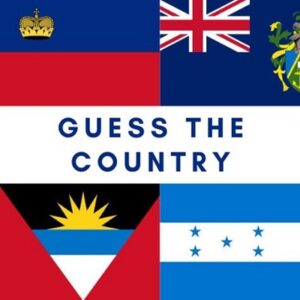
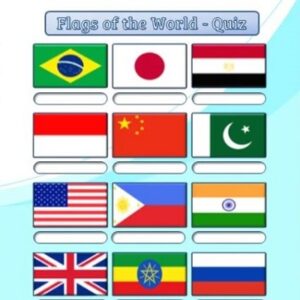
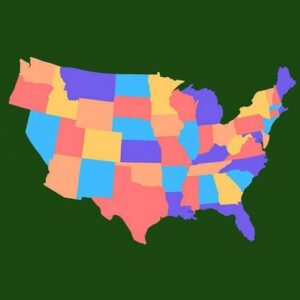
A strong part of the category is made up of games that ask players to identify a thing from a narrow clue set. Flags Quiz and Guess the Country are direct examples: one focuses on national flags, the other on country recognition, but both rely on memory, visual familiarity, and the ability to separate similar-looking options. Atlas Quiz expands that same idea into map awareness, which changes the skill from simple identification to spatial thinking.
These games tend to reward repeated exposure. A player may not know every answer on the first try, but the format itself helps build knowledge over time. The tension comes from speed and confidence: the clue is often familiar enough to spark a guess, but uncertain enough to make mistakes likely. That balance is a big reason quiz games remain popular. They create a satisfying loop where knowledge feels useful even when it is incomplete.
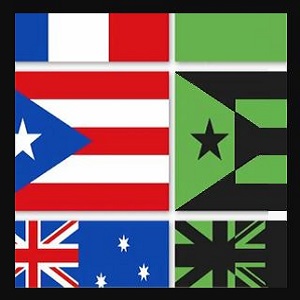
Flaggle sits close to this style but introduces a more deduction-heavy structure. Instead of checking whether a player already knows the answer outright, it encourages narrowing possibilities through feedback. That makes it feel closer to a logic puzzle than a simple trivia test, even though the subject matter is still rooted in geography.
Word Puzzle Quizzes And Deduction Games
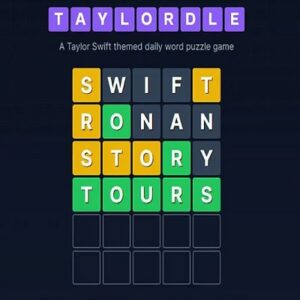
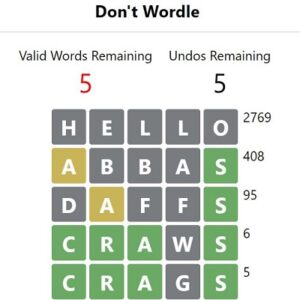
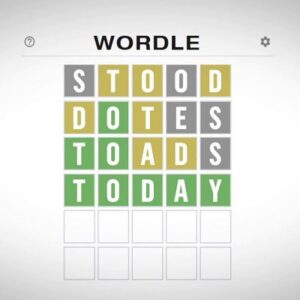
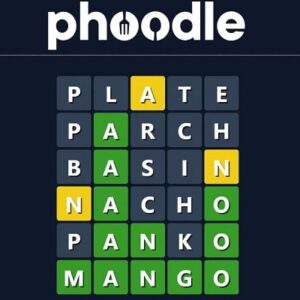
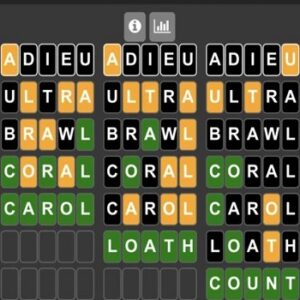
Several games in this category use the quiz format to support word-based deduction rather than traditional trivia. Wordle Online, Don’t Wordle, Disney Wordle, Taylordle, and Swiftle all build around guessing a target word or name through repeated attempts. The appeal is not only in finding the answer, but in interpreting feedback and using it to refine later guesses. This gives the category a strong puzzle identity.
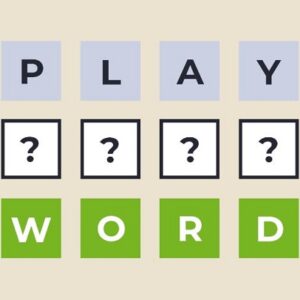
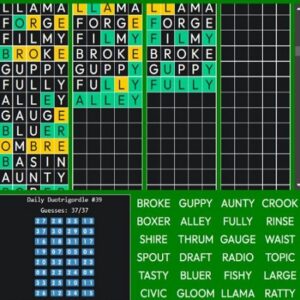
Weaver Wordle and Crosswordle push that idea further by making the path to the answer part of the challenge. In Weaver Wordle, the player works through word changes step by step, which turns the process into a chain of transformations. Crosswordle borrows the grid logic of crosswords while keeping the deduction rhythm of a word-guessing game. Both are more structural than a standard quiz, and both reward players who think in terms of patterns rather than definitions.
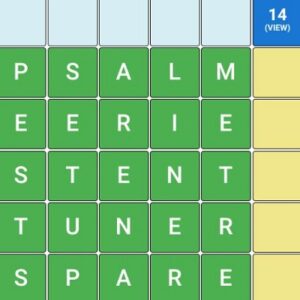
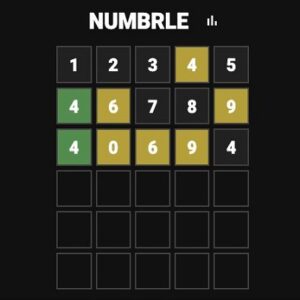
Squareword and Numberle show how the same framework can move beyond ordinary vocabulary. Squareword uses a grid-based solving pattern, while Numberle applies the familiar guessing logic to numbers. That variety matters, because it shows the category is not limited to trivia in the narrow sense. It can also mean figuring out hidden rules, testing combinations, and learning from feedback in a constrained number of moves.
Music, Pop Culture, And Fandom-Based Quizzes
Another noticeable cluster uses quiz mechanics to test familiarity with artists, songs, and entertainment franchises. Guess the Song: Quiz Music and Heardle 2000s both rely on audio recognition, which changes the challenge from visual recall to listening and timing. Instead of reading clues, players listen for a short sample and try to identify the track before the answer is given away. TayHeardle and Swiftle follow the same broad approach but anchor the experience in a specific artist-focused context, which makes them more targeted and more personal for fans.
Taylordle and Disney Wordle show another side of fandom quizzes: the answer pool is restricted to a known universe. That creates a different kind of difficulty. The challenge is not broad general knowledge, but depth of familiarity with a particular subject. A player who knows the source material well can make informed guesses quickly, while a casual player may need more attempts to narrow down possibilities.
This subset of quiz games is especially effective because it mixes knowledge with recognition. A song clip, a familiar name, or a themed word can trigger immediate recall, and that instant connection is part of the appeal. It also makes the games highly replayable for people who enjoy testing how well they know a specific category of music or media.
Social Formats And Answer-Pattern Games
Family Feud stands apart from the word-guessing and trivia-identification games because it is built around survey logic. The goal is not simply to know the correct fact, but to think like a crowd and predict the most common answers. That shifts the skill set toward social intuition and pattern recognition. The game rewards answers that feel familiar, conventional, or broadly shared, which is very different from a pure knowledge test.
Chain Reaction uses a similarly connective idea, though in a more mechanical way. Rather than asking for a single fact, it suggests a sequence or relationship that has to be worked out. That gives the game a more structural feel than a standard quiz. In a category dominated by direct prompts, games like this stand out because they make players think about how pieces fit together.
The Idiot Test also belongs in this group, even if it approaches the idea from a trickier angle. Its challenge comes from misunderstanding assumptions and noticing that the obvious response is not always correct. That kind of design broadens the category beyond factual knowledge. It shows that quiz games can be about reading instructions carefully, spotting hidden logic, and resisting reflexive answers.
What Keeps Quiz Games Interesting Across So Many Formats
The variety inside Quiz games comes from how many different ways a player can be asked to think. Flags Quiz, Atlas Quiz, and Guess the Country reward memory. Wordle Online, Numberle, and Crosswordle reward deduction. Guess the Song: Quiz Music and Heardle 2000s reward rapid recognition. Family Feud rewards social prediction, while The Idiot Test rewards caution and attention to detail.
That spread also explains why the category reaches both casual and dedicated players. A beginner can enjoy something accessible like Flags Quiz or Disney Wordle without needing specialist knowledge, while more experienced players may prefer layered formats such as Weaver Wordle, Squareword, or Flaggle, where each guess is part of a larger reasoning process. Even games that look similar on the surface often ask for different habits of thought. TayHeardle and Swiftle may both be artist-based, but one is centered on listening and the other on name recognition through constrained guessing.
The strongest Quiz games in this category are the ones that turn a narrow subject into a repeated decision problem. Whether the topic is geography, pop music, word structure, or survey answers, the format keeps asking the same thing in slightly different ways: what can be inferred from the clue, what can be ruled out, and what is still worth trying next?
FAQ
Are quiz games only about trivia?
Not here. The Quiz category also includes word deduction, number puzzles, audio identification, survey-based guessing, and trick-question formats.
Which quiz games are easiest to start with?
Games like Flags Quiz, Guess the Country, and themed versions such as Disney Wordle are often approachable because the subject matter is easy to recognize even with limited knowledge.
What makes the harder quiz games different?
Titles like Weaver Wordle, Crosswordle, Flaggle, and Numberle usually demand more step-by-step reasoning, since the player has to use feedback carefully rather than simply naming an answer.
 Chain Reaction
 The Idiot Test
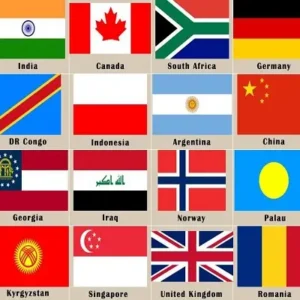 Flags Quiz
 Atlas Quiz
 Get 1000
 Taylordle
 Family Feud
 Weaver Wordle
 Don’t Wordle
 Wordle Online
 Guess the Song: Quiz Music
 Flaggle
 TayHeardle
 Guess the Country
 Swiftle
 Disney Wordle
 Squareword
 Heardle 2000s
 Crosswordle
 Numberle
 Flags of the World Quiz
 Phoodle
 Heardle Unlimited
 Duotrigordle
 The Password Game
 Wordle Countries
 Tridle
 Factle
 Antiwordle
 50 US States Quiz
 Mini Crossword
 Outspell
 Hangman
 Trivia Crack
 Brain Teaser
 Akinator Online
 Google Feud
 Dumb Test
 Who Wants To Be A Millionaire
 Akinator