What Are Shooting Games?
Shooting games are built around aiming, timing, positioning, and quick reactions. Some focus on direct combat against enemies, while others turn shooting into a contest of accuracy, movement, or survival. The category includes fast arena battles, wave-based defense, tactical encounters, and unusual hybrids that mix shooting with other systems such as crafting, physics, or mission-based progression.
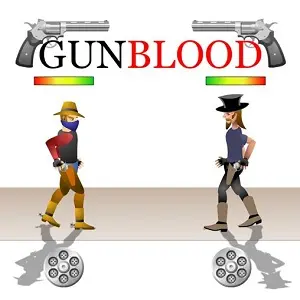
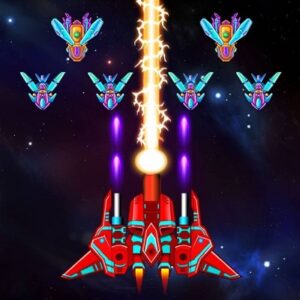
The games in this collection show how broad shooting can be. Gunblood centers on tense duels and timing. Airport Clash 3D, Winter Clash 3D, and Rush Team lean into multiplayer-style combat and team pressure. Galaxy Attack Alien Shooter uses a classic arcade format, while Time Shooter and Time Shooter 3 bring a more deliberate, puzzle-like rhythm to gunplay. That range is what keeps the category flexible: the core action is still shooting, but the surrounding structure can change completely.
Fast Reactions, Clear Targets, Constant Pressure
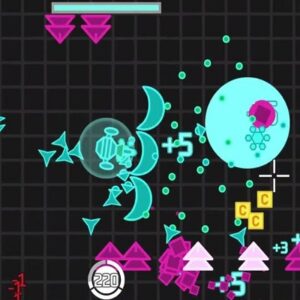
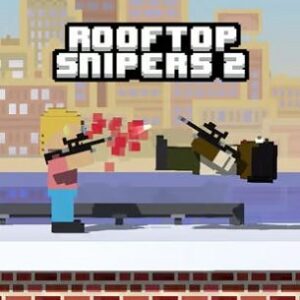
At the heart of shooting games is the same basic loop: identify a target, aim accurately, and act before the situation changes. That seems simple, but the pace varies sharply from game to game. Rooftop Snipers 2 turns every shot into a balance problem, where movement and recoil matter as much as marksmanship. Gunblood compresses action into short duels where hesitation is costly. Shape Shooter and Shape Shooter 2 rely on pattern recognition and quick target selection, which gives the player less time to react but more room to improve through repetition.
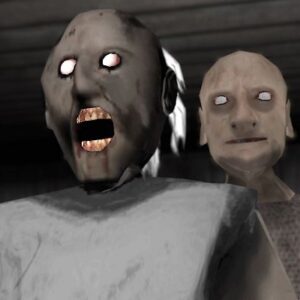
That mix of speed and clarity is a major reason shooting games stay popular. The goals are usually easy to understand, even when the execution becomes demanding. In Zombie Attack and Horde Killer: You vs 100, the objective is survival against pressure that keeps building. In Granny 2, tension comes from avoiding detection rather than simply clearing enemies. The broad topic includes both aggressive and cautious styles, but both depend on the same sharp awareness of space and timing.
Arcade Waves, Survival Runs, and Score Chasing
A large part of the category is made up of games that escalate through waves or increasingly difficult encounters. Galaxy Attack Alien Shooter fits neatly into the classic arcade shooter tradition, where the challenge is to last as long as possible while managing dense enemy patterns. Zombie Attack and Horde Killer: You vs 100 use similar pressure in more grounded forms, throwing escalating numbers of enemies at the player and forcing constant movement.
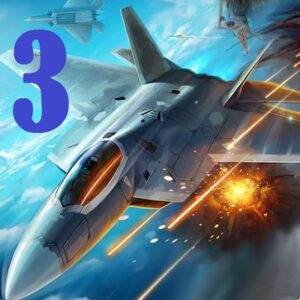
Winter Clash 3D and Airport Clash 3D push the idea in a different direction by framing combat around larger spaces and repeated skirmishes. Rather than a single clean duel, the player has to keep repositioning, respond to threats from multiple angles, and make decisions while the action stays in motion. Air Wars 3 shifts that pressure into the sky, where positioning becomes even more important because every movement changes altitude, angle, and firing opportunity.
These games attract players who enjoy reading a battlefield and surviving under pressure. Some focus on pure endurance, while others reward steady improvement through repetition. The basic pattern is similar, but the feel changes a lot depending on whether the game uses top-down waves, 3D environments, or side-view action.
Time Shooter and the Appeal of Tactical Gunplay
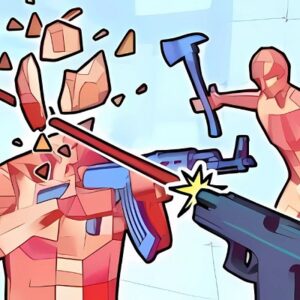
Time Shooter and Time Shooter 3 stand out because they slow the usual pace of shooting down to a tactical crawl. Movement and action are tightly linked, so the player has time to assess threats, plan the next step, and choose when to commit. Time Shooter 3: Swat builds on that same principle but frames it with a more specific scenario, which makes the encounters feel closer to small-scale operations than to pure arena combat.
This style of shooting game plays differently from the more reflex-driven titles in the category. Instead of relying on raw speed alone, success depends on reading the layout and understanding when action should happen. That gives these games a place between puzzle design and conventional combat. They appeal to players who want shooting to feel deliberate rather than chaotic, and they contrast sharply with the immediate pace of Gunblood or the crowd control pressure of Zombie Attack.
Multiplayer Pressure and Competitive Movement
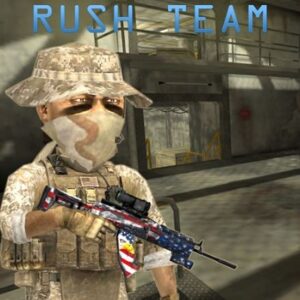
Some of the strongest examples in the category are built around direct competition or team-based conflict. Rush Team is the clearest example of a traditional competitive shooter structure, where awareness and positioning matter alongside accuracy. Airport Clash 3D and Winter Clash 3D also fit that broader combat style, with players moving through maps and trying to outmaneuver opponents in sustained firefights.
Rooftop Snipers 2 shows a different side of competition. Rather than using large maps and heavy weapon variety, it creates tension from simple dueling mechanics and awkward movement. That makes each shot feel consequential. Air Wars 3 adds another competitive layer by making the battlefield three-dimensional, so opponents have to manage direction, distance, and positioning in a way that ground-based shooters do not.
These titles show that shooting games do not need elaborate systems to generate rivalry. Sometimes the most memorable part is the direct contest itself. A clean duel, a team push, or a tight aerial exchange can be enough if the movement and aiming rules are clear.
Unusual Hybrids and Mission-Based Play
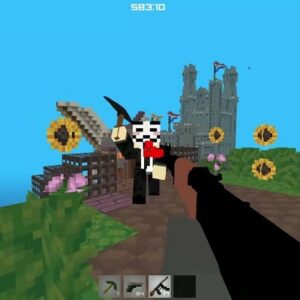
Not every game in the category follows the standard shooter formula. Craftnite.io blends shooting with building and resource use, which changes the role of positioning. A player is not only aiming at enemies but also shaping cover and creating tactical advantages. That makes the experience broader than a pure shooter, because decisions happen both in combat and in the space around it.
Bank Robbery and Thing Thing 4 lean more heavily into mission structure. Rather than only surviving waves or competing on a score line, the player is working through encounters that feel staged and objective-driven. That gives shooting a more directed sense of progress. Doom 3 also belongs in this more atmospheric part of the category, where combat is tied to exploration and tension rather than only reaction speed.
These variations matter because they show how shooting games can borrow from other genres without losing their identity. A good shooter does not always need to be about nonstop action; it can also revolve around planning, mission flow, or the use of terrain and tools.
Accuracy Games, Arcade Skill, and Precision Under Pressure
One reason shooting games remain so varied is that aiming itself can mean different things. In Archery World Tour, the challenge is less about spray-and-pray combat and more about consistency, angle, and controlled release. The game still belongs to the shooting category because it is built on precision and target handling, but the mechanics are closer to a measured marksmanship test than to a firefight.
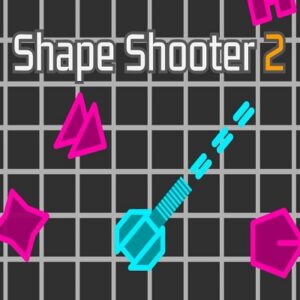
Shape Shooter and Shape Shooter 2 sit on another part of that spectrum, where the player has to process targets quickly and avoid getting overwhelmed by incoming patterns. The challenge is not always about realism or weapon feel. Sometimes it is about identifying the right object, deciding the correct angle, and keeping pace with the screen.
That variety helps explain why shooting games appeal to such different audiences. Some players want a straightforward test of accuracy. Others want movement-heavy combat. Others still prefer a tactical setup where every action has to be chosen carefully. This category contains all three, often in very compact form.
What Keeps Shooting Games Distinct
The strongest thread across the category is clarity. Whether the game is Gunblood, Time Shooter 3, Galaxy Attack Alien Shooter, or Craftnite.io, the player usually understands the objective almost immediately. The challenge comes from carrying out that objective under pressure, with limited margin for error.
That is why shooting games can shift between so many moods without losing their identity. A duel, a survival run, a team battle, a tactical raid, or an archery challenge all fit inside the same broad category because they rely on the same core relationship between sight, timing, and action. The difference lies in how the game frames that relationship and how much control it gives the player over the battlefield.
 Bullet Bro
 GunSpin
 Hunter and Props
 Deadshot Io
 Block Craft 3d
 Two Archers: Bow Duel
 Gunblood
 Airport Clash 3D
 Zombie Attack
 Rush Team
 Time Shooter 3: Swat
 Air Wars 3
 Archery World Tour
 Winter Clash 3D
 Shape Shooter 2
 Galaxy Attack Alien Shooter
 Thing Thing 4
 Craftnite.io
 Bank Robbery
 Doom 3
 Shape Shooter
 Time Shooter 3
 Time Shooter
 Rooftop Snipers 2
 Granny 2
 Horde Killer: You vs 100
 Fortnite
 Funny Shooter
 Crazy Shooters 2
 Subway Clash 3D
 Pixel Wars of Hero
 Stick Merge
 Good Guys vs Bad Boys
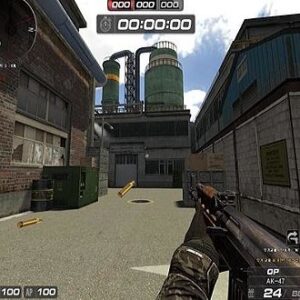 Sudden Attack
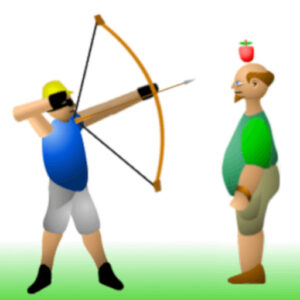 Apple Shooter
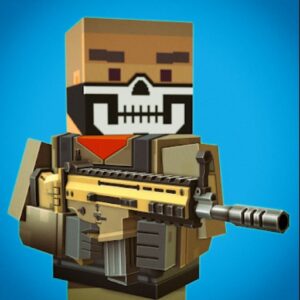 Pixel Warfare
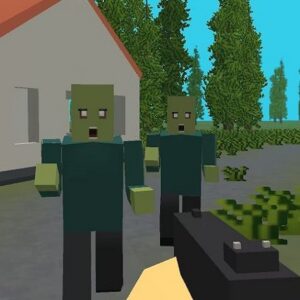 ShooterZ
 Toon Off
 WorldZ
 Crazy Pixel Apocalypse 3
 Slendrina Must Die: The House
 Tactical Assassin
 3D Aim Trainer
 Zombie Craft
 Left 4 Dead
 Intrusion
 Space Battle
 Bubble Tanks 2
 Downtown 1930s Mafia
 CS Portable