What Are Sports Games?
Sports games on browser platforms condense familiar athletic activities into short, repeatable challenges built around timing, aiming, positioning, and score chasing. In this category, the core loop is usually easy to understand at a glance: take a shot, return a serve, line up a kick, or control a moving object through a course. The appeal comes from how quickly the rules are established and how much room remains for precision after that first layer of simplicity.
The collection behind Sports is broad, but it leans heavily toward direct-action formats rather than full simulation. Penalty Shooters 3, Penalty Shooters 2, Penalty Kicks, and Penalty Shootout: Multi League focus almost entirely on one decisive phase of football, while games like Table Tennis World Tour, 3D Bowling, Dunk Shot, and Mini Golf Club translate sport into a small set of repeatable inputs. Even when the sport itself is different, the design often revolves around one clean action that can be practiced, refined, and repeated.
Timing and Precision Shape Most of the Action
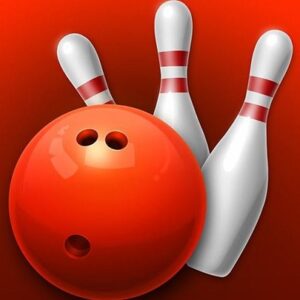
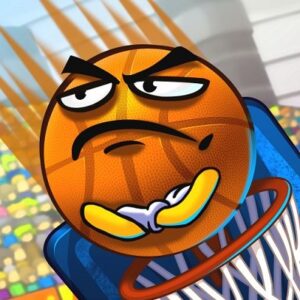
The most common pattern in this category is not complex rule management but exact execution. Flip Diving depends on launch angle, rotation, and clean water entry, while Dunk Shot turns basketball into a rhythm game of arcs and rebounds. Basket and Ball uses a similar logic, asking for careful control of bounce and direction rather than a broad playbook of basketball tactics. In 3D Bowling, the challenge is less about strategy than release timing, line, and spin.
This emphasis on precision also explains why sports games work so well as short-session browser titles. A player can fail a shot in seconds and restart immediately, then adjust the angle or timing on the next attempt. Mini Golf Club and Table Tennis World Tour both rely on this same loop, though in different ways: mini golf tests path planning and shot power, while table tennis adds a faster reaction layer, especially when rallies speed up and placement becomes as important as contact.
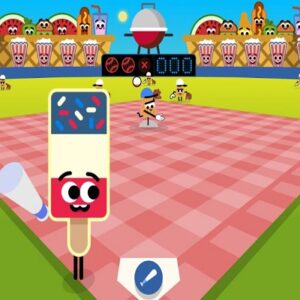
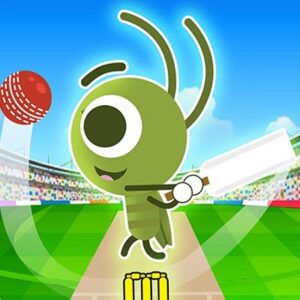
Even the more casual entries still reward fine control. Google Doodle Baseball and Doodle Cricket reduce bat-and-ball sports to a clear hitting moment, but the player still has to read the pitch and connect at the right instant. That directness is a defining feature of the category: success usually comes from mastering a small number of inputs rather than navigating an elaborate control scheme.
Penalty and Shootout Games Turn Football Into a Duel
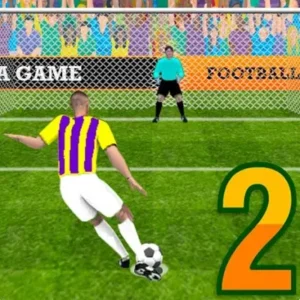
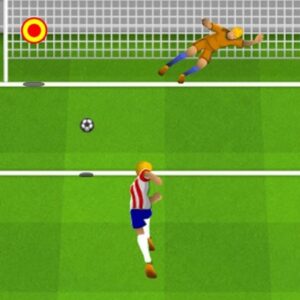
Football is represented in several different forms here, but the penalty shootout format is especially prominent. Penalty Shooters 2, Penalty Shooters 3, Penalty Kicks, and Penalty Shootout: Multi League all isolate the most dramatic one-on-one moment in the sport. That reduction creates a pure contest of reading the keeper, controlling placement, and switching roles between attacker and defender. The structure is straightforward, yet it creates tension because every attempt carries immediate consequences.
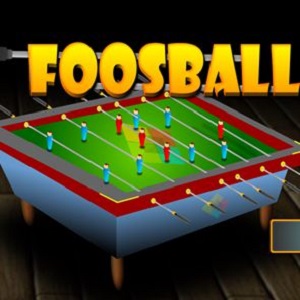
Football Masters, Retro Goal, and Brazil vs Argentina 2017/2018 expand football slightly beyond the penalty arc, but they still favor compact matches and simplified control over long-form simulation. Retro Goal stands out by leaning into team movement and broader match flow, while Football Masters and Brazil vs Argentina 2017/2018 focus on direct competitive play with accessible controls. Foosball carries that same directness into a tabletop format, translating football into quick positioning and rapid reactions.
The football games in Sports reveal how flexible the genre can be without losing clarity. Some entries test a single kick, some stage a full match, and others sit somewhere between those extremes. What connects them is the emphasis on instant readability: the player always knows the objective, whether that means scoring a penalty, defending a shot, or controlling the ball in a stripped-down match environment.
Physics and Momentum Are Central in the Trickier Games
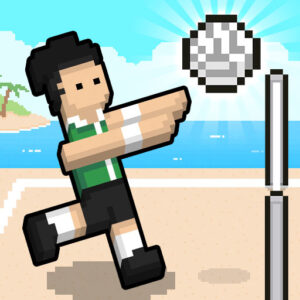
A second major pattern across Sports is the use of physics as the primary source of difficulty. Volley Random and Basket Monsterz both push this idea further than the more traditional entries. In Volley Random, movement and ball behavior are intentionally unpredictable, so the challenge is not only technique but adaptation. The same is true of Basket Monsterz, where the standard idea of basketball is filtered through a more exaggerated, arcade-style presentation that still depends on reading motion and adjusting quickly.
Dude Perfect 2 and Basket and Ball also use physics as a design tool, but they frame it differently. The former emphasizes careful shot selection and stunt-like trajectories, while the latter asks the player to solve movement through environments where bounce control matters as much as direct aiming. Mini Golf Club belongs in this group too, because its progression comes from understanding how force and angle combine over uneven layouts.
This physics-driven approach gives the category a wide range of difficulty. Some games are approachable because their rules are simple, but the actual mastery comes from reading momentum well enough to repeat success. That makes each attempt feel like a small experiment, especially in games where slight errors change the result dramatically.
Rally Play, Repetition, and Score Chasing Keep Sessions Moving
Not every Sports game is built around head-to-head competition. Several titles are closer to score-based endurance challenges, where the goal is to extend a run or keep a rhythm alive. Basketball FRVR is a clear example, built around repeated shots and steady accuracy rather than match structure. 3D Bowling and Google Doodle Baseball also fit this pattern, since their appeal comes from repeating a simple action and trying to improve consistency across attempts.
That same loop appears in the more arcade-like entries, even when they borrow from team sports. Doodle Cricket and Google Doodle Baseball both reward quick recognition and repeatable timing, while Volley Random keeps matches moving through short, reactive exchanges. The design priority is usually pace: a round ends quickly, results are visible immediately, and another attempt is only a click away.
The category therefore splits into two broad rhythms. Some games are about winning a specific contest, as with the penalty and football titles. Others are about maintaining form across repeated actions, where the player’s own consistency becomes the main objective. Both rely on the same underlying principle: the joy of improving a narrow skill under pressure.
Beginner-Friendly Rules, but Room for Real Mastery
Sports games tend to be easy to enter because they rely on recognizable rules and limited controls. That is true whether the game is Foosball, 3D Bowling, or Table Tennis World Tour. The player rarely needs a long tutorial to understand what matters. Instead, the challenge grows from better timing, smarter placement, and more reliable execution.
The most demanding games in the set are usually the ones that combine simple inputs with high pressure. Penalty Shooters 3 and Penalty Shootout: Multi League both create that pressure by making every kick matter. Mini Golf Club asks for patience and route planning, while Flip Diving punishes careless angle changes. Even where the presentation is playful, the underlying skill ceiling can be surprisingly firm.
This mix of accessibility and depth is what holds the topic together. Sports games in this category are not trying to simulate every part of a sport. They focus on the part that can be distilled into a clean challenge, then build replayability from repetition, precision, and competitive pressure.
Which Sports Games Lean Most Toward Competition?
Penalty Shooters 2, Penalty Shooters 3, Penalty Kicks, Penalty Shootout: Multi League, Football Masters, and Retro Goal are the clearest examples if the goal is direct competition, while Table Tennis World Tour and Foosball add fast back-and-forth duels in a different format. For score-chasing and personal consistency, Basketball FRVR, 3D Bowling, and Google Doodle Baseball are among the most straightforward choices.
Do Sports Games Usually Depend on Physics?
Often, yes. Flip Diving, Dunk Shot, Mini Golf Club, Dude Perfect 2, and Basket and Ball all rely heavily on angle, force, and momentum. Even the simpler sports entries use some form of trajectory or timing logic, but the physics-focused games make that system the center of play rather than a supporting detail.
 Basketball Legends 2020
 Retro Bowl
 Football Penalty 2026
 Hoops Rush
 Penalty Shooter: Soccer Cup 2026
 Tennis Masters 2026
 Soccer Aiming Simulator in 3D
 Cricket Online
 Basketball Hit
 Soccer Legend Online
 Zombie Dash
 Blocky Runner
 World Cup Soccer Caps
 9 Ball Pool
 Volleyball Legends
 Doodle Champion Island Games
 Ping Pong
 A Small World Cup
 Sports Heads Soccer
 Flip Diving
 Table Tennis World Tour
 Penalty Shooters 3
 Volley Random
 Penalty Shooters 2
 Dunk Shot
 Mini Golf Club
 Dude Perfect 2
 Basketball FRVR
 Penalty Shootout: Multi League
 3D Bowling
 Google Doodle Baseball
 Basket Monsterz
 Basket and Ball
 Doodle Cricket
 Retro Goal
 Football Masters
 Foosball
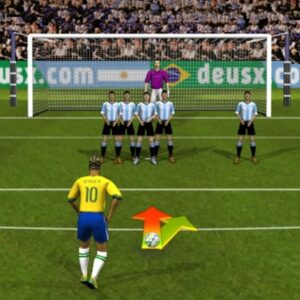 Brazil vs Argentina 2017/2018
 Penalty Kicks
 Soccer Random
 Cricket World Cup
 Tanuki Sunset
 Soccer Physics
 Return Man 2
 Crunchball 3000
 Basket Champs
 8 Ball Pool
 Tennis Masters
 Stick Figure Badminton 2
 Tap Tap Shots