What Are Casual Games?
Casual games are easy to start, quick to understand, and flexible enough to suit short play sessions or longer browsing breaks. The Casual category usually includes games with simple controls, clear goals, and gradual difficulty spikes rather than complex systems that take a long time to learn. Many of these games focus on one main activity, such as slicing fruit in Fruit Ninja, running through tunnels in Run 3, or managing a food counter in Papa’s Bakeria.
Players often come to casual games for straightforward goals, repeatable rounds, and mechanics that do not demand a large time commitment. Some games in the category are skill-based reaction challenges, while others are management, rhythm, puzzle, or simulation games. That variety is a major reason the Casual category stays broad and useful for different types of players.
Popular Types of Casual Games
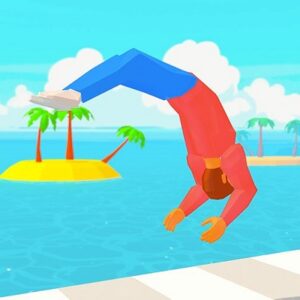
The Casual category covers several recognizable subgenres. Action-based games such as Fruit Ninja and Backflip Parkour ask players to react quickly, time inputs carefully, and improve through repetition. These games are simple to begin but can become more demanding as speed and patterns increase.
Endless runner and obstacle games are also common in Casual. Run 3 fits this structure with its fast movement, platforming routes, and repeated attempts to reach farther distances. Similar games rely on quick decision-making and learning how to handle jumps, turns, and gaps.
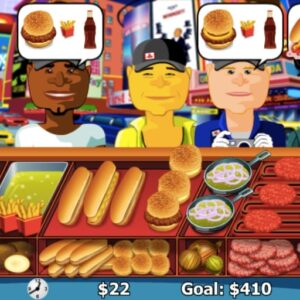
Simulation and time-management games form another important part of the category. Papa’s Bakeria and Hot Dog Bush both put players in charge of preparing food and serving customers. These games usually involve ordering tasks, multitasking, and keeping up with incoming requests while maintaining speed and accuracy.
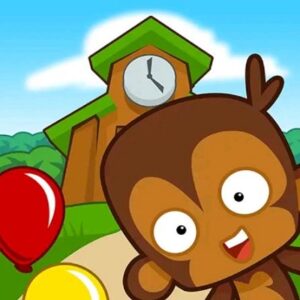
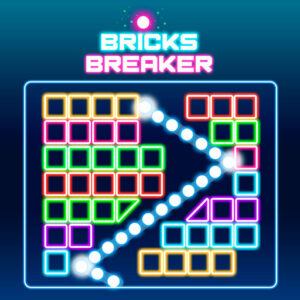
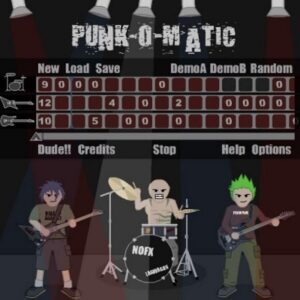
Puzzle and arcade games also appear frequently. Bricks Breaker is built around simple aiming and ball-bouncing mechanics, while Bloons Monkey City combines casual tower defense with city-building progression. Perfect Piano and Punk-o-Matic show how Casual games can also include music and creativity-focused play, where timing, pattern recognition, and experimentation matter more than fast reflexes.
There are also presentation-based games such as My Dolphin Show, which combine light action with stage performance and repeated objectives. These games often appeal to players who want clear tasks and visible progress without complicated menus or systems.
Common Gameplay Features
Most Casual games are built around readable rules and repeatable gameplay loops. Players usually perform a small set of actions, then watch how the game responds and adjust on the next attempt. That structure is easy to understand in Fruit Ninja, where the main action is swiping at moving targets, and in Bricks Breaker, where the player aims shots to clear the board efficiently.
Timing is a central mechanic across many games in the category. Run 3 requires careful movement and jump timing. Backflip Parkour depends on landing at the right moment. Perfect Piano asks players to hit notes in rhythm, while Punk-o-Matic rewards pattern-based musical arrangement. Even management games like Papa’s Bakeria depend on timing, since order handling and preparation must stay in balance.
Another common feature is short-term progression. Casual games often give immediate feedback after each action, round, or level. My Dolphin Show, for example, uses performance goals that let players see success step by step. Bloons Monkey City uses layered objectives, allowing players to build and expand while also defending territory. This makes the category approachable without removing a sense of progress.
Many games in the Casual category also use simple controls suited to browser play. Mouse clicks, taps, swipes, arrow keys, and basic timing inputs are common. Because the control schemes are usually minimal, the focus stays on reading patterns, reacting quickly, and making efficient choices.
Notable Games in This Category
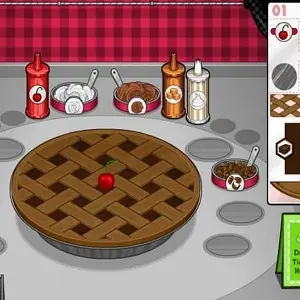
Papa’s Bakeria is a good example of a casual restaurant-management game. Players follow orders, prepare pies, and manage customer expectations while trying to keep the line moving. It appeals to players who like organization and task juggling.
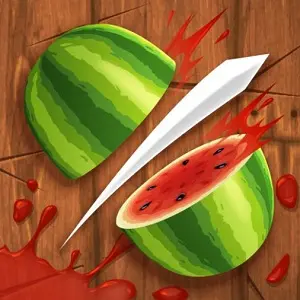
Fruit Ninja is one of the clearest action examples in Casual. The objective is simple, but success depends on quick reactions, careful swipes, and avoiding missed targets. It is easy to learn and often used as a benchmark for fast browser play.
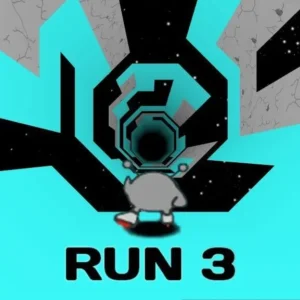
Run 3 brings platforming into the category. The game uses movement, gravity, and level navigation to create repeated challenges that reward familiarity with the stage layout.
Bloons Monkey City blends casual strategy, tower defense, and light city-building. Players place defenses, manage map progression, and expand their city while dealing with balloon-based attacks.
Bricks Breaker is a classic arcade-style entry. It centers on aiming and clearing blocks, which makes it a familiar pick for players who want simple mechanics with a steady pace.
Punk-o-Matic stands out as a creative music game. Rather than focusing on reflexes alone, it lets players arrange punk-style tracks and experiment with sound patterns and composition.
Backflip Parkour uses timing and movement control to guide flips, jumps, and landings. It suits players who enjoy short action challenges with a focus on precision.
Perfect Piano leans into rhythm and musical memory. Players follow note patterns and timing cues, making it a natural fit for those who like music-based gameplay.
My Dolphin Show mixes performance timing with playful stage tasks. It presents a clear routine structure and rewards consistency across repeated shows.
Hot Dog Bush is another food-service game in the category, with fast order handling and a steady stream of customer demands. It reflects the time-management side of Casual games well.
Why Players Enjoy Casual Games
Players often choose Casual games because they can be started quickly and understood without a long tutorial. A game like Fruit Ninja gives immediate feedback, while Bricks Breaker and Perfect Piano communicate their rules almost instantly. That accessibility makes the category useful for players who want a short session without a large setup.
The category also offers variety without complexity. Someone interested in action can play Backflip Parkour or Run 3, while another player can spend time on Papa’s Bakeria or Hot Dog Bush. A different player may prefer strategy through Bloons Monkey City or creativity through Punk-o-Matic. The category works well because it contains familiar structures across several genres.
Casual games also support replayability in a straightforward way. Many of these games encourage players to improve scores, master timing, or complete tasks more efficiently. My Dolphin Show and Perfect Piano both reward consistency, while Fruit Ninja and Bricks Breaker invite players to beat earlier results. That kind of repeat play is often appealing because the goals remain clear.
Beginner Friendly and Advanced Challenges
Many games in the Casual category are beginner friendly at the start but still offer room for advanced play. Papa’s Bakeria is easy to understand at a basic level, but high-speed order management becomes more demanding as customers increase. Hot Dog Bush works in a similar way, with simple early tasks that grow harder as the pace rises.
Action games often follow the same pattern. Fruit Ninja begins with straightforward slicing, then asks for faster reactions and cleaner decision-making. Run 3 starts with simple movement but later requires stronger route planning and better control over risky jumps. Backflip Parkour also becomes more demanding as landing windows tighten and movement choices matter more.
For players who want low-pressure play, Bricks Breaker and My Dolphin Show provide easy entry points. For players who want more control and practice-based improvement, Perfect Piano and Punk-o-Matic allow repeated refinement. Bloons Monkey City sits between accessibility and strategy depth, since its systems are simple enough to learn but broad enough to support longer sessions.
What Makes This Category Different
The Casual category is defined less by one style of gameplay and more by how the games are presented and paced. These games usually focus on one clear loop, whether that is slicing, running, serving food, clearing blocks, building defenses, or following rhythms. The design stays direct, and the rules are usually visible within the first few moments of play.
What sets Casual apart is its range. Papa’s Bakeria and Hot Dog Bush show the management side, Fruit Ninja and Backflip Parkour show the reflex side, Run 3 and Bricks Breaker cover arcade play, and Perfect Piano and Punk-o-Matic bring in music and creativity. My Dolphin Show adds performance structure, while Bloons Monkey City adds light strategy and progression.
That mix makes Casual a broad category for players who want familiar mechanics, clear objectives, and a quick path into play. It includes both relaxed games and high-speed challenges, but the common thread is accessibility through focused design.
 Super Smash Flash
 Vex 9
Vex 9
 ScaleMan 3D
 Pogo Masters
 E-Life Simulation
 Hyper Wave Challenge
 Bowling Master
 Aqua Bits
 Tallman Run
 Mob Rush
 Haaland Coloring Book
 Stack Ball 3D
 Sausage Flip
 Idle Vlogger Simulator
 Steal a Brainrot
 Food Truck: Cooking
 Case Battle
 My Waterpark
 Meme Mukbang: ASMR
 My Perfect Farm:
 Capybara Mart
 Waterpark Simulator
 Airborne BMX
 Wheel Quest
 Animal Hospital (Anomaly)
 Flip Spot
 Car Loop
 Steal An Egg
 Flip Or Fail
 Supermarket Simulator: Desert
 +1 Speed Monkey
 Flip Duel
 Boys vs Girls
 Tower Rise
 Farming Simulation Game
 Bat Smash 2
 Bowmasters Archery Shooting
 67 Clicker
 Ball Breaker
 Kick Lucky Blocks
 Mazes Draw The
 Stumble Race
 Rust & Rope
 Mr. Flip
 Birdie Bop
 Run And Jump
 Trump Clicker
 Diddy Clicker
 Poop Away
 Screw Masters 3D
 Retro Sports Champion
 Wobbly Pets
 Short Life 2
 Arrow Escape: Puzzle
 Fish Quest
 Rotate Rush
 Retro Drift
 Operation Epic Furious:
 Farting Flight
 Long Leg Master
 Color Surfer
 Track Dash
 Drop Stack Ball
 Sky Dart
 Tetrix Online
 Geometry Dash Funhouse
 Brush Jjaemu
 Ship Smasher
 FNF: The Amazing
 Count Masters
 Hole Arena
 Lift Off 2
 Golf Orbit
 Horse Magnifier
 Soccer Legends 2026
 Scritchy Scratchy
 Monster Squad Rush
 Escape Animals
 Wacky Steps
 Madness Hole
 2048 Rogue
 Ragdoll Launcher
 Flip Rush
 Goo Goo Gaga
 Doodle Baseball
 Bottle Hop
 Football Bros
 Lift Off
 Your AI Slop
 Grow a Garden
 Garden Horizons
 Slope
Slope
 Block Blast
 Knockout
 Wordle
 Magic Tiles
 Tung Sahur Clicker
 Knife Master
 Rocket Fortress
 Trap The Cat
 Epstein Clicker
 Skip It!
 Snake
Snake
 Ragdoll Flip
 Steal a Car
 Crunch Lock
 Get Yoked
 Pinball Master
 Space Waves
 Retro Blaster
 Orbit Rush
 Rob a Car
 Pereelous
 Pizza Clicker Online
 Airport Security
 Golf Puzzle
 Slide Down
 Neon Leap
 Italian Brainrot Clicker
 Bucket Smash
 Orbit Kick
 Fun Clicker
 Wacky Flip
 Golf Hit
 Chill Guy Clicker
 Flipping Master
 Hyper Wave Trial
 Slap Champions
 Maze 3D
 Pokémon Overlord
 Glide In
 Stick RPG Complete
 Papa’s Donuteria
 Dumb Ways to
 Papa’s Wingeria
 Papa’s Cupcakeria
 Bartender The Right
 Penguin Diner 2
 Papa’s Scooperia
 Cluster Truck Online
 Tube Jumpers
 Smarty Bubbles
 Papa’s Bakeria
 Fruit Ninja
 Run 3
Run 3
 Bloons Monkey City
 Bricks Breaker
 Punk-o-Matic
 Backflip Parkour
 Perfect Piano
 My Dolphin Show
 Hot Dog Bush
 Smarty Bubbles 2
 Teacher Simulator
 Bubble Shooter 3
 Tunnel Runner
 Rotate
 Draw Tattoo
 The Evolution of
 Run Sausage Run
 Lode Runner
 Draw Bridges
 CircloO 2
 JustFall.LOL
 Lemonade Stand
 Cat Coffee Shop
 Glove Power
 Color Line
 Run Race 3D
 Om Nom Bubbles
 Blackjack
 T-Rex Run 3D
 Shape Shooter 3
 Alien Hominid
 Bubble Tea Maker
 Sushi Party
 Om Nom Run
 Doodle Jump 2
 Yummy Cupcake
 Cat Ninja
 Hacker Simulator
 Coin Flip
 Flappy Bird 2
 Sand Painting
 Rock Paper Scissors
 Learn To Fly
 Learn to Fly
 Little Alchemy 2
 Google in 1998
 Traffic Control
 N Game
 Flip A Coin
 Google Gravity
 Whack A Mole
 Drawize
 Papa’s Sushiria
 Thisissand
 Slope 2
 Bongo Cat
 Death Run 3D
 Core Ball
 Do a Barrel
 Google Space
 Super Mario 64
 Magic Cat Academy
 Pop It Master
 Computer Repair
 Purble Place
 Bored Button
 Pixel Speedrun
 Bad Ice Cream
 Hide N Seek
 99 Balls
 Magic Piano Tiles
 Knife Hit
 Bubble Trouble
 Kick the Buddy
 Papa’s Pancakeria
 Elastic Man
 Bouncing Balls
 Yummy Taco
 Traffic Mania
 Flood Runner
 Portal: The Flash
 Bob the Robber
 Stack
Stack
 Shopping Cart Hero
 Multiplayer Piano
 FL Tron
 Free Tetris
 Lemmings
 Meat Boy
 Color Tunnel
 Gold Digger
 Burger Time
 Bomb It
 Blob Opera
 Flip Bottle
 Fish Eat Fish
 Big Tower Tiny
 Stickman Archery
 Spank the Monkey
 Ping Pong Chaos
 Poppit
 Effing Worms
 Line Rider 2
 Skywire
 Sushi Go Round
 Scale of the
 Rogue Soul
 Playing With Fire
 Crazy Roll 3d
 Learn to Fly
 Penguin Diner
 Hotel Tycoon Empire
 Spider Solitaire 1
 Ovo
Ovo
 Robot Unicorn Attack
 Motherload
 Vector TD
 Turbo Dismounting
 Love Calculator
 Cat Mario
 Appel
Appel
 Clustertruck
 Google Santa Tracker
 Super Mario Run
 Flow
Flow
 10 More Bullets
 the Impossible Game
 Worlds Hardest Game
 Papas Cheeseria
 Clicker Heroes
 Pou
Pou
 Spider Solitaire
 Temple of Boom
 Dumb Ways to
 Marble Race
 Winterbells
 Bomb It 7
 Rollercoaster Creator
 I Don’t Even
 Frogger
 Geometry Dash Meltdown
 Geometry Dash Online
 Friday Night Funkin
 Pinturillo 2
 Papa’s Hot Doggeria
 Papa’s Burgeria
 Gold Miner
 Swing Monkey
 Jelly Mario Bros
 Douchebag Workout
 Tiny Fishing
 Papas Pizzeria
 Tic Tac Toe
 Diner Dash
 Tag 2 3
 Love Tester 3
 Hanger
 Atari Breakout
 Cat Simulator
 Bloons
 Into Space
 Death Note Type
 Cooking Mama
 Google Pacman
 12 Minibattles
 I Love You
 Text Twist
 Fireboy and Watergirl
 Papa’s Cheeseria
 Kitten Cannon
 Kitty Cats
 Jet Rush
 Virtual Drum
 Pandemic 2
 Marvel vs Capcom
 Classic Snake
 Piano Tiles
 Bubble Spinner
 Bubble Shooter
 Chainsaw Dance
 This Is The
 StrikeForce Kitty
 BitLife
 Doodle Jump
 Papa’s Taco Mia
 Helix Jump
 Love Tester
 McDonald’s Videogame
 Bottle Flip
 Pacxon
 Curveball
 Space Invaders
 Virtual Piano
 Geometry Dash SubZero
 Run
Run
 Dinosaur Game
 Line Rider
 Flappy Bird
 Cubefield
 Pixel Art
 Super Auto Pets
 Geometry Dash
 Papa’s Freezeria
 Pacman