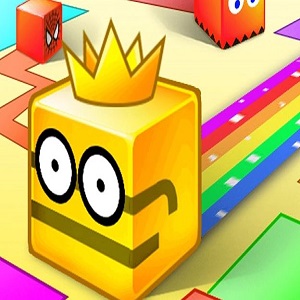




Flipping Master is a physics arcade runner where you hop diagonally between three linked tiles and try to keep the run alive. It plays free in the browser, on desktop, tablet and mobile, with no download. The board is tiny and unforgiving. That is the whole pitch.
A Tiny Runner That Opens in Seconds
It is an HTML5 build, so it loads about as fast as you can blink and shuts down just as quickly. That matters more than it sounds. A run can end in seconds at the start, and a full attempt rarely asks for a big time commitment, which makes Flipping Master easy to squeeze into a short break. The page rating reads a perfect 10 from a single vote, which is a strange thing to see, and the loop can actually back that up on a good day.
On paper the whole thing sounds thin. Three tiles, two keys, one health bar. Then you play it and realize the pressure is real.
How the Three Tile Board Works
Three tiles stay linked in a tight shape that never grows. Your runner stands on one, flips diagonally to the next, and keeps cycling until something goes wrong. There is no camera to fight and no map to memorize. The only thing that moves is you.
Empty tiles are the hard stop. Land on bare ground and the run ends on the spot, with no shield and no second hop. That single rule turns the game into a reading test. You start checking the floor one jump ahead, then two, and the board that looked random at the start turns into a pattern you can survive.
Scoring Runs on Enemy Landings
Health drains from the first second of every attempt, so standing around is a slow death. Enemies are the answer. Crush one under a landing and you refill part of the bar and push your score potential higher, which flips the usual runner instinct. Dodging is wrong here. Contact is the point.
Chains make it better. String a few enemy landings together and the bar stays healthy while the multiplier climbs, so a messy run can survive longer than it deserves. The risk is greed. I lose most attempts on a low bar because I chase one more target instead of taking the safe tile.
Positioning Wins More Runs Than Speed
Timing beats twitch reactions. The tiles never separate, so the way back to a safe spot is often the way you came from, and a jump that feels wrong is sometimes the one that keeps the bar up. When health is low and no enemy is reachable, take the quiet tile and buy a few seconds. When an enemy sits two flips away, go get it.
I used to fixate on one side of the shape and die there over and over. Forcing a jump to the opposite tile feels bad in the moment and works almost every time. Options are the real resource, not speed.
The Two Keys You Need
Input is as small as it gets. Two directions, both diagonal, both locked at the press.
- A key, jump diagonally to the left.
- D key, jump diagonally to the right.
No aiming, no air control, no way to bail out of a bad jump. Tapping and holding produce the same hop, so a steady rhythm beats mashing. New players usually drift on the first few runs because both moves travel sideways and up at once, and the landing spot is decided before you leave the tile. After a minute it becomes muscle memory, and then the board reads faster than your hands move.