Brain Games Built Around Pattern Recognition and Planning
The Brain tag brings together games that ask for more than quick reactions. The common thread is problem solving under constraint: reading layouts, spotting safe moves, and testing ideas with as few mistakes as possible. In Block Blast and Block Blast Unblocked, that often means arranging pieces to preserve space and keep the board usable. Color Block Jam leans on similar spatial reasoning, while ParkOut: Traffic Escape turns the same kind of thinking into movement planning, where one blocked route can affect the entire puzzle.
What stands out across the tag is the reliance on clear rules with messy outcomes. Wordle is built on deduction and feedback loops, Trap The Cat turns a simple board into a containment puzzle, and Crunch Lock suggests mechanical logic that rewards sequence and timing. The appeal comes from identifying structure quickly, then using that structure to predict what happens next.
Spatial Puzzles That Punish Waste
A large share of Brain-tag games are about fitting, clearing, or redirecting pieces efficiently. Block Blast and Color Block Jam emphasize board management, where empty spaces matter as much as occupied ones. Golf Puzzle and Maze 3D shift that same spatial logic into movement, asking players to judge angles, routes, and dead ends rather than only block placement.
Glide In and Pull The Pins sit in the same design family even when their mechanics differ. One relies on controlled entry or motion, the other on sequence and release. In both cases, the player is constantly weighing whether a move opens the board or collapses it. That pressure is what gives these puzzles their structure: every action narrows the remaining options.
Logic Games That Reward Careful Reading
Some games in the tag focus less on spatial arrangement and more on interpreting clues. Wordle is the clearest example, built around deduction from limited feedback. Mine Quest Daily suggests a daily puzzle rhythm with recurring logic challenges, while Hidden Objects: Island Secrets depends on visual scanning and attention to detail rather than route planning.
Horse Magnifier fits this pattern in a different way, pointing toward observation as the main skill. Games in this group appeal to players who like extracting meaning from small hints. The challenge is often not speed, but confidence: recognizing when enough information has been gathered to make the next move.
Traffic, Traps, and Other Controlled Conflicts
A separate cluster of Brain games uses obstruction as the core idea. ParkOut: Traffic Escape turns the screen into a congestion problem, where vehicles limit one another’s movement and every slide matters. Trap The Cat creates a similar feeling of pressure, but in a more abstract grid-based form. Crunch Lock also belongs here, because the name points to constrained movement or locked mechanisms that must be solved in the right order.
These games are effective because they make the player think in terms of cause and effect. A single misplaced move can create a dead end, but a well-chosen action can unlock several follow-up options at once. That balance between restriction and release is central to the Brain tag.
Progress Systems That Turn Puzzles Into Repetition With Purpose
Not every Brain game is a one-off logic test. Count Masters introduces a numerical progression style that ties puzzle thinking to accumulation and scaling. SchoolBoy Runaway suggests stealth and escape, which usually means reading patterns, avoiding detection, and choosing the right moment to act. Even when action is involved, the underlying requirement is still mental control.
This is where the tag broadens beyond clean, static puzzles. Some games ask for repeated attempts, where the player learns route behavior, timing windows, or risk thresholds through experience. Others create tension by layering simple rules into longer sequences. That makes the collection feel varied without losing its identity.
What Brain Players Tend to Value
The strongest common feature across Cyber Arrows: Brain Puzzle Game, Block Blast Unblocked, Trap The Cat, Wordle, ParkOut: Traffic Escape, Mine Quest Daily, Golf Puzzle, and Hidden Objects: Island Secrets is the demand for attention. These games rarely depend on reflex alone. They reward players who notice patterns early, compare options carefully, and stay patient when the correct answer is not obvious.
- Spatial thinkers are drawn to block puzzles, mazes, and traffic jams.
- Deduction-focused players tend to favor word and clue-based games.
- Methodical players prefer systems where a bad move creates lasting consequences.
- Short-session players often like daily or single-screen logic challenges.
That mix is what gives the Brain tag its range. Glide In and Pull The Pins may feel different from Wordle or Maze 3D, but they all ask for the same mental habit: slow down, read the puzzle, and treat each move as part of a larger plan.
 Hidden Objects: Island Secrets
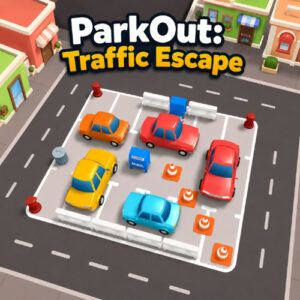 ParkOut: Traffic Escape
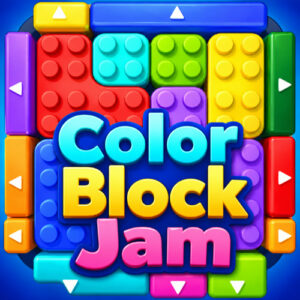 Color Block Jam
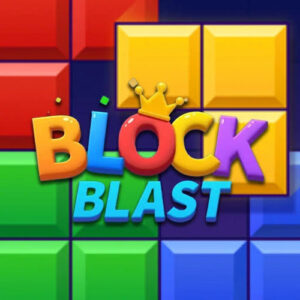 Block Blast
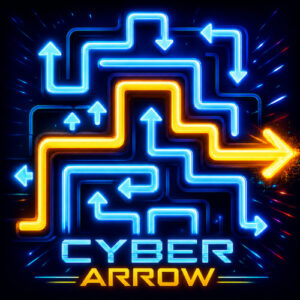 Cyber Arrows: Brain Puzzle Game
 Mine Quest Daily
 Count Masters
 Horse Magnifier
 Block Blast
 Wordle
 Trap The Cat
 Crunch Lock
 SchoolBoy Runaway
 Golf Puzzle
 Maze 3D
 Glide In
 Pull The Pins
 Cursor * 10
 Atlas Quiz
 Get 1000
 Family Feud
 Guess the Song: Quiz Music
 Flaggle
 Guess the Country
 Pointer
 Squirdle
 Google Memory Game
 Flags of the World Quiz
 City Guesser
 Duotrigordle
 The Password Game
 Letters Boxed
 Loldle
 Factle
 50 US States Quiz
 Mini Crossword
 Outspell
 Nonogram
 Black Game
 Block Puzzle
 Word Search
 Brain Teaser
 Akinator Online
 Google Feud
 Who Wants To Be A Millionaire
 There Is No Game
 Minesweeper
 Akinator


'/%3E%3Cpath%20fill='%23b2b2b2'%20d='M241%20382q0%2016%2017%2026%2017%2011%2042%2011t42-11q16-11%2017-26V269H241'/%3E%3Cpath%20fill='%239f7e00'%20d='M241%20379q0%2014%208%2023%209%209%2021%209%2014%200%2021-9%209-9%209-23V269h-59'/%3E%3Cpath%20d='M241%20339v-70h59v110q0%2014-9%2023l-6%205v-68h-15v72q-8%200-14-4v-68zm59%2040c0%2022%2015%2032%2029%2032%2021%200%2030-18%2030-32v-40h-59'/%3E%3Cpath%20fill='%239f7e00'%20d='M266%20277v5h2v12h-3v-5h2v-5h-9v5h2v5h-4v9h3v18h-5v10h34v-10h-5v-18h3v-9h-4v-5h2v-5h-9v5h2v5h-3v-12h2v-5zm42%20101q0%2010%206%2017%206%206%2015%207%2010-1%2016-7%206-7%206-17v-29h-43'/%3E%3Ccircle%20fill='%230044ad'%20cx='329.5'%20cy='372'%20r='6'/%3E%3Cellipse%20fill='%230044ad'%20cx='300'%20cy='340'%20rx='16'%20ry='21'/%3E%3C/svg%3E)


