One-Button Games Turn Simple Input Into Timing, Rhythm, and Control
The One Button tag brings together games that strip interaction down to a single action, then build variety through timing, direction changes, spacing, and pacing. That simplicity does not make the games shallow. It usually makes every press matter more, because the player has less direct control and must read the system carefully. Bat Smash 2, Tap Road 2, and Stack Ball 3D all depend on precise taps, while Turbo Flip and Sausage Flip use one input to manage movement through jumps, flips, and landing angles.
What links the tag is not a single genre, but a design habit: reduce the control scheme, then let the challenge emerge from state changes. Some games ask for steady rhythm, others for split-second release, and some for repeated choices that feel easy at first but become more demanding as speed or complexity increases. That makes the tag appealing to players who want clear rules, fast restarts, and direct feedback.
Timing Is the Main Skill
In many of these games, the real challenge is not learning controls but learning timing windows. Football Penalty 2026 and Cricket Online fit that pattern well, since a single action often determines whether a shot connects cleanly or misses the target. Bat Smash 2 follows a similar logic: one input can decide the quality of the swing, so the player watches for the right moment rather than juggling multiple buttons.
That same pressure appears in Flip Spot and Racing Pop, where success depends on acting at the correct instant rather than holding full control over every movement. The appeal is in the clarity of the feedback. A mistimed tap usually fails in an obvious way, which makes improvement easy to track.
Momentum, Physics, and the Fear of Overcorrection
A large part of the tag’s identity comes from games that use one button to manage motion already in progress. Car Loop, Parking Adventure, and Tap Road 2 depend on reading speed and pathing, then making small input choices that affect the outcome more than raw reflexes do. In Stack Ball 3D, the one-button structure supports a downward rhythm of descent and release, where mistiming can break the flow completely.
Sausage Flip and Turbo Flip push this further by turning physics into the core obstacle. The player is not steering continuously; instead, each tap launches a body through space and leaves the result to angle, momentum, and recovery. That creates a distinct kind of tension. Press too early and the arc falls short. Press too late and the landing is lost. The challenge often comes from resisting the urge to compensate too aggressively after a mistake.
Puzzle Thinking Beneath the Minimal Controls
Not every One Button game is about action speed. Cyber Arrows: Brain Puzzle Game, Arrow Puzzle, and Color Block Jam show how a single input can support planning-heavy play. Instead of demanding constant dexterity, they ask the player to understand patterns, sequence, and cause-and-effect. The button is simple, but the decisions around it may be surprisingly layered.
67 Clicker and Idle Vlogger Simulator also shift the focus toward accumulation and timing over direct control. In these games, repeated taps or occasional input drive growth, making the player think less about reaction and more about efficient progress. That style fits people who like visible advancement without a complicated interface.
Competitive and Score-Driven Play Still Fits the Format
The tag also includes games that use one-button control inside head-to-head or score-focused formats. Boys vs Girls and Bullet Bro rely on the simplicity of input to keep attention on outcome rather than execution clutter. Pool Mania carries a more deliberate feel, but the same principle applies: the fewer controls the player has, the more important positioning and shot selection become.
Racing Pop and Football Penalty 2026 are good examples of how one-button design can still support direct competition. The action is easy to understand immediately, which makes score pressure, accuracy, and consistency stand out more clearly. That clarity is one reason these games work well in short sessions.
Short Sessions, Fast Restarts, and Repetition That Teaches
One Button games usually favor compact attempts and quick retries. A failed run in Tower Rise or Flip Spot rarely feels like a long setback because the format encourages repetition. Each restart gives the player another chance to refine rhythm, estimate distance, or improve reaction timing. That loop is especially effective in games with escalating difficulty, where the rules remain simple but the pace tightens.
Because the control scheme stays minimal across so many different designs, the tag can support a wide range of play styles without asking the player to learn complex inputs. Some come for the reaction challenge in Stack Ball 3D or Tap Road 2; others prefer the planning side of Arrow Puzzle or the incremental progression of 67 Clicker. The common thread is a design that tests judgment through a single, repeated action.
 E-Life Simulation
 Pool Mania
 Arrow Puzzle
 Color Block Jam
 Football Penalty 2026
 Stack Ball 3D
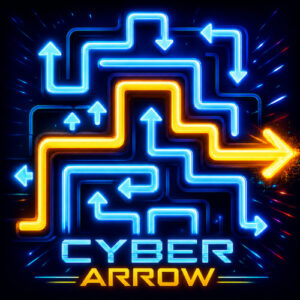 Cyber Arrows: Brain Puzzle Game
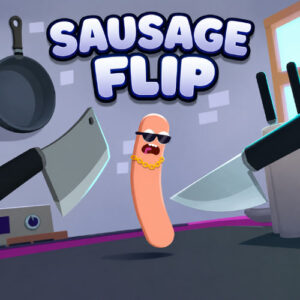 Sausage Flip
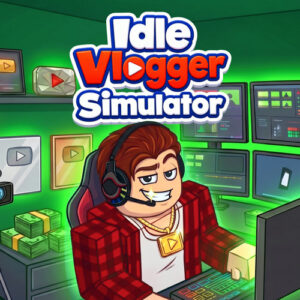 Idle Vlogger Simulator
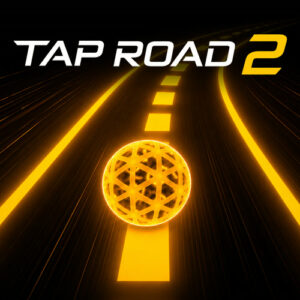 Tap Road 2
 Racing Pop
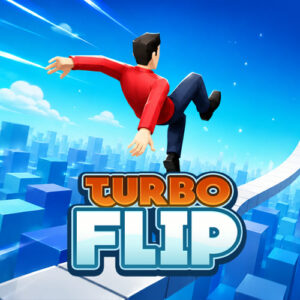 Turbo Flip
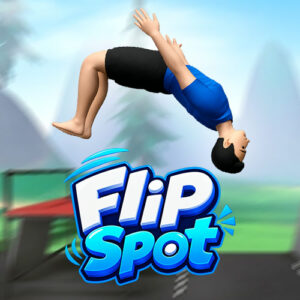 Flip Spot
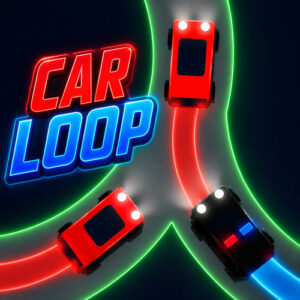 Car Loop
 Cricket Online
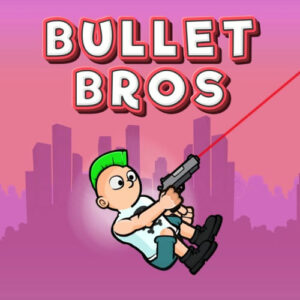 Bullet Bro
 Boys vs Girls
 Tower Rise
 Bat Smash 2
 Parking Adventure
 67 Clicker
 Mazes Draw The Path
 Vex Try To Fly
 Stumble Race
 Rust & Rope
 Mr. Flip
 Birdie Bop
 Bouncemasters
 Trump Clicker
 Diddy Clicker
 Poop Away
 Screw Masters 3D Puzzle
 Wobbly Pets
 World Cup Soccer Caps
 Wurst Dash
 Arrow Escape: Puzzle
 Royal Pin
 Fish Quest
 Retro Drift
 Operation Epic Furious: Strait to Hell
 Rooster Road
 Arcade Glide
 Farting Flight
 Long Leg Master
 Track Dash
 Drift Master 3D
 Sausage Battle
 Drop Stack Ball
 Sky Dart
 Geometry Dash Funhouse