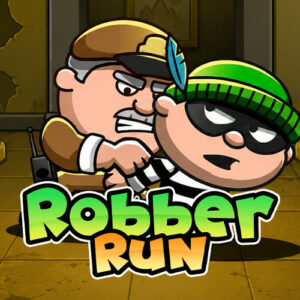
 Robber Run





Mission Games Built Around Clear Objectives and Escalating Problems
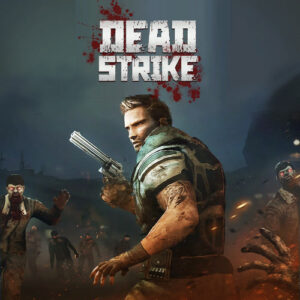
The Mission tag brings together games that structure play around defined goals, repeated tasks, and forward motion from one objective to the next. In this group, that can mean serving customers in Food Truck: Cooking Games, managing land and production in Farming Simulation Game and Garden Horizons, or pushing through hostile encounters in Frontline Commando Shooting: Gun Games, Dead Strike, and Operation Epic Furious: Strait to Hell. The common thread is not a single genre but a game design that always gives the player something specific to do.
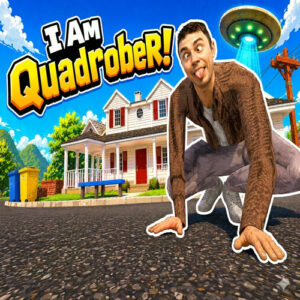
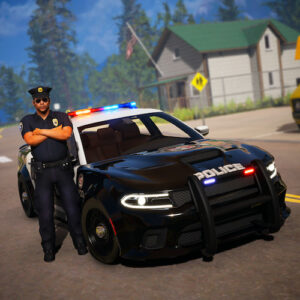
That structure makes mission-based games feel focused even when the settings vary widely. Police Simulator and SchoolBoy Runaway use mission logic to frame movement and problem-solving, while Robber Run, Rooftop Rush, and Dude Theft Auto lean on escape, pursuit, and open-ended disruption. Even the stranger, more chaotic titles such as Deer Adventure and I Am Quadrober! still rely on objective loops that push players from one action to the next.
Action Missions Depend on Positioning, Timing, and Pressure
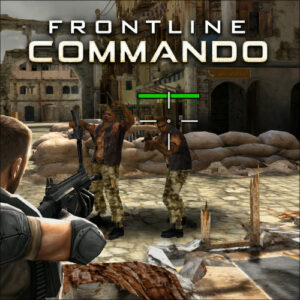
The shooter-heavy side of the tag is built around fast decisions under pressure. Frontline Commando Shooting: Gun Games, Dead Strike, and Operation Epic Furious: Strait to Hell point toward encounters where survival depends on movement, aim, and reaction time. These games typically reward players who can read space quickly and respond to threats before the situation closes in.
Murderer and Robber Run add a different kind of tension by turning the mission into pursuit. Instead of clearing a battlefield, the player is often trying to escape it, which changes the rhythm of the action. That same sense of being hunted also appears in SchoolBoy Runaway, where staying ahead of trouble matters as much as reaching the objective.
What links these action missions is a steady rise in risk. The player is rarely free to wander without consequence. Every movement serves the larger task, and the mission itself becomes a test of control.
Simulation Missions Turn Routine into Progress
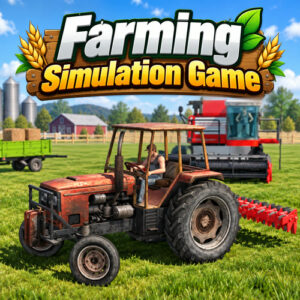
Not every mission game is about danger. Farming Simulation Game, Garden Horizons, Food Truck: Cooking Games, and Police Simulator show how mission structure can make ordinary work feel organized and measurable. These games often rely on repetition, but the repetition has purpose: plant, harvest, serve, patrol, respond, improve.
The appeal comes from handling systems in the right order. In a farming or gardening game, missions may involve resource growth and careful planning. In a cooking game, the challenge shifts to speed, sequencing, and customer flow. Police Simulator introduces another kind of duty cycle, where procedures and response patterns matter more than raw reflexes. Compared with the action titles, these games tend to reward consistency and memory over aggression.
This is one of the strongest patterns in the tag: missions are not limited to combat. They can organize management play just as effectively as they organize firefights.
Escape, Chase, and Disruption Give Missions Their Pace
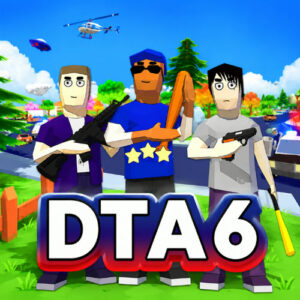
Several of the listed games use mission design to create momentum through evasion rather than direct confrontation. DTA 6, Dude Theft Auto, Rooftop Rush, and Robber Run all suggest movement-driven play where the player is navigating through obstacles, authorities, or unstable environments. The mission is less about holding ground and more about keeping motion alive.
Deer Adventure and I Am Quadrober! point to a more playful version of the same idea. In those games, mission structure can support unpredictable behavior, where objectives are paired with physics-heavy movement or oddball encounters. That gives the tag room for comedy and chaos without losing its sense of direction.
These games are useful examples of how mission design can control pace. A clear objective keeps the player moving, even when the tone is loose or absurd.
Stealth, Planning, and Clean Execution
Some mission games ask for patience rather than speed. SchoolBoy Runaway fits neatly into this space, where avoiding detection and choosing the right moment matter more than constant action. Mission-based stealth often works by narrowing the player’s options, then asking them to solve the route with careful observation.
That same idea appears in different form in the more tactical shooters. Frontline Commando Shooting: Gun Games and Operation Epic Furious: Strait to Hell may emphasize combat, but mission structure still encourages planning through objectives, enemy placement, and pacing. The player is not just reacting; they are sequencing the task.
Games in this part of the tag attract players who want a cleaner sense of progression. Success feels earned because the mission leaves less room for improvisation.
Why the Mission Tag Works Across So Many Playstyles
The strength of the Mission tag is that it can support many different fantasies while keeping the same basic promise: there is always a next objective. For some players, that means managing production in Farming Simulation Game or Garden Horizons. For others, it means fighting through pressure in Dead Strike or Murderer. It can also mean escaping, patrolling, delivering, or surviving a strange sequence of events in Dude Theft Auto and Deer Adventure.
Because the missions can be short, structured, and varied, this tag suits players who prefer clear targets over open-ended wandering. It also gives developers a flexible framework: the same mission loop can support precision, management, stealth, chaos, or action depending on the game around it.