Logic Games Reward Pattern Recognition, Not Guesswork
The Logic tag gathers games that ask players to read systems carefully, test ideas, and identify the rule hidden behind the surface. Some of the strongest examples, such as Cut the Rope, Block Champ, and Chuzzle, turn simple inputs into problems of timing, placement, and sequence. Others, including Blue Game, Red Game, and Xor, strip the action down even further and make color, movement, or binary structure the main obstacle. Across the tag, the common thread is not speed but interpretation: the player succeeds by noticing how a puzzle behaves before acting on it.
This is also why the tag feels broader than a standard puzzle category. 3D Chess and Chain Reaction focus on planning ahead, while Cups – Water Sort Puzzle and Alchemy reward order, combination, and cleanup. Even games that look more adventurous, like Bob the Robber 3, Bob the Robber 4, and A Dark Room, lean on logic through route selection, resource decisions, and the consequences of small mistakes. The result is a collection where mental discipline matters as much as discovery.
Matching Rules to Actions
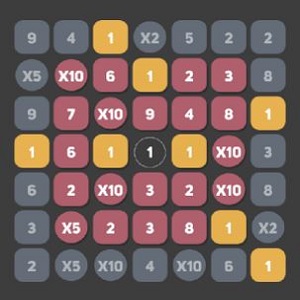
Several games in the tag ask players to decode a rule set through repeated trials. Little Alchemy 2 and Alchemy are built around combining elements until new outcomes appear, while Get 1000 pushes players to understand how identical values merge into larger ones. Chuzzle and Block Champ rely on alignment and board control, but they approach logic from different angles: one is about shifting pieces into useful arrangements, the other about fitting shapes into a board without wasting space.
These games are appealing because progress usually comes from understanding, not memorizing. A successful move in Cups – Water Sort Puzzle often depends on preserving future options, and that same thinking appears in the more compact rules of Chain Reaction. Even when the interface is minimal, the player is constantly evaluating cause and effect.
Precision, Timing, and Ordered Steps
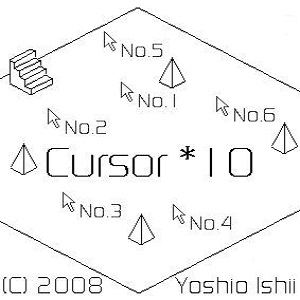
Logic games are often mistaken for static brain teasers, but many of the games here depend on careful execution. Cut the Rope uses physics and sequence together, since the player has to release ropes in the right order and anticipate movement. Cursor * 10 and Frog Rush are more demanding in a different way, because the challenge is not just knowing the answer but carrying it out cleanly through controlled movement.
That same structure appears in Blue Game and Red Game, where the apparent simplicity hides a need for exact timing and an understanding of how each level’s rules constrain movement. In Xor, the logic is even more abstract, pushing players toward systematic thinking rather than improvisation. These games show that logic design can be fast without becoming loose; every action has to land in the right place at the right moment.
Exploration Through Trial, Combination, and Discovery
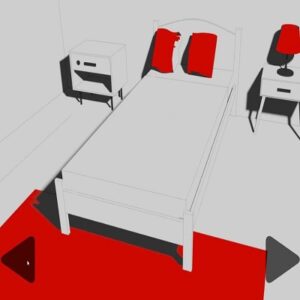
Some of the most memorable entries in the tag create logic from exploration. Little Alchemy 2 is the clearest example, since its structure encourages experimentation until a hidden recipe becomes obvious. Alchemy uses the same broad appeal in a more compact form, while A Dark Room expands the idea into a slower, text-driven system where uncovering the next step is part of the challenge. The White Room and Scarred also fit this pattern, relying on observation, environmental clues, and puzzle-solving in confined spaces.
What links these games is the satisfaction of turning uncertainty into a working model. Players are not just solving a single puzzle; they are learning how the world behaves. That makes the first few minutes feel very different from later stages, because knowledge itself becomes the main form of progression.
Stealth, Traps, and Consequences in Motion
Not every logic game is abstract. Bob the Robber 3 and Bob the Robber 4 translate logic into stealth, where watching guard patterns and choosing safe routes matters more than direct confrontation. The player is solving a spatial problem under pressure, and the correct answer changes as patrols, locks, and hazards move through the level.
Trollface: Quest Horror 2 uses a different kind of reasoning, leaning into absurdity and unexpected solutions, but it still depends on reading the designer’s trick rather than reacting instinctively. This part of the tag tends to attract players who enjoy systems with hidden rules, where mistakes are informative and progress comes from narrowing down possibilities.
Why the Logic Tag Stays So Varied
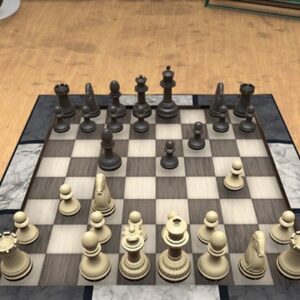
The strength of the Logic tag is that it covers multiple kinds of thinking without losing its identity. 3D Chess is deliberate and competitive, Chain Reaction is chain-based and reactive, Get 1000 is combinational, and Bob the Robber 4 is route-based and tactical. Yet all of them ask the same core question: what happens if this move is made now?
That shared design creates a wide range of difficulty. Some games welcome experimentation immediately, while others demand a strong grasp of the board from the first move. Some punish waste, some reward foresight, and some reshape the rules after every small success. Taken together, the Logic tag shows how many different forms careful thinking can take inside browser games.
 ParkOut: Traffic Escape
 Arrow Puzzle
 Chain Reaction
 Cyber Arrows: Brain Puzzle Game
 WorldGuessr
 Mazes Draw The Path
 Screw Masters 3D Puzzle
 Mine Quest Daily
 Arrow Escape: Puzzle
 Royal Pin
 2048 Rogue
 Block Blast
 Wordle
 GeoGuessr
 Trap The Cat
 Crunch Lock
 Airport Security
 SchoolBoy Runaway
 Golf Puzzle
 Oneli
Oneli
 Maze 3D
 Mahjongg Solitaire
 Pull The Pins
 Dominoes Classic
 Cut the Rope
 Blue Game
 Classic Backgammon
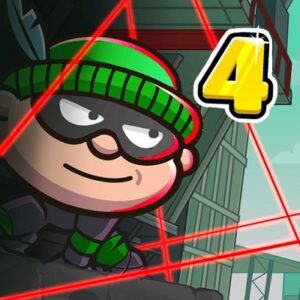 Bob the Robber 4
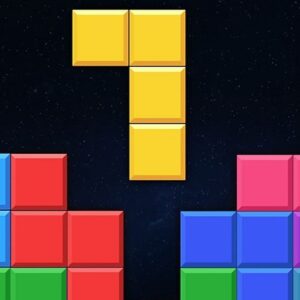 Block Champ
 Chuzzle
 Red Game
 Mahjong Real
 Cursor * 10
 Atlas Quiz
 Blackjack
 Cups – Water Sort Puzzle
 Frog Rush
 Get 1000
 3D Chess
 Alchemy
 Trollface: Quest Horror 2
 The White Room
 Taylor Swift 2048
 Little Alchemy 2
 Reversi
 Bob the Robber 3
 Xor
Xor
 A Dark Room
 Google Memory Game
 Flags of the World Quiz