Police Chases, City Control, and Getting Out Alive
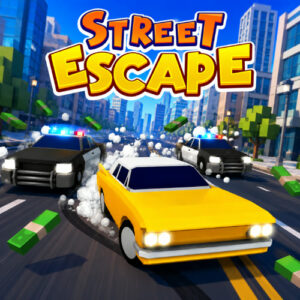
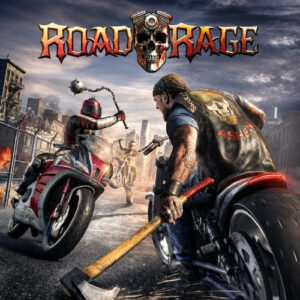
The Police tag brings together games built around pursuit, enforcement, and the friction that happens when vehicles or characters try to move through a city under pressure. In Escape Road, Escape Road 2, Escape Road 3, Escape Road City, and Escape Road City 2, the core tension comes from being chased through traffic-heavy streets and trying to survive longer than the police response can contain you. That same pressure appears in different forms across the tag: Road Rage pushes aggressive driving, Street Escape leans into running from danger, and Skate Hooligans shifts the chase onto a more erratic, obstacle-filled route. The common thread is not just law enforcement as theme, but police as a gameplay force that changes how movement is planned.
These games often ask players to react quickly while reading the city as a system. Roads, intersections, barriers, and traffic become more important once police units begin closing space. The tension is less about raw speed than about staying unpredictable, finding gaps, and making decisions before the chase tightens.
Chases Built Around Movement Rather Than Combat
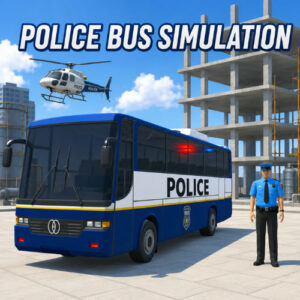
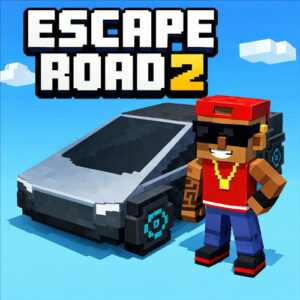
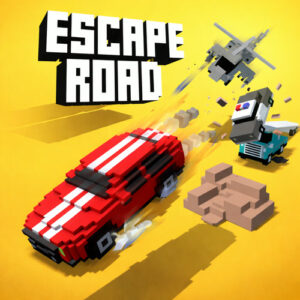
Several games in the Police tag treat movement itself as the main skill. Escape Road and its sequels are built around driving away from pursuit, while 3D Car Simulator and City Car Driving Simulator focus more on controlled driving in urban environments where mistakes matter. Police Bus Simulation adds a different angle by placing the player inside a service vehicle rather than a getaway car, which changes the rhythm from escape to route management and compliance.
This creates a tag where vehicle handling matters as much as the police theme. Some games reward sharp turns and momentum, while others depend on steady steering, braking, and keeping a vehicle aligned with the road. The result is a collection that covers both arcade-style evasions and more grounded driving behavior.
When the City Becomes the Obstacle
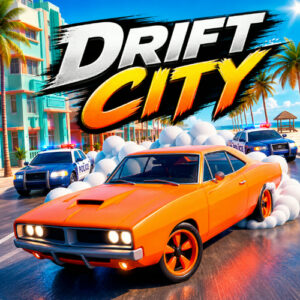
The urban setting is doing a lot of work in these games. Crowded streets, narrow lanes, and traffic patterns create pressure before police even enter the frame. Drift City and Road Rage use the street environment to support high-speed movement and aggressive driving choices, while Escape Road City and Escape Road City 2 turn the map into a maze of exits, obstacles, and shortcuts. In Dude Theft Auto and Deer Adventure, the city becomes more chaotic and open-ended, allowing police presence to interact with general sandbox mischief rather than a single chase route.
That city-first design gives the tag a specific identity. Police are not just enemies; they are one part of a wider pressure system that includes traffic, geography, and player-caused disorder. In games like Skate Hooligans, the setting is stripped down into a running lane, but the idea remains the same: the environment determines how much room there is to escape.
Simulation, Rules, and Sideways Control
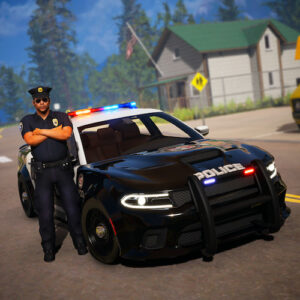
Not every game under Police treats law enforcement as pure pursuit. Police Simulator and Police Bus Simulation place players closer to the enforcement side of the theme, where the focus shifts toward procedure, vehicle control, and staying within the structure of a role. That is very different from the anarchic energy of Pato Vs Cops, which uses the police idea in a more playful conflict setting, or the sandbox behavior of Dude Theft Auto, where the world encourages disorder rather than order.
This contrast matters because it broadens the tag beyond chase games. Some entries are about resisting police, while others are about performing a police role or operating within a system that resembles one. The shared element is authority in motion, but the player’s position relative to that authority changes the entire feel of play.
Chaos, Stunts, and Mischief Under Pressure
The Police tag also attracts games that lean into playful disruption. Road Rage and Pato Vs Cops emphasize confrontation rather than careful compliance, while Dude Theft Auto and Deer Adventure sit closer to open-ended chaos, where police response becomes one of the consequences of misbehavior. These games are less interested in tidy objectives and more interested in what happens when the player pushes systems until the police react.
That makes the tag appealing to players who enjoy indirect goals. Instead of following a straight mission path, they experiment with speed, collision, movement tricks, or reckless behavior and then deal with the response. The police presence gives structure to that freedom by making actions feel consequential.
Skill Sets That Repeat Across the Tag
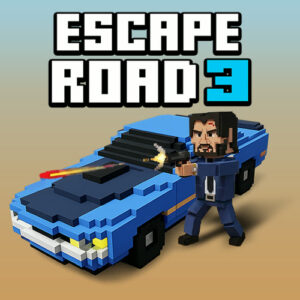
Across these games, a few skills appear again and again. Spatial awareness matters in Escape Road 3, Street Escape, and Skate Hooligans, where the player needs to read incoming obstacles and open routes. Vehicle control is essential in 3D Car Simulator, City Car Driving Simulator, and Police Bus Simulation, where precision is often more useful than raw acceleration. In the more chaotic entries, such as Dude Theft Auto and Deer Adventure, timing and improvisation become more important because the player is responding to unpredictable outcomes rather than following a fixed path.
- Awareness for tracking police position and map layout
- Control for steering, braking, and positioning vehicles
- Adaptation when a chase changes direction suddenly
- Risk management when choosing whether to keep escaping or slow down
That mix gives the Police tag a broad range without losing its identity. Whether the game is a chase, a simulator, or a sandbox, police functions as a pressure point that changes how every move is judged.
 Police Bus Simulation
 Skate Hooligans
 Street Escape
 Road Rage
 Drift City
 Pato Vs Cops
 Police Simulator
 Escape Road 3
 Dude Theft Auto
 Deer Adventure
 Escape Road City 2
 Escape Road City
 Escape Road 2
 Escape Road
 3D Car Simulator
 City Car Driving Simulator
 Amazing Strange Rope Police


'/%3E%3Cpath%20fill='%23b2b2b2'%20d='M241%20382q0%2016%2017%2026%2017%2011%2042%2011t42-11q16-11%2017-26V269H241'/%3E%3Cpath%20fill='%239f7e00'%20d='M241%20379q0%2014%208%2023%209%209%2021%209%2014%200%2021-9%209-9%209-23V269h-59'/%3E%3Cpath%20d='M241%20339v-70h59v110q0%2014-9%2023l-6%205v-68h-15v72q-8%200-14-4v-68zm59%2040c0%2022%2015%2032%2029%2032%2021%200%2030-18%2030-32v-40h-59'/%3E%3Cpath%20fill='%239f7e00'%20d='M266%20277v5h2v12h-3v-5h2v-5h-9v5h2v5h-4v9h3v18h-5v10h34v-10h-5v-18h3v-9h-4v-5h2v-5h-9v5h2v5h-3v-12h2v-5zm42%20101q0%2010%206%2017%206%206%2015%207%2010-1%2016-7%206-7%206-17v-29h-43'/%3E%3Ccircle%20fill='%230044ad'%20cx='329.5'%20cy='372'%20r='6'/%3E%3Cellipse%20fill='%230044ad'%20cx='300'%20cy='340'%20rx='16'%20ry='21'/%3E%3C/svg%3E)


