Platform Games Built Around Movement, Timing, and Route Planning
The Platform tag brings together games that ask players to control movement with precision while reading the layout of each stage. In this collection, that idea appears in very different forms. Vex 4 and Vex 7 focus on sharp obstacle courses and rapid resets, while Vector Rush, Obby Blox Parkour, and JustFall.LOL push movement into more unstable, reactive spaces. Doodle Jump 2 and N Game lean into momentum and vertical traversal, while Lode Runner and Monkey Quest show how platforming can support maze-like navigation and light exploration as well as dexterity.
What ties the tag together is not a single visual style but a shared demand for control. Good platform games make every jump, landing, and wall interaction matter. Some are built for clean repetition, others for improvisation under pressure, but all of them turn space itself into the main challenge.
Precision Platforming as the Core Skill
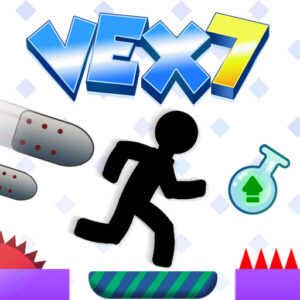
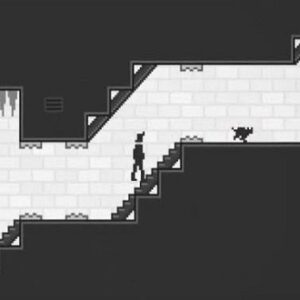
A large part of the tag is built on exact movement. Vex 4, Vex 7, and Rotate are designed around narrow windows for success, where a mistimed jump or a slightly late correction can send the player back to the start of a section. CircloO and CircloO 2 present a different kind of control problem, using rolling momentum and circular stage design to make movement feel less like running a straight line and more like managing physics with care.
That emphasis on precision gives these games a strong skill curve. Early stages usually teach basic timing, but later layouts demand confidence in movement rhythm, recovery, and route memory. The player is not simply reacting to obstacles; they are learning how each game’s movement rules behave under pressure.
Momentum, Physics, and Unusual Stage Shapes
Several games in the tag stand out because they treat platforming as a physics puzzle rather than a pure reflex test. CircloO 2 and CircloO revolve around circular motion and growth-based traversal, which changes how players think about direction and speed. Rotate similarly uses the environment as part of the challenge, encouraging players to read shifting angles instead of relying on standard left-to-right movement. Doodle Jump 2 and N Game build on upward movement and momentum management, where forward progress depends on the ability to keep the character in motion without losing control.
This group is important because it broadens the meaning of platforming. In these games, the platform is not only a surface to stand on. It becomes a system to manipulate, and success often comes from understanding inertia, bounce, and positioning rather than speed alone.
Chasing the Fast Route Through Hazardous Levels
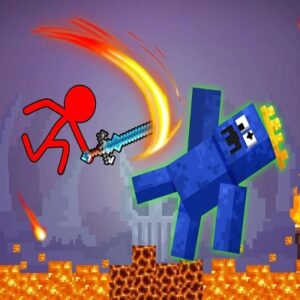
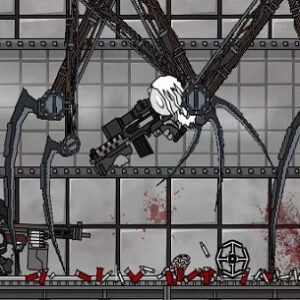
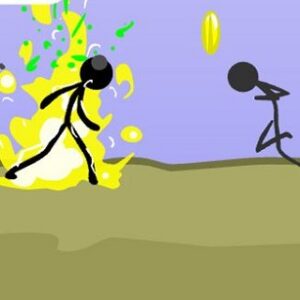
Some platform games in this tag are built around pace as much as precision. Vex 4, Vex 7, and Rage 2 reward quick restarts and clean execution, which makes failure part of the rhythm rather than a major setback. Stickman Epic and Choppy Orc add combat or hazard pressure to that formula, so movement must stay sharp while the player deals with enemies or environmental threats. Thing Thing 4 pushes the action side even further, blending traversal with fast-paced encounters.
That combination attracts players who enjoy repetition with visible improvement. The challenge lies in reducing hesitation: learning the safest jump angle, the best landing point, or the route that avoids unnecessary risk. In these games, the fastest solution is rarely the most obvious one on the first attempt.
Platforming as Puzzle Navigation
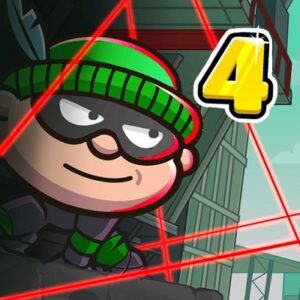
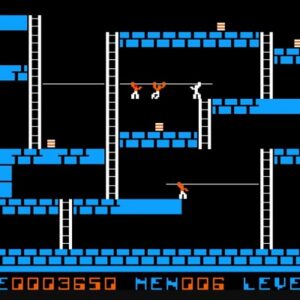
Not every game in the tag is centered on speed. Lode Runner, Bob the Robber 3, and Bob the Robber 4 use platform movement to support stealth, route solving, and controlled exploration. Rather than asking the player to survive a sequence of jumps, they build layouts where timing and path choice matter as much as movement skill. Monkey Quest also fits this pattern by pairing traversal with adventure structure, giving platforming a broader sense of progression.
These games show how platform mechanics can support planning. Players often need to observe patrols, identify safe openings, or decide when to take a higher route versus a hidden one. The movement is still important, but it works alongside problem-solving instead of replacing it.
Competitive Pressure and Unstable Arenas
A few titles in the tag shift platforming into direct competition. Territory War and JustFall.LOL place players in environments where control matters because other players are creating disruption at the same time. In JustFall.LOL, the platform itself becomes temporary and unstable, so survival depends on adaptation and positioning. Territory War uses platform-like spaces for contested encounters, where staying alive often means understanding angles, spacing, and when to move aggressively.
These games add a social layer to the usual platform formula. Instead of reading only the stage, players must also react to human opponents, which makes movement less predictable and often more tactical.
Why the Platform Tag Still Feels So Varied
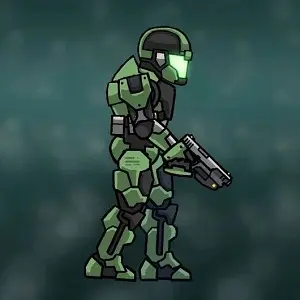
The range inside Platform is broader than it first appears. Obby Blox Parkour and Vector Rush emphasize clean obstacle running, Vex 7 and Vex 4 focus on precision under pressure, CircloO 2 and Rotate lean into physics and spatial awareness, while Bob the Robber 3, Bob the Robber 4, and Lode Runner show how traversal can support stealth and planning. Even the more action-heavy games such as Raze 3, Thing Thing 4, and Rage 2 keep platform movement central to their pacing.
That variety explains why the tag remains so flexible. Some players want strict execution, others prefer exploration or puzzle routes, and others enjoy the tension of moving through dangerous spaces while reacting to combat or competition. The shared language is movement, but the uses of that language vary widely across the games in the collection.
 Vex 9
Vex 9
 Pogo Masters
 Blocky Xtreme
 Pixel Path
 Sphere Rush
 Sonic Mania Plus
 Obby: Supercar Race on a Giant Keyboard
 Shape Rush
 Roblox Parkour Adventure
 +1 Speed Monkey Escape
 Bullet Bro
 Super Bear Adventure
 Neon Rush
 Run And Jump For Brainrot
 Short Life 2
 Track Dash
 Red Ball 4
 Geometry Dash Funhouse
 Don’t Get Crushed By 67
 Escape Animals
 Bottle Hop
 EscapeLava.io
 Happy Wheels
 Survive Lava for Brainrots!
 Hollow Knight: Silksong
 Hollow Knight
 Parkour Online
 Cactus McCoy
 Little Nightmares
 Neon Leap
 Primary
 Big FLAPPY Tower VS Tiny Square
 2 Player Tag
 Strike Force Heroes
 Strike Force Heroes 2
 Trap Adventure 2
 Territory War
 Vex 4
Vex 4
 Raze 3
 Stickman Epic
 Vex 7
Vex 7
 Bob the Robber 4
 Rotate
 Vector Rush
 Lode Runner
 Monkey Quest
 CircloO 2
 Thing Thing 4
 JustFall.LOL
 Rage 2