Management Games Turn Small Decisions Into Constant Trade-Offs
The Management tag brings together games that are less about reflexes and more about keeping systems in motion. In this group, the player is usually expected to organize money, space, time, customers, upgrades, and expansion at the same time. Farming Simulation Game, Supermarket Simulator: Desert, Waterpark Simulator, and Capybara Mart all point toward the same core idea: the appeal comes from building something that functions well, then improving it piece by piece.
What makes this tag broad is the variety of settings wrapped around the same loop. A farm, a supermarket, a waterpark, a food business, or even a park built around internet humor all rely on the same pressure points. My Perfect Farm: Idle Tycoon and Astro Tycoon lean into growth systems, while Food Truck: Cooking Games and Idle Vlogger Simulator focus more on throughput and repeated decisions. The player is not just watching numbers rise; they are deciding where efficiency matters most.
Idle Growth and Hands-On Oversight Sit Side by Side
Several of these games use idle progression to soften the workload without removing management entirely. My Perfect Farm: Idle Tycoon and Idle Vlogger Simulator suggest a structure where income continues or accumulates while the player returns to make upgrades, reassign priorities, or unlock new layers. That is a very different rhythm from a purely active sim, but it still depends on planning. Idle systems reward timing as much as patience.
By contrast, Supermarket Simulator: Desert and Food Truck: Cooking Games imply tighter moment-to-moment control, where stock, service, or preparation need regular attention. That contrast is one of the defining features of the management tag: some games ask for constant intervention, while others create a cycle of checking in, optimizing, and expanding. The satisfaction comes from seeing both models work toward the same end.
Stores, Parks, and Farms Share the Same Operational Logic
At first glance, Capybara Mart, My Waterpark, and Farming Simulation Game seem to live in different genres. In practice, they are all about layout and flow. Where do customers or resources go first? Which upgrades improve efficiency? What needs to be expanded before bottlenecks appear? These games often turn simple spaces into systems that must be arranged carefully.
Waterpark Simulator and My Waterpark emphasize attractions and visitor movement, while Farming Simulation Game likely centers on production chains and land use. The management challenge changes shape, but the thinking remains similar: placement affects output, and output affects growth. Games like Capybara Mart add a lighter presentation, yet the underlying loop still depends on maintaining order.
Tycoon Structures Reward Expansion, Then Force Reorganization
Tycoon-style games in this tag, including Astro Tycoon and My Perfect Farm: Idle Tycoon, tend to begin with a simple operation and gradually introduce more layers that need supervision. Early decisions are often straightforward. Later, the challenge becomes less about starting a business and more about managing complexity as the business scales. Growth creates new responsibilities instead of just higher profits.
That pattern also appears in games like Brainrot Park and Grow a garden for Brainrots, which appear to use unusual themes without abandoning familiar building logic. Once enough systems are in motion, the player has to rethink priorities: upgrade this first, expand that later, or keep one area stable while another grows. Management games often become more interesting after the first layer of success, when organization matters more than survival.
Online Competition Adds Pressure to the Usual Management Loop
Not every game in the tag is about solitary optimization. Meeland.io, FrontWars.io, Fish It Online, and Escape Tsunami Brainrots Online suggest more public or competitive structures, where players are managing under pressure from other people or from shared conditions. In these games, decision-making can be faster and less predictable than in a standard sim.
That shift changes the meaning of management. Efficiency still matters, but so does adaptation. Fortress Clash hints at controlled conflict, while Steal a Brainrot Online adds a more aggressive social layer. Instead of building in isolation, the player may need to defend resources, react to opponents, or make choices that account for interference. Management becomes less orderly, but also more reactive.
Unexpected Themes Keep the Genre Flexible
One of the stronger patterns in this tag is how easily management systems adapt to unusual subjects. Shift At Midnight and BLOODMONEY! suggest that the same scheduling, resource, and decision frameworks can support much darker or more unusual premises than farms and shops. The mechanics stay recognizable even when the tone changes.
That flexibility helps explain the range of players drawn to management games. Some want calm progression and a sense of control; others want a structured challenge built around efficiency; others prefer social or competitive pressure. Whether the game is about a desert supermarket, a capybara-themed shop, a park, or a battlefield-like strategy layer, the underlying appeal is the same: keeping a system working while making it better at the same time.
 E-Life Simulation
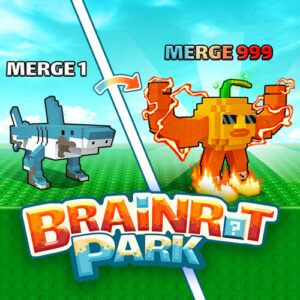 Brainrot Park
 Grow a garden for Brainrots
 Idle Vlogger Simulator
 Shift At Midnight
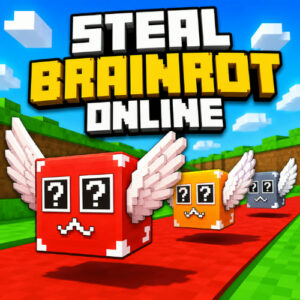 Steal a Brainrot Online
 Food Truck: Cooking Games
 My Waterpark
 My Perfect Farm: Idle Tycoon
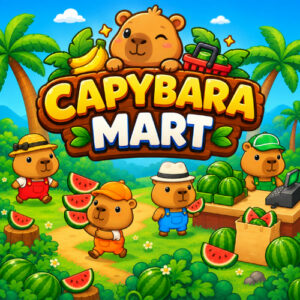 Capybara Mart
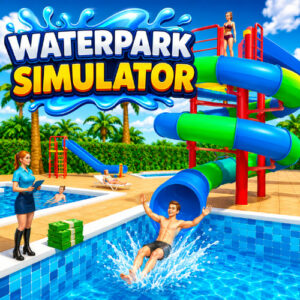 Waterpark Simulator
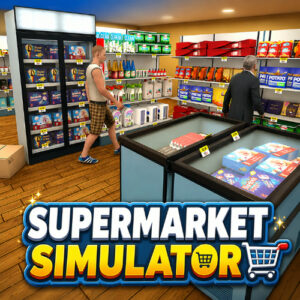 Supermarket Simulator: Desert
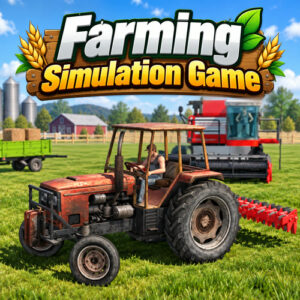 Farming Simulation Game
 Meeland.io
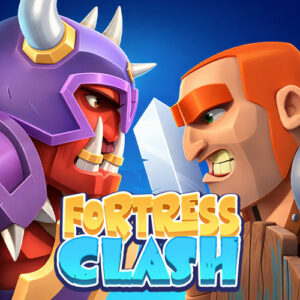 Fortress Clash
 Astro Tycoon
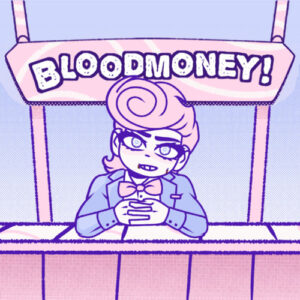 BLOODMONEY!
 Escape Tsunami Brainrots Online
 Fish It Online
 FrontWars.io
 Jacksmith
 Lemonade Stand
 Hacker Simulator
 SimCity
 Computer Repair
 President Simulator
 I Want To Be A Billionaire 2
 Hotel Tycoon Empire
 BitLife
 McDonald’s Videogame