What Are 2 Player Games?
2 Player games are built around a direct, shared contest or collaboration between two participants, whether they are sitting side by side or taking turns against the same system. The appeal comes from the clarity of the format: every move matters because there is another human perspective on the other side, or a tightly balanced alternative if the game uses shared controls. In this tag, the games range from quick reflex contests like Rock Paper Scissors and Rooftop Snipers 2 to more measured head-to-head formats such as 3D Chess and Carrom Online.
Competitive Duels and Fast Readability
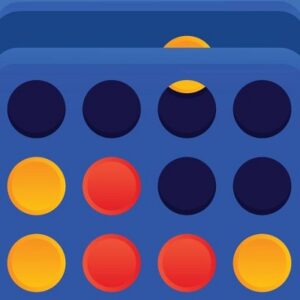
Many 2 Player games thrive on instantly readable rules and short rounds. 4 in a Row, Rock Paper Scissors, and Foosball all work because the objective is easy to grasp, yet the decisions can still be tense. The player motivation here is not complexity for its own sake, but the pressure of making a clean read under time or turn constraints. Games such as 3D Bowling, Mini Golf Club, and Carrom Online add a different layer by turning precision into the main skill. Instead of outthinking an opponent through long-term strategy, players are trying to control angle, force, and timing more consistently than their rival.
This same format can stretch in different directions. Buckshot Roulette and Cribbage lean more heavily on decision-making and risk management, while 3D Chess rewards patience and positional planning. The match structure may still be compact, but the skill ceiling changes dramatically depending on how much information the game exposes and how far ahead players need to think.
Physics, Timing, and Controlled Chaos
A large part of the 2 Player tag is built on physics-driven uncertainty. Volley Random, Soccer Physics, Soccer Random, and Rooftop Snipers 2 all ask players to react to unstable movement, unusual shot arcs, or awkward control schemes. These games are popular because they lower the barrier to entry while keeping the outcome uncertain enough that every round feels open. Beginners can win through simple timing, but advanced players start reading momentum, spacing, and recovery windows more carefully.
Auto Drive and Retro Goal show another side of this idea. One focuses on motion and handling, the other on football movement and shot selection, but both benefit from the same core skills: anticipation, positioning, and restraint. In 2 Player games, the challenge is often less about perfect execution than about controlling a situation before it turns messy.
Co-Op Problem Solving and Shared Control
Not every 2 Player game is a direct duel. Fireboy and Watergirl 5 and Bad Ice Cream are built around coordination, where two players divide responsibilities and solve levels together. These games change the social dynamic completely. Instead of reading an opponent, players must communicate, synchronize movement, and avoid blocking each other. The appeal comes from shared problem-solving, especially when levels ask both players to use their movement patterns differently.
That contrast matters when compared with competitive 2 Player games. In Superhero.io and Football Masters, the priority is to outmaneuver a rival under pressure. In Fireboy and Watergirl 5, success depends on timing actions so both characters progress at once. The same tag can therefore support either cooperation or confrontation, which is one reason the format stays flexible across genres.
Why Players Keep Returning To 2 Player Games
Players come back to 2 Player games because they create immediate stakes without requiring long setup. A round of Flags Quiz can turn into a knowledge test between two players, while Cribbage and 3D Chess reward memory and planning over time. Faster games such as Volley Random or Soccer Physics are more about momentum and adaptation, which makes them good for repeated rematches. In both cases, the appeal lies in the feedback loop: one player learns the other’s habits, then adjusts.
Skill growth in this tag is often easy to feel. New players start by understanding the rules, but repeated play reveals deeper patterns: better angle control in Mini Golf Club, stronger positioning in Foosball, safer risk choices in Buckshot Roulette, or more efficient coordination in Bad Ice Cream. That progression, whether competitive or cooperative, is what gives 2 Player games lasting appeal.
Frequently Asked Questions
Are 2 Player games always competitive?
No. Some, like Fireboy and Watergirl 5, are cooperative.
Do 2 Player games need advanced skills?
Not always. Many are simple to learn but hard to master.
Why are physics-based 2 Player games so common?
They create unpredictable moments that keep rematches fresh.
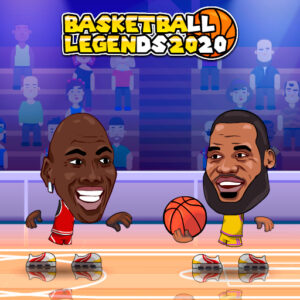 Basketball Legends 2020
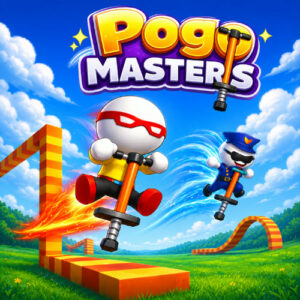 Pogo Masters
 Flags Quiz
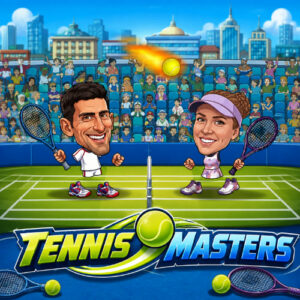 Tennis Masters 2026
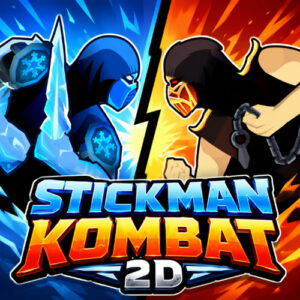 Stick Kombat 2D
 Flip Duel
 Baseball Bros IO
 Bowmasters Archery Shooting
 Kick Lucky Blocks Online
 Lucky Brainrot Blocks Online
 Racing: Online!
 Tube Fight
 Wrestle Bros
 World Cup Soccer Caps
 Two RX7 Drifters
 Soccer Legends 2026
 Ragdoll Archers
 Kart Bros
 Football Bros
 Steal a Car
 Escape School Duel
 Car Chaos
 Pokémon Overlord
 Ragdoll Arena
 2 Player Tag
 Sports Heads Soccer
 Tube Jumpers
 Dominoes Classic
 Table Tennis World Tour
 Penalty Shooters 3
 Volley Random
 Classic Backgammon
 Penalty Shooters 2
 Auto Drive
 Mini Golf Club
 Superhero.io
 Basketball FRVR
 3D Bowling
 Carrom Online
 3D Chess
 Family Feud
 Buckshot Roulette
 4 in a Row
 Rock Paper Scissors
 Rooftop Snipers 2
 Reversi
 Fireboy and Watergirl 5
 Doodle Cricket
 Retro Goal
 Football Masters