Strategy Games Built Around Position, Planning, and Pressure
The Strategy tag brings together games that reward thinking ahead rather than simply reacting fast. Across the selection, the core appeal comes from making one decision affect several turns or several minutes of play. Dice Wars, State.io, and Superhex.io focus on map control and expansion, while 3D Chess and World Wars 2 lean more heavily on turn structure and direct tactical planning. Even when the presentation changes, the same pattern appears: players are asked to manage limited options, read the board, and create advantage through careful timing.
There is also a clear range of pace inside the tag. Some games demand quick territorial choices in real time, while others let the player study a puzzle-like layout before committing to a move. That variety is one reason the strategy category stays broad. It can support short sessions built around simple but tense decisions, as well as longer systems involving armies, base growth, and persistent progression.
Territory, Expansion, and Control of the Board
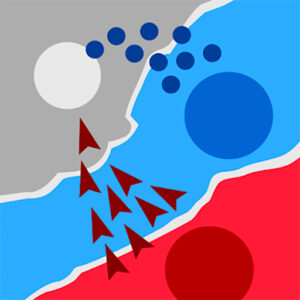
A major thread in this tag is territory management. State.io: Conquer the World, State.io, Superhex.io, and Dice Wars all turn the map itself into the main resource. The challenge is not only taking space, but doing it without overextending. A player who expands too quickly becomes vulnerable, while a cautious player may lose momentum and fall behind.
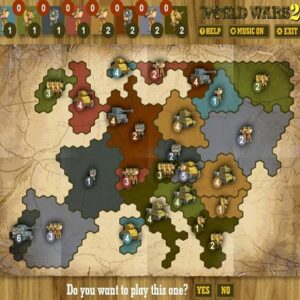
Castlesiege.io follows the same broad logic, but frames it through competitive conquest rather than pure abstract control. World Wars 2 and Warlords 2 (Rise of Demons) push this further by linking territory to military pressure, where positioning armies or units matters as much as the final attack. In these games, the board is never just scenery; it is the main strategic object.
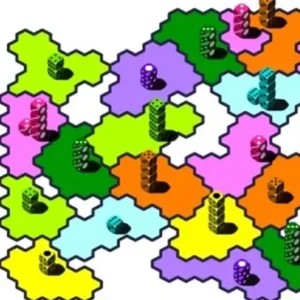
- Dice Wars emphasizes risk management through limited attacks and probabilistic pressure.
- State.io and State.io: Conquer the World focus on spreading control and defending new ground.
- Superhex.io rewards careful pathing and area capture.
- World Wars 2 and Warlords 2 (Rise of Demons) add a more military layer to conquest.
Turn-Based Thinking and Tactical Patience
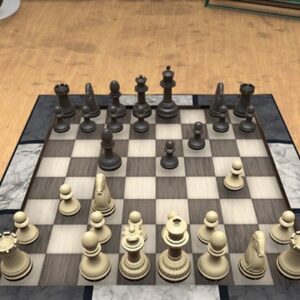
Games such as 3D Chess, World Wars 2, and Mahjong Connect 2 highlight a slower, more deliberate side of strategy. Instead of rushing players, they ask them to analyze the current state and evaluate consequences. In chess-style play, each move alters the position in a way that can matter several turns later. In tile-matching strategy like Mahjong Connect 2, the challenge is not battlefield planning, but pattern recognition and path reading under spatial restrictions.
Chat Noir sits close to this puzzle-strategy space as well, where the player must work through a constrained layout and plan several steps ahead. Icy Purple Head also uses a puzzle structure, but the strategic layer comes from timing and environmental interaction rather than classic combat. These games show that strategy is not always about armies; it can also be about sequencing, layout control, and efficient use of the space available.
Growth Systems That Turn Progress Into a Long-Term Problem
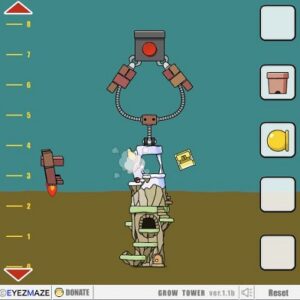
Several games in the tag build strategy through progression. Elvenar and A Dark Room are good examples of games where expansion depends on how well the player organizes resources and unlocks new systems over time. Grow Tower uses a different kind of progression, but the principle is similar: each choice changes the future state of the playfield, and the challenge is to arrange elements in a productive order.
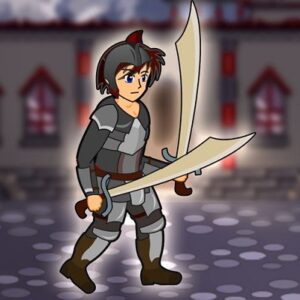
Feudalism 3 and Dynamons World bring progression into combat planning. The player is not only choosing actions in the moment, but also building a stronger roster, party, or character path. That creates a second layer of decision-making, since the best immediate move is not always the best long-term investment. Strategy players often return to these games because growth itself becomes part of the puzzle.
Defense, Waves, and Managing Escalation
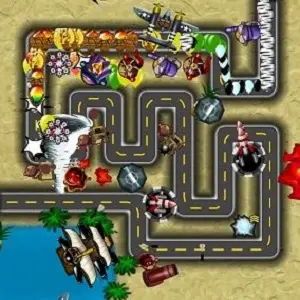
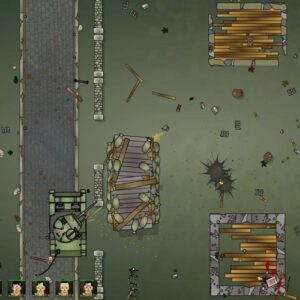
Another important pattern is defense under pressure. Bloons Tower Defense 4 Expansion is the clearest example in the list, with its focus on placing defenses and adapting to increasingly demanding waves. The strategic work lies in timing upgrades, reading route pressure, and responding to changes before the map becomes overwhelmed. Mud and Blood 3 carries that same tension into a wartime setting, where holding a position and surviving attrition matter as much as attacking.
These games appeal to players who enjoy plans that are tested over time. Early choices matter, but later waves or encounters reveal whether those choices were sound. That creates a strong sense of structure: preparation, observation, correction, and then another round of adjustment. The strategy comes from staying stable while the difficulty climbs.
Asymmetric Goals and Offbeat Problem Solving
Not every game in the tag is built around direct conflict. Bob the Robber 2 approaches strategy through stealth and route planning, where the objective is to move through a space without being caught. Dark Orbit adds a different flavor, mixing combat positioning with player-vs-player decision-making and ongoing route choice. In both cases, the player is constantly weighing exposure against progress.
Elvenar, A Dark Room, and Feudalism 3 also support strategy through structure rather than speed. They ask players to think about what to build, what to improve, and when to commit. That kind of play suits anyone who prefers systems that reward patience, pattern recognition, and controlled risk over immediate action.
 Plants vs Zombies Hybrids
 Robber Run
 Dice Wars
 Cyber Arrows: Brain Puzzle Game
 Paint Hide and Seek
 Chameleon Hideout
 Fortress Clash
 Garfield War
 Count Masters
 Stick Hero RPG
 2048 Rogue
 FrontWars.io
 Get Yoked
 Plants Vs Zombies
 Clash of Vikings
 Rob a Car
 Pereelous
 Pokémon Emerald
 Five Nights at Epstein’s
 Stickman Empires
 Pokémon Overlord
 PokéPath TD
 Dynamons World
 Dark Orbit
 World Wars 2
 Grow Tower
 Castlesiege.io
 3D Chess
 The Oregon Trail
 Hacker Simulator
 Chat Noir
 A Dark Room
 Bloons Tower Defense 4 Expansion
 SimCity
 Icy Purple Head
 Elvenar
 State.io: Conquer the World
 Feudalism 3
 State.io
 Mud and Blood 3
 Parcheesi
 Superhex.io
 President Simulator
 Bob the Robber 2
 Warlords 2 (Rise of Demons)
 Mahjong Connect 2
 Ludo King
 Bloons Tower Defense 2
 Krew.io
 Hanafuda