Stickman Games Built Around Movement, Combat, and Simple Shapes
Stickman games rely on a stripped-down visual style, but the mechanics underneath are often much more demanding than the art suggests. Across Vex 4, Vex 7, Stickman Parkour, and Vex 2, movement becomes the core skill: timing jumps, reading hazards, and keeping momentum through obstacle-heavy levels. That same clarity helps combat-focused titles such as Stick Fighter, Stickman Fighter: Epic Battle, Electric Man, and Rage stay readable even when fights become fast and chaotic.
The tag also includes games with very different goals, from the puzzle-like logic of Stick Escape School to the physics-driven unpredictability of Shopping Cart Hero and the aim-based precision of Stickman Archery. That variety is part of the appeal: the stickman format can support pure platforming, brawling, stealth, progression, and short challenge loops without needing complicated presentation.
Platforming Turns Minimal Art Into Exact Timing
The strongest platforming games in the Stickman tag use simplicity to keep attention on movement itself. Vex 4 and Vex 7 build long obstacle courses around spikes, traps, wall jumps, and momentum management, while Stickman Parkour pushes the same idea into a more direct athletic format. Vex 2 shows how the formula works even in an earlier, leaner structure: the player is always learning the layout, then repeating it with cleaner execution.
These games reward observation as much as reflexes. A successful run depends on reading the level before committing to a jump, because one mistimed move can undo a lot of progress. The stickman style supports that structure well, since the stages remain easy to parse even when hazard density increases.
Fights in the Stickman Tag Usually Favor Clarity Over Clutter
Combat games in this collection tend to focus on readable animations and direct encounters rather than elaborate systems. Stick Fighter, Stickman Fighter: Epic Battle, and Electric Man all use the stickman body as a frame for attacks, dodges, and combo timing. Rage and Rage 2 lean into a rougher, more aggressive style, where positioning and pressure matter as much as attack selection.
Because the characters are visually simple, the games can emphasize impact. That makes blocks, counters, launchers, and special attacks easier to read in the middle of fast exchanges. The result is a fighting-game feel that stays approachable, even when the action becomes dense. For players who like quick rounds and immediate feedback, the stickman format removes visual noise without removing challenge.
Progression and Combos Add Structure Between Quick Rounds
Not every Stickman game is about surviving a single stage or winning one fight. Stick Merge and Epic Combo add progression systems that encourage repetition, upgrading, and chaining actions into stronger results. That changes the rhythm of the tag: instead of only reacting to obstacles or enemies, players also manage growth over time.
Stick Merge suggests a more strategic layer built around combining units or elements, while Epic Combo points toward scoring and chain-building. These designs appeal to players who like watching small gains accumulate into broader improvements. Even when the moment-to-moment action stays simple, the long-term structure creates another reason to keep playing.
Precision Aiming and Stealth Fit the Format Well
The stickman look also works well for games where one careful action matters more than constant movement. Stickman Archery turns aim and arc judgment into the main challenge, while Tactical Assassin uses patience, positioning, and deliberate targeting. The Torture Chamber 2 sits closer to the darker side of the tag, where the interaction is still built around direct control and timing rather than broad exploration.
These games show a different use of the stickman style: the figure is not there to create personality through detail, but to keep attention on intent. When a shot has to land or a target has to be approached carefully, the visual design stays out of the way and lets the mechanic lead.
Comedy, Physics, and Failure Create a Different Kind of Challenge
Some of the most memorable stickman games are built on controlled messiness. Shopping Cart Hero uses physics and distance as the main source of progress, turning every launch into a test of balance and momentum. Stick Figure Badminton 2 applies the same readable body style to a sports setup where movement, timing, and reaction speed matter more than complex rules. Hangman and Stick Escape School sit further from action, but they still show how the tag can support short, focused play sessions with clear objectives.
This branch of the tag tends to attract players who want immediate feedback and a bit of unpredictability. Success is important, but so is the way failure reveals what went wrong. Whether the goal is a distance run, a rally, or a narrow escape, the stickman format keeps the outcome legible and the stakes easy to understand.
Why the Stickman Tag Keeps Spreading Across Genres
What ties Portal 2D, Vex 4, Electric Man, Stick Merge, and Tactical Assassin together is not a single mechanic but a design advantage: the stickman body can be placed into almost any kind of gameplay and still remain clear. That flexibility helps the tag cover platforming, combat, stealth, sports, physics, and puzzle-adjacent systems without losing its identity.
For some players, the appeal is speed and readability. For others, it is the ability to master timing-heavy challenges without distraction. The tag works because it supports both quick pick-up sessions and more demanding skill tests, often inside the same game. As a result, Stickman games keep evolving while still relying on the same basic visual language.
 Vex 9
Vex 9
 Stick Kombat 2D
 Vex Try To Fly
 Stumble Race
 Mr Stickman Gunner
 Vex X3M 3
 Draw Action
 Bow Battle
 Count Masters
 Stick Hero RPG
 Ragdoll Archers
 Neon Leap
 Stickman Slash
 Stickman Empires
 Stickman Battle
 Vex 4
Vex 4
 Stickman Epic
 Stickman Escape School
 Vex 7
Vex 7
 Stick Fighter
 Stickman Fighter: Epic Battle
 Rage
Rage
 Rage 2
 Vex 2
Vex 2
 Puppet Master
 Stick Merge
 Epic Combo
 Portal 2D
 The Torture Chamber 2
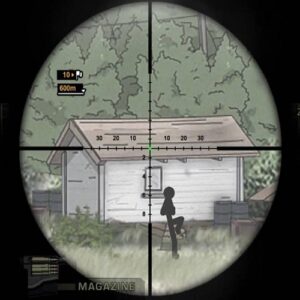 Tactical Assassin
 Stickman Parkour
 Hangman
 Shopping Cart Hero
 Stick Figure Badminton 2
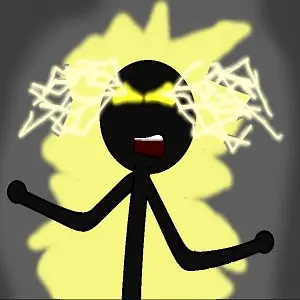 Electric Man
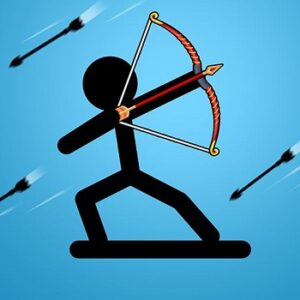 Stickman Archery
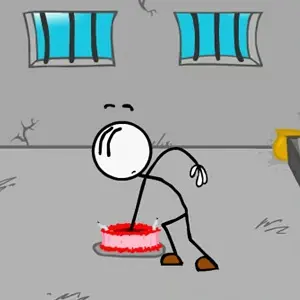 Escaping the Prison
 Vex 5
Vex 5
 Vex 3
Vex 3
 Turbo Dismounting
 Free Rider HD
 Stick RPG 3
 Stickman Battle Fight Warriors
 Stickman Fighting 3D
 Stick War
 Storm the House 3
 Free Rider Jumps
 Breaking the Bank
 Defend Your Castle
 Flip Master