Idle Games Turn Tiny Actions Into Long-Term Systems
The Idle tag gathers games that start with simple input and then expand into layered progression. Cookie Clicker, Doge Miner 2, Donut Clicker, and Pizza Clicker all use the same basic rhythm: click, earn, automate, and watch numbers climb. That structure makes the tag easy to recognize, but the collection is broader than a single clicker loop. Grindcraft, Realm Grinder, A Dark Room, and Antimatter Dimensions show how idle design can move from light resource accumulation into management, branching upgrades, and systems that demand planning over raw speed.
What defines the tag is not just inactivity, but conversion. A single action becomes income, income becomes upgrades, and upgrades reshape how the game plays without requiring constant manual control. In that sense, idle games are less about moment-to-moment execution than about setting up efficient loops and making good timing decisions.
Automation Is the Real Progression Curve
The early phase in many idle games focuses on direct interaction, but the interesting shift happens when automation takes over. Cookie Clicker 2, Money Clicker, Tube Clicker, and Pizza Clicker 2 all rely on the player first understanding the core earning method before handing more of that work to systems that run on their own. The appeal is not in endless manual clicking; it is in building a machine that eventually clicks for you in spirit, if not literally.
Idle Miner and Mineclicker lean even more heavily into this idea. Their loop centers on expanding production lines, improving output, and reducing the amount of attention needed per gain cycle. Antimatter Dimensions pushes the concept further with layered progression that makes earlier gains feed later ones, turning automation into a mathematical structure rather than a convenience feature.
Different Idle Games Use Different Kinds of Work
Some idle games are built around harvesting a single resource, while others borrow from crafting, management, or combat. Grindcraft uses a crafting-oriented structure that makes resource chaining feel like a production problem. Realm Grinder adds faction and upgrade choices that give progression a strategic shape. A Dark Room uses sparse information and gradual expansion to create a slow reveal, where each new system changes the meaning of the one before it.
Evolve and Particle Clicker show another pattern: progression framed as research or transformation rather than simple accumulation. That gives the idle loop a more experimental feel, especially compared with lighter novelty-driven titles like Doge Miner 2 or Candy Clicker. Even when the surface theme changes, the underlying structure still depends on unlocking stronger conversion rates and stacking advantages over time.
Short Sessions, Long Payoffs
Idle games suit players who want progress to continue in the background, but the genre also rewards careful check-ins. The best decisions often happen at upgrade thresholds, reset points, or moments when one investment path overtakes another. Realm Grinder and Antimatter Dimensions especially reward this kind of pacing, since their systems make it worthwhile to think beyond the current balance on screen.
At the same time, more direct titles such as Cookie Clicker, Donut Clicker, and Pizza Clicker remain readable enough for newcomers. Their loops are easy to understand even before the numbers become absurdly large. That accessibility matters, because the tag covers both casual entry points and games that gradually ask for more patience, more planning, and a better sense of when to wait versus when to spend.
The Tag Also Includes Hybrid Play
Not every game in the tag is a pure passive builder. Worms Io brings real-time movement and survival pressure into the mix, showing how idle-adjacent design can overlap with action-driven progression. That contrast helps define the tag more clearly: some games keep the player active at all times, while others make activity optional after the foundation is built.
This hybrid approach is part of the tag’s variety. A player might be drawn to the low-friction accumulation of Idle Breakout, the economy-building of Idle Miner, or the more system-heavy growth of Antimatter Dimensions. The shared thread is persistent advancement, but the methods range from tapping and upgrading to managing evolving economies and unlocking deeper mechanics.
Why Number Growth Matters So Much Here
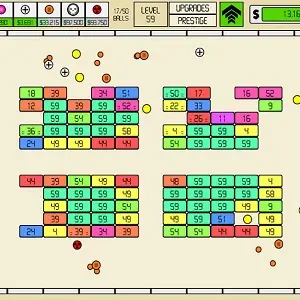
Idle games are built around visible escalation, and that escalation becomes the main source of structure. Cookie Clicker, Money Clicker, and Tube Clicker all use large numbers to show momentum, while Idle Breakout translates that momentum into escalating destruction and faster clearing. The point is not simply to increase output, but to feel the system becoming more efficient and more self-sustaining.
That constant growth also explains why the tag attracts such different audiences. Some players want a relaxed loop that can sit open in the background. Others want optimization problems, prestige-style planning, or the satisfaction of turning small actions into layered production chains. Games like Realm Grinder, Grindcraft, A Dark Room, and Antimatter Dimensions show that idle design can stretch far beyond its simplest clicker roots while still keeping progression at the center of the experience.
 Brainrot Park
 Idle Vlogger Simulator
 Incremental Racing
 My Waterpark
 Meme Mukbang: ASMR Game
 My Perfect Farm: Idle Tycoon
 67 Clicker
 Trump Clicker
 Kick a Lucky Block
 Diddy Clicker
 Meeland.io
 Lift Off 2
 Scritchy Scratchy
 Goo Goo Gaga Clicker
 Tung Sahur Clicker
 Rocket Fortress
 Epstein Clicker
 Pizza Clicker Online
 Italian Brainrot Clicker 2
 Fun Clicker
 Chill Guy Clicker
 Slap Champions
 Candy Clicker 2
 Capybara Clicker
 Cookie Clicker
 Doge Miner 2
 Donut Clicker
 Pizza Clicker
 Grindcraft
 Worms Io
 Mineclicker
 Realm Grinder
 Evolve
 Antimatter Dimensions
 Tube Clicker
 Pokemon Clicker
 Candy Clicker
 Cookie Clicker 2
 A Dark Room
 Pizza Clicker 2
 Spacebar Clicker
 Money Clicker
 Idle Breakout
 Idle Miner
 Particle Clicker
 Babel Tower
 Idle Ants
 Monopoly
 Room Clicker
 Anti Idle