Growth as a Core Game Loop
The Grow tag gathers games built around accumulation, expansion, and the pressure that comes with getting bigger. In Agario, Agario 3D, Gulper.io, Snake Io, and Hungry Shark Arena, growth is immediate and visible: every successful move adds mass, length, or dominance, while every mistake risks a rapid reset. EvoWars.io pushes the same idea into direct combat, turning size into both advantage and target. Even in single-player-focused games such as Grow Tower, Grow RPG, Grow Valley, Grow Island, and Grow Cube, the idea remains the same: progress changes the space, changes the rules, and creates new problems to solve.
That shared structure makes the tag broader than it first appears. Some games reward steady collection, some reward careful sequencing, and some reward surviving long enough to turn growth into control. The common thread is not just advancement, but the tension between being small and vulnerable versus large and influential.
Mass, Length, and Map Control
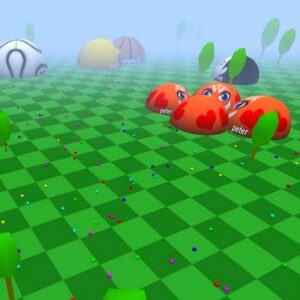
The multiplayer .io-style games in this group treat growth as territorial pressure. Agario and Agario 3D focus on absorbing smaller rivals while avoiding larger threats, which makes positioning as important as raw size. Gulper.io and Snake Io shift that same logic into snake movement, where length opens new routes but also increases the risk of trapping yourself. Digdig.io adds another layer by tying progress to movement through the environment, so the map itself becomes part of the growth process.
Hungry Shark Arena and EvoWars.io show how growth can reshape combat pacing. A stronger character can dominate open areas, yet that same visibility invites confrontation. These games are less about fixed match plans and more about reading the field, choosing when to pressure weaker targets, and deciding when to retreat before a bigger opponent appears.
Growth That Unlocks New Systems
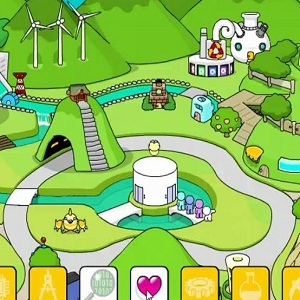
The Grow series uses expansion as a structured puzzle rather than a raw power curve. Grow Cube, Grow Island, and Grow Valley all revolve around selecting elements in the right order so that each choice affects the next one. The challenge comes from understanding dependency, not speed. A successful sequence often feels less like collecting points and more like building a functioning chain reaction.
Grow Tower takes that same logic into a vertical layout, where placement order matters because each layer changes the potential of the layers above and below it. Grow RPG extends the idea into role-based progression, making growth part of a larger system of character development. In these games, advancement is not just more of the same; it is a way of opening new interactions.
Survival Is Tied to Timing
Across the tag, growth rarely happens safely. In Classic Snake, every added segment makes movement more restrictive, so the act of growing increases the difficulty of staying alive. That same tradeoff appears in Snake Io and Gulper.io, where longer bodies improve reach and control while making collisions more punishing. The result is a constant balance between ambition and caution.
This timing element also defines the arena games. In Agario and Hungry Shark Arena, early growth creates momentum, but overextending can wipe out progress quickly. The best runs usually come from short, deliberate bursts of risk rather than nonstop aggression. That rhythm is central to the appeal of the tag: progress is satisfying because it is fragile.
Progression That Changes the Player’s Role
Some Grow-tag games do more than increase numbers; they alter how the player interacts with the system. In Grow RPG, development implies a more traditional character-building structure, where growth is tied to capability. In EvoWars.io, size changes the way a player enters fights, making each upgrade feel like a shift in battlefield role. The same is true in Agario 3D, where added mass affects how confidently a player can move through crowded space.
This is why the tag appeals to different kinds of players. Some want the clear feedback loop of starting small and becoming dominant. Others prefer the puzzle-like satisfaction of arranging a sequence correctly, as in the classic Grow games. The collection works because it treats growth as both a goal and a constraint.
 ScaleMan 3D
 Aqua Bits
 Grow a garden for Brainrots
 Farming Simulation Game
 Hole Arena
 Madness Hole
 Grow a Garden
 Garden Horizons
 Crazy Shark
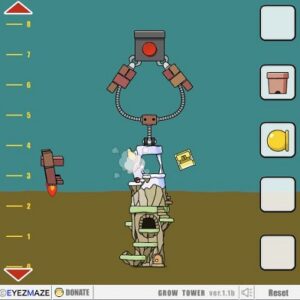 Grow Tower
 Hungry Shark Arena
 Agario 3D
 Grow RPG
 Gulper.io
 Snake Io
 Digdig.io
 Grow Valley
 Agario
 Grow Island
 Classic Snake
 Grow Cube
 EvoWars.io