What Are Arena Games?
Arena games strip play down to competition in a bounded space. The map is usually compact, the rules are clear, and the pressure comes from repeated clashes rather than long-form exploration. That structure can mean a last-survivor brawl in Hungry Shark Arena, a fast shooting lane in Krunker Io, a physics-heavy scramble in Bonk.io, or a melee free-for-all in Chaos Faction 2. Even when the surface style changes, the underlying loop is similar: enter, adapt quickly, survive contact, and come back stronger or sharper.
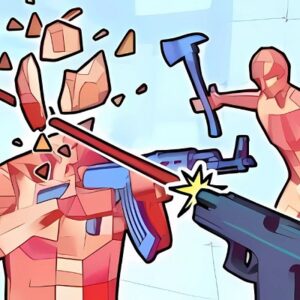
What makes the arena format durable is that it supports many different skill tests. Some games emphasize aiming and recoil control, others reward movement, timing, or crowd awareness. Time Shooter and Time Shooter 3 turn every encounter into a careful read of positioning and bullet paths, while Time Shooter 3: Swat adds tactical entries and tighter room-clearing pressure. Germs.io and Snake Io shift the focus toward growth and territorial survival, where the arena becomes a living system of threats and opportunities.
Close-Range Pressure and Instant Decisions
Arena games often compress decision-making into seconds. Thing Thing Arena 2, Masked Forces Crazy Mode, and Rage Blade all lean on direct confrontation, but they ask for different forms of control. One player may be juggling gunfire and movement in a side-scrolling fight, another trading shots in a 3D shooting space, and another relying on melee spacing and momentum. The common thread is that hesitation is punished immediately.
Zombie Derby uses that same pressure in a different way. Instead of dueling on foot, you are managing speed, damage, and survival through a hostile route. The arena idea still applies: the play space is contained, the hazards keep coming, and each attempt teaches a slightly better line through the chaos.
How Different Arena Games Handle Competition
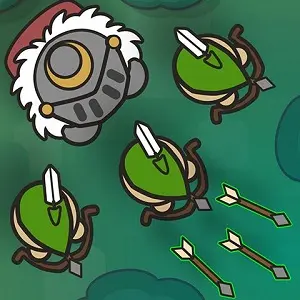
Some arena games are built around direct PvP, while others make the arena itself the opponent. Lordz.io and Starblast.io both add progression and collection to the format, but they do it differently. Lordz.io pushes expansion, unit buildup, and resource pressure, creating a broader strategic contest. Starblast.io concentrates on ship growth, resource harvesting, and combat in space, where survival depends on balancing aggression with efficient upgrading. Both reward smarter development, yet they create different kinds of tempo.
Fall Beans and Donut vs Donut lean more toward party-style competition. The challenge comes from unpredictability, awkward movement, and surviving a series of tests rather than outmuscling a single opponent in a straight fight. In these games, the arena is as much about reading the course or the chaos as it is about mastering controls.
Movement, Physics, and the Skill Ceiling
A lot of arena games become memorable because movement is not just a means of travel; it is the core skill. Bonk.io is a good example of an arena built around physics literacy. Players do not merely attack; they learn how weight, momentum, and collision shape every encounter. Narwhale.io uses similar principles in a more aggressive, streamlined form, where positioning and sudden attacks decide who controls the space.
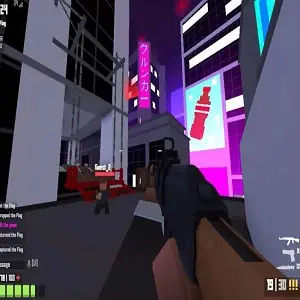
Krunker Io and Modern Blocky Paint show another side of the same idea. Their blocky visual style keeps the read clean, but the real depth comes from tracking opponent movement, snapping aim, and staying mobile under pressure. In arena shooters, the best players are often the ones who can preserve accuracy while never becoming an easy target.
Progression, Growth, and the Return Loop
Not every arena game is about a single clean duel. Many build tension through accumulation, and that progression gives players a reason to keep re-entering the same space. Snake Io turns growth into a risk-management problem: every gain makes you stronger and more vulnerable at once. Germs.io approaches the same concept from a biological angle, where expansion and contact create a constant push-pull between dominance and exposure.
This same loop appears in Hungry Shark Arena, where survival ties into feeding, growth, and the shifting threat of larger predators. The arena becomes a ladder, and the player’s job is to climb it without becoming somebody else’s meal.
Why the Arena Format Fits So Many Styles
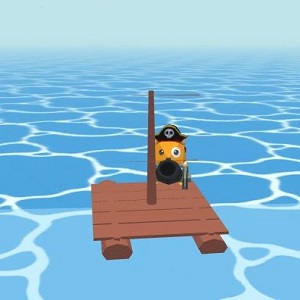
The tag works because it is flexible. A shooter like Time Shooter can use the arena to focus attention on tactical movement. A brawler like Chaos Faction 2 can turn it into a test of melee spacing and reflexes. An io game like Starblast.io can use the same structure for long-term growth, while a physics game like Bonk.io uses it for spatial control and improvisation. Even Krew.io and Rage Blade fit the broader pattern by concentrating action into a competitive space where awareness matters as much as raw force.
That variety is what defines arena games: they do not ask players to learn sprawling worlds. They ask them to read a situation, make a quick plan, and survive the next collision better than the last one.
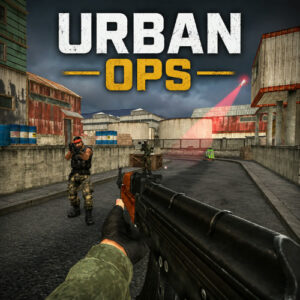 Urban Ops
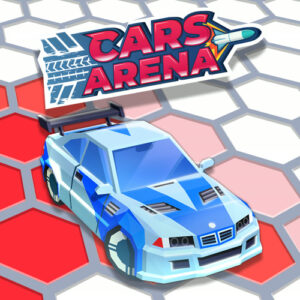 Cars Arena
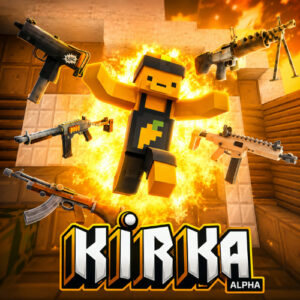 Kirka.io
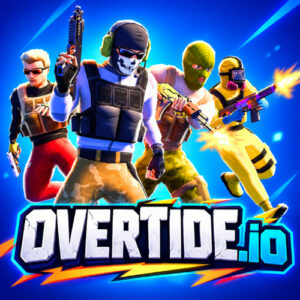 Overtide.io
 Blobade
 Mine Blade Online Kit PvP
 Bowmasters Archery Shooting
 Beast Clash
 Soyjak Siege
 Tube Fight
 Arrow Arena
 Tap Brawl
 RageRoll.io
 Sausage Battle
 Hole Arena
 Rivals FPS: Online Shooter
 Poxel.io
 2v2.io
 Knockout
 Car Chaos
 RocketGoal.io
 Ragdoll Arena
 Stickman Battle
 Veck.io
 Cubes 2048.io
 Strike Force Heroes
 Strike Force Heroes 2
 Swords & Souls
 Paper.io 2
 Swords and Sandals 1
 Narwhale.io
 Time Shooter 3: Swat
 Rage Blade
 Hungry Shark Arena
 Time Shooter 3
 Time Shooter
 Fishing.io
 Zombie Derby
 Germs.io
 Fall Beans
 Donut vs Donut
 Snowball.io
 Lordz.io
 Krunker Io
 Basketball.io
 Snake Io
 Krew.io
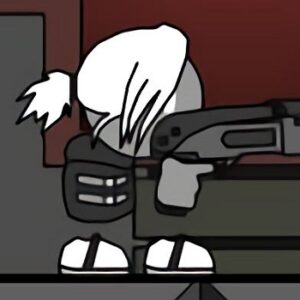 Thing Thing Arena 2
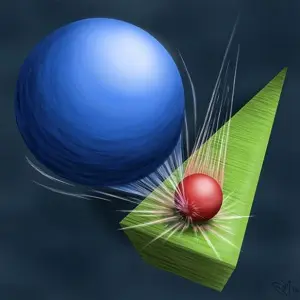 Bonk.io
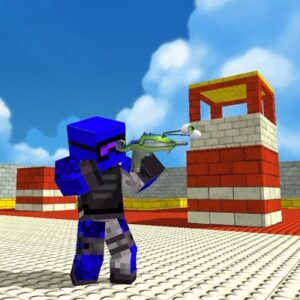 Modern Blocky Paint