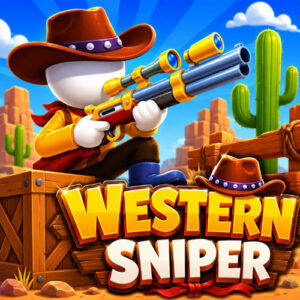
 Western Sniper
Sniper Games Turn Distance Into the Main Challenge
The sniper tag gathers games that treat range, timing, and patience as the core of play. In Tactical Assassin, Sniper Assassin 3, and Sift Heads, success depends on reading a scene before acting, then making a shot that solves the entire encounter. That style is very different from the faster, more chaotic action in Time Shooter or Thing Thing Arena, where gunplay is still important but movement and pressure matter just as much as aim.
Across the tag, sniping is not only about lining up a target. It is about controlling exposure, understanding distance, and choosing the right moment to fire. Some games lean into methodical assassination missions, while others turn the idea of a sniper into a broader combat role with a stronger emphasis on reaction time and survival.
Steady Aim, One Shot, and the Value of Patience
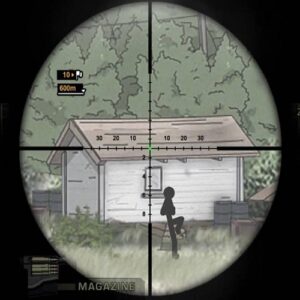
The clearest sniper designs reward restraint. Tactical Assassin and Sniper Assassin 3 are built around observing patrols, spotting the target, and waiting for the cleanest opening. The challenge comes from precision under limited tolerance for mistakes. A missed shot can mean restarting a run or losing the chance to finish a mission cleanly.
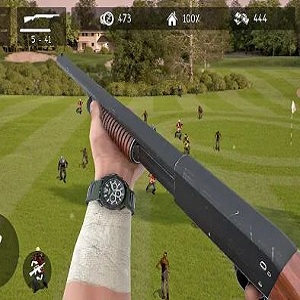
Dead Zed uses a similar principle in a different context. Instead of hunting a single target, players hold a line against waves, where careful shots and target priority matter more than raw fire rate. That makes the sniper tag appealing to players who prefer deliberate control over constant motion.
From Hidden Elimination to Open Firefights
Not every game in the tag treats sniping as quiet or isolated work. Time Shooter and Time Shooter 3 blend ranged accuracy with the series’ slow-motion combat structure, so the player can reposition, target threats, and react to the battlefield in short tactical bursts. Time Shooter 3: Swat pushes that idea further with tighter combat scenarios that feel more reactive than puzzle-like.
Winter Clash 3D sits even closer to direct action. It still rewards accurate shooting, but the flow is less about hiding and more about staying alive in messy encounters. In these games, the sniper identity becomes part of a larger shooter toolkit rather than a strict stealth role.
Rooftop Battles Put Positioning at the Center
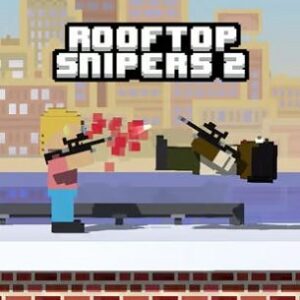
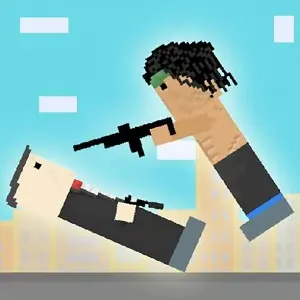
Rooftop Snipers and Rooftop Snipers 2 take a stripped-down approach that makes positioning and timing feel almost physical. The goals are simple, but the movement model creates constant instability, so every shot is tied to balance, angle, and recovery. Compared with mission-based games like Sift Heads, the rooftop format is far less about planning a route and more about surviving an awkward duel.
That simplicity is part of the appeal. These games reduce the sniper idea to a readable contest: keep your footing, judge the arc, and force the opponent out of position. The result is a form of long-range combat that feels competitive without needing complicated systems.
Action Games Borrow Sniper Logic Without Slowing Down
Several games in the tag use sniper-style precision inside faster combat frameworks. Thing Thing Arena is a good example, because its combat is frantic and movement-heavy, yet accurate shooting still separates a controlled run from a chaotic one. The player is not simply aiming from far away; they are applying sniper discipline in a space built for constant pressure.
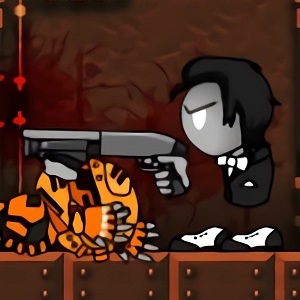
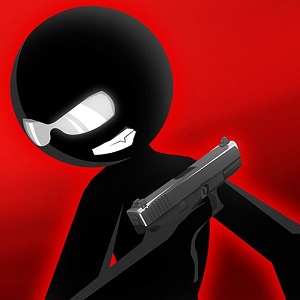
Sift Heads also bridges this gap. Its missions combine firearm accuracy with scene reading and target selection, but the pacing is more active than in a pure assassination sim. That mix helps explain why the sniper tag reaches beyond pure stealth games and into broader shooter territory.
What the Tag Rewards Beyond Accuracy
Sniper games tend to test a few overlapping skills: target tracking, timing, patience, and the ability to stay calm when a missed shot has consequences. Some games, like Tactical Assassin and Sniper Assassin 3, emphasize planning and elimination. Others, like Rooftop Snipers 2 and Winter Clash 3D, lean toward quick duels or active firefights. Dead Zed and Time Shooter 3 sit between those extremes, pairing accuracy with survival pressure.
That variety is what gives the sniper tag its range. It covers quiet mission design, arcade-style duels, wave defense, and movement-driven combat, but the common thread is always the same: distance is a problem to solve, not a disadvantage to ignore.