 DTA 6
DTA 6


Sandbox Games as Systems You Can Test, Bend, and Break
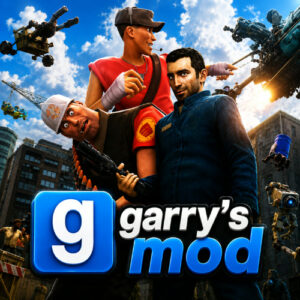
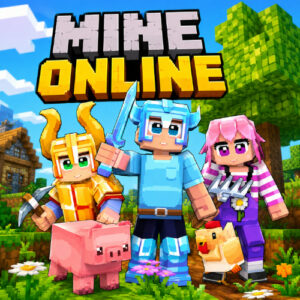
The sandbox tag gathers games built around player freedom rather than a single fixed route to victory. In Garry’s Mod, Ragdoll Playground, and Lab Havoc, the appeal comes from experimentation: objects, physics, and tools are the real structure of play. Mine – Online pushes that same idea into building and survival, while JustBuild.LOL strips the concept down to fast construction and movement practice. Across the tag, the common thread is not story progression but the ability to set your own goals and see what happens when the game systems collide.
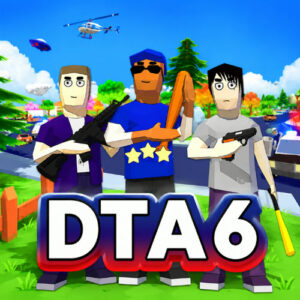
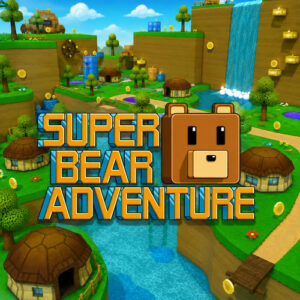
This is also why sandbox games attract such different players. Some want to create, some want to cause chaos, and some want to treat the map like a machine that can be mastered. Super Bear Adventure and Deer Adventure lean toward open exploration and playful improvisation, while Dude Theft Auto and DTA 6 focus on free-roaming mischief and unpredictable encounters. Even when the tone shifts from cartoonish to chaotic, the design principle stays the same: the game provides tools and spaces, then leaves room for player-driven outcomes.
Physics, Ragdolls, and the Appeal of Controlled Chaos
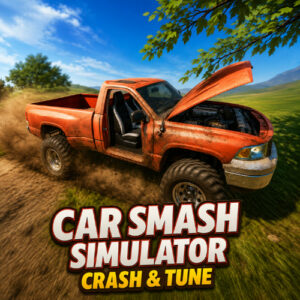
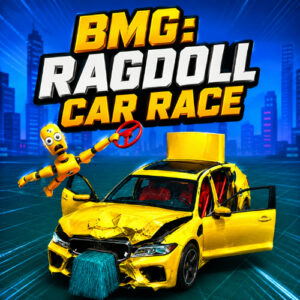
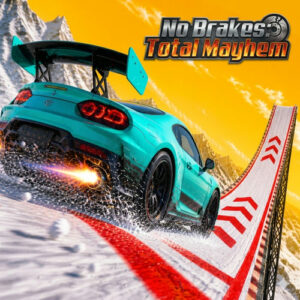
Several games in this tag are built around physics as a source of comedy and discovery. BMG: Ragdoll Car Race, Car Smash Simulator: Crash & Tune, and No Brakes: Total Mayhem turn vehicle movement into a problem of momentum, collisions, and timing. Lab Havoc and Ragdoll Playground push the same logic into character and object interactions, where experiments can become messy very quickly. The fun comes from watching systems respond, not from executing a carefully scripted sequence.
That design creates a different kind of skill ceiling. Beginners can enjoy the immediate results of crashing, launching, or stacking objects, while more experienced players start reading angles, force, and spacing more carefully. In My Car My Rules, the vehicle itself becomes part of the sandbox identity, while Car Smash Simulator: Crash & Tune suggests the satisfaction of modifying and then testing the result. These games reward curiosity because every interaction is a chance to discover a new outcome.
Building, Crafting, and Setting Up Your Own Objectives
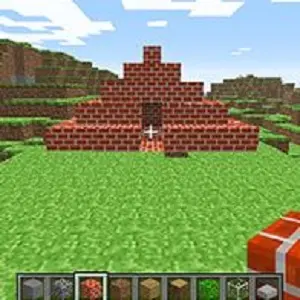
Some sandbox games focus less on destruction and more on construction. Mine – Online represents the creative-survival side of the tag, where collecting materials and shaping the environment are part of the core loop. JustBuild.LOL takes building and turns it into a direct mechanic, emphasizing speed and spatial judgment. Garry’s Mod sits in the middle, offering a broader toolkit that can be used for structures, contraptions, and custom scenes. In all three, the player is not just moving through content; the player is generating it.
This kind of sandbox play tends to appeal to people who enjoy planning and iteration. A structure is rarely only a structure. It becomes a test of efficiency, a platform for movement, or a stage for later experiments. Mine – Online supports long-form creation, while JustBuild.LOL emphasizes fast decisions under pressure. Garry’s Mod gives the broadest canvas of the group, which is why it often serves as a reference point for the entire sandbox tag.
Open-World Misbehavior and Free-Roaming Play
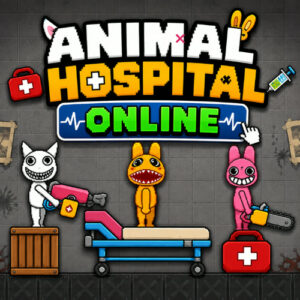
Another strong strand in the sandbox tag is open-world rule bending. Dude Theft Auto, DTA 6, and Deer Adventure frame the city or landscape as a place to improvise rather than follow a narrow mission track. Animal Hospital Online fits differently, but it still leans into a play space where actions unfold at the player’s pace rather than under constant pressure. These games often invite short-term goals that change depending on the moment, whether that means exploration, mayhem, or simple role-based activity.
Compared with the physics toys, these open-world sandbox games are less about isolated experiments and more about sustained freedom. The map matters because it gives context to whatever the player decides to do next. Super Bear Adventure also benefits from this style of design, using exploration to keep movement and discovery central. The attraction is not only that players can wander, but that wandering itself becomes a valid way to play.
Progress Without a Script
Sandbox games still need structure, but their progression tends to be self-directed. In Mine – Online, improvement comes from gathering better resources and extending what can be built. In Car Smash Simulator: Crash & Tune and My Car My Rules, progress is measured through vehicle experimentation and the gradual understanding of what each setup can do. JustBuild.LOL turns improvement into muscle memory, where faster placement and cleaner movement matter more than unlocking a new route.
This loose form of progression is one reason the sandbox tag has such broad appeal. It supports short sessions of playful disruption, but it also supports longer sessions of accumulation and mastery. A player can treat Ragdoll Playground as a quick physics toy one day and use Garry’s Mod or Mine – Online for deeper creative projects the next. The games differ in tone, but they share a structure that lets curiosity become the main driver.