Educational Games Turn Learning Into a Set of Clear Problems
The Educational tag covers games that ask players to think, sort, solve, and recognize patterns rather than simply react quickly. In this collection, the learning angle appears in very different forms: Teacher Simulator builds around school routines and classroom judgment, The Evolution of Trust frames social strategy through repeated decision-making, and Trivia Crack relies on knowledge recall under pressure. Other entries, such as Xor, Bloxorz, and 2048, focus less on facts and more on logic, spatial reasoning, and planning.
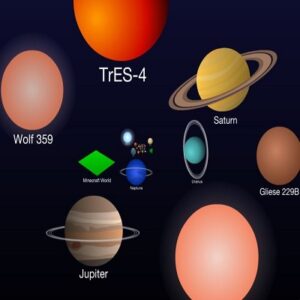
That variety is what defines the tag. Some games are explicitly instructional, others are educational in a broader sense because they sharpen memory, deduction, or problem-solving habits. Text Twist and Text Twist 2 train word recognition and anagram solving, while Scale of the Universe 2 turns scientific comparison into an interactive reference point. The result is a group of games that reward patience and attention in different ways.
Knowledge-Based Play Sits Next to Pure Logic
One part of the tag is built on stored knowledge. Trivia Crack asks players to retrieve facts across categories, so progress depends on what has already been learned and how quickly that knowledge can be accessed. Scale of the Universe 2 takes a different route, presenting scale relationships that help players understand how objects compare across enormous ranges.
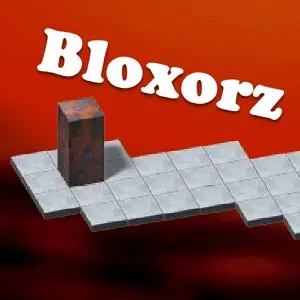
Another part is more abstract. Xor and Bloxorz are not about memorizing answers; they are about seeing constraints and working through them. In both, the player must understand how a system behaves before moving forward. That same mental habit appears in 2048, where simple rules create a board that becomes difficult to manage without planning several moves ahead.
Words, Symbols, and Pattern Recognition
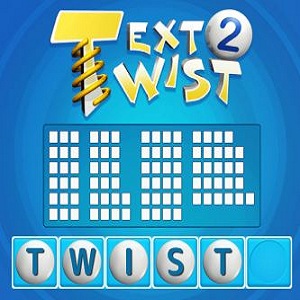
Language-heavy games are a strong fit for Educational audiences because they reward vocabulary and flexible thinking. Text Twist and Text Twist 2 ask players to rearrange letters into valid words, which means success comes from spotting letter combinations quickly and testing possibilities efficiently. The challenge is familiar, but the skill being exercised is precise: recognition, recall, and adaptation.
Xor shifts that pattern-thinking into a more visual form. Instead of letters, the player reads tile layouts and available movement options. Marble Run also depends on pattern awareness, though in a more physical way, since the arrangement of ramps and paths determines whether the marble reaches the goal. These games differ in theme, but each one rewards the ability to interpret structure rather than rely on reflex alone.
Progress Comes from Reading Systems Correctly
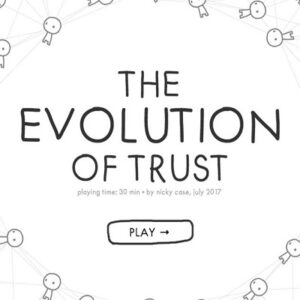
Several games in the tag are built around the idea that understanding the rules is the real challenge. The Evolution of Trust is especially notable here, since each decision changes the behavior of future rounds. It turns cooperation and betrayal into a small strategic model, making the player think about incentives rather than immediate gain. That is educational in a broader sense because it demonstrates how systems respond over time.
Teacher Simulator works differently but follows the same principle: the player is dealing with structured situations that require judgment. The game’s appeal lies in interpreting routines, choosing responses, and managing classroom-style scenarios. Instead of raw difficulty, the tension comes from recognizing what the situation asks for and responding accordingly.
Spatial Reasoning and Step-by-Step Planning
Logic puzzles are a major part of this tag, and they tend to attract players who enjoy slow, deliberate problem-solving. Bloxorz is the clearest example, since each move changes the block’s position and affects what is possible next. A wrong step can ruin a route, so the game encourages careful mapping in the player’s head.
2048 uses a simpler presentation but similar thinking. The board fills up quickly unless tiles are merged with purpose, and the game punishes random movement. Marble Run adds another layer by letting players think about gravity, direction, and route construction. Together, these games show how Educational titles can teach planning without needing direct instruction.
Games That Teach Through Repetition and Experimentation
Not every educational game presents itself as a lesson. Particle Clicker uses incremental progression to introduce scientific concepts through repeated actions and upgrades. The player keeps building, observing, and advancing, which makes the underlying structure easy to grasp through play. That same loop appears in a different form in 2048, where repeated attempts gradually improve board sense and decision timing.
The Evolution of Trust also benefits from repetition, because the player learns by watching outcomes across many rounds. Rather than handing over a fixed answer, it demonstrates behavior through interaction. This is one reason Educational games often feel approachable: the lesson is embedded in the act of playing, not separated from it.
Why This Tag Attracts Different Kinds of Players
The Educational tag spans a wide range of motivations. Some players want trivia and factual recall from Trivia Crack. Others prefer verbal challenges like Text Twist and Text Twist 2. A different group may gravitate toward the clean logic of Bloxorz, Xor, and 2048, where the pleasure comes from solving a system rather than answering a prompt.
What ties the collection together is the emphasis on mental tools that carry beyond a single session. A game like Scale of the Universe 2 broadens perspective, The Evolution of Trust encourages thinking about cooperation, and Teacher Simulator models decision-making in a classroom setting. Educational games are not limited to quizzes or lessons; they can train memory, reasoning, language, and judgment through very different play styles.
 WorldGuessr
 GeoGuessr
 Teacher Simulator
 The Evolution of Trust
 Atlas Quiz
 The Oregon Trail
 Flaggle
 Guess the Country
 Xor
Xor
 Squirdle
 Google Memory Game
 Flags of the World Quiz
 City Guesser
 The Password Game
 Factle
 50 US States Quiz
 Particle Clicker
 Text Twist 2
 Trivia Crack
 Scale of the Universe 2
 Bloxorz
 Marble Run
 Text Twist