War Games Built Around Pressure, Positioning, and Control
The War tag brings together games that treat conflict as a system rather than a simple backdrop. In this group, success usually depends on reading the battlefield, managing timing, and taking advantage of territory before an opponent can react. State.io and State.io: Conquer the World lean into broad map control, while Call of War pushes the same idea into slower, more deliberate strategic planning. At the opposite end, Airport Clash 3D, Rush Team, Pixel Warfare, and CS Portable focus on moment-to-moment aim, movement, and direct confrontations. The tag is broad, but the shared thread is clear: every game asks players to compete for control, whether that means a base, a lane, a tank formation, or a single critical position.
Strategy Games Turn War Into Territorial Math
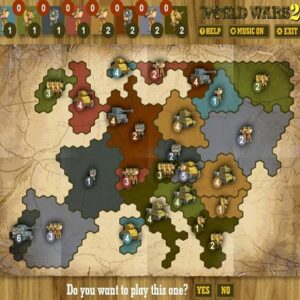
Several of these games treat war as a contest of expansion and timing. State.io and State.io: Conquer the World are built around gradual map takeover, where the central decision is not just where to attack, but when to commit forces. Call of War uses a larger strategic frame, rewarding patience, production management, and careful planning over quick reactions. World Wars 2 and Feudalism 3 sit somewhere in between, combining conquest with longer-term growth and unit management. In these games, aggression without preparation tends to create openings for rivals, so players are constantly balancing expansion against defense.
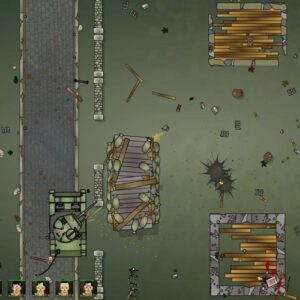
That same logic appears in smaller-scale forms as well. Battle Gear 2 and Warlords 2 (Rise of Demons) emphasize the composition of forces and the order in which they are deployed. Mud and Blood 3 adds a harsher edge to that formula, where every push carries consequences and positioning matters as much as raw numbers. The appeal of this part of the tag lies in seeing a conflict develop from a few early choices into a larger campaign.
Shooters Focus on Movement, Aim, and Fast Reactions
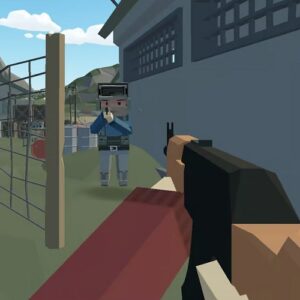
Another major cluster within War is built around direct combat. Rush Team, Pixel Warfare, CS Portable, and Mini Royale all frame war as a first-person test of aim, map awareness, and reaction speed. These games reduce the strategic layer to what can be controlled in the moment: angles, cover, spacing, and the rhythm of advancing or retreating. Toon Off fits this lane as well, with the kind of combat pacing that rewards quick decisions over long preparation.
Airport Clash 3D and Zombie Attack add another layer by creating pressure through crowded encounters. In both, the battlefield is defined by movement routes and sudden contact rather than carefully measured advances. That makes the War tag attractive to players who prefer immediate feedback. A missed shot, a late turn, or a bad push can decide the outcome fast, which keeps the action tightly focused on execution.
Vehicles and Heavy Firepower Change the Rhythm
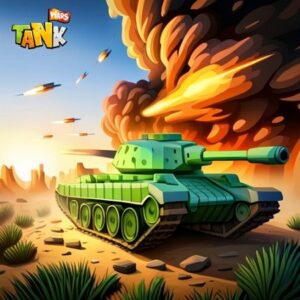
Not every war game here is about infantry. Air Wars 3 and Tank Wars shift attention to vehicle handling, where momentum and positioning matter as much as firepower. In air combat, survival depends on staying mobile and managing pursuit. In tank combat, the pace is heavier, but each angle and firing lane becomes important because movement is slower and commitment is harder to reverse. These games tend to feel more tactical than pure shooters, because the vehicle itself becomes part of the strategy.
Kart Wars takes that idea in a more chaotic direction, blending vehicle motion with combat pressure. The result is a war-themed arena where speed, collision space, and weapon use all compete for attention. Compared with the sharper infantry shooters, these games introduce more physicality into the conflict, which changes how players approach offense and defense.
Fantasy and Melee Versions of Conflict
The tag is not limited to guns and machines. Swordz.io and Warlords 2 (Rise of Demons) show how war themes can move into melee combat and fantasy framing without losing the core idea of territorial struggle. Feudalism 3 also fits this direction, mixing combat with broader progression and world-building. In these games, war is often expressed through growth in power, equipment, or units, so the conflict feels more personal and less mechanical than in the modern shooter entries.
This side of the tag is useful for players who want the same escalation and confrontation, but with different tools. Instead of rifles and artillery, the focus falls on swords, demonic forces, or evolving armies. The underlying structure remains familiar: build strength, survive counterattacks, and keep pushing into contested ground.
Why the War Tag Supports So Many Play Styles
The variety in this collection comes from how broadly war can be interpreted in browser games. Some titles, such as Call of War and World Wars 2, treat it as an operational challenge. Others, like Rush Team and CS Portable, turn it into a reflex test. State.io, Battle Gear 2, and Mud and Blood 3 sit between those extremes by combining larger tactical decisions with direct battlefield consequences. Even within the same tag, the player’s role changes sharply from commander to soldier to vehicle operator.
That range explains why the War tag draws different kinds of players. Some want long-view planning and territory control. Others want short matches, clear objectives, and constant conflict. A few prefer the tension of hybrid designs, where battlefield control and action mechanics reinforce each other. What connects them all is the same basic structure: conflict is not random, and every move changes the shape of the fight.
 Fragen
 Operation Epic Furious: Strait to Hell
 Redcoats.io
 Fortress Clash
 FrontWars.io
 Stickman Empires
 Strike Force Heroes 2
 Airport Clash 3D
 Zombie Attack
 World Wars 2
 Rush Team
 Air Wars 3
 Endless War
 Battle Gear 2
 State.io: Conquer the World
 Kart Wars
 Feudalism 3
 Pixel Warfare
 Call of War
 State.io
 Mud and Blood 3
 Toon Off
 Tank Wars
 Warlords 2 (Rise of Demons)
 Swordz.io
 CS Portable
 Mini Royale
 Totally Accurate Battle Simulator
 Bullet Force Multiplayer
 Stick War
 Air Wars 2
 Venge.io
 Forge Of Empires
 Hex Empire
 War Simulator
 Warfare 1944
 Warbot.io
 Warfare 1917
 CS Online
 War Brokers
 Age Of War
 Bullet Force