Traffic Games Turn Roads Into Systems To Manage
The Traffic tag covers games that treat roads as more than scenery. In this group, movement, spacing, timing, and lane discipline become the main sources of challenge. Traffic Control and Traffic Mania focus directly on directing flow, while Highway Racer, Racing in City, and Car Driving Simulator 3 place the player inside dense road networks where every lane change matters. Parking Fury 3 adds a slower, more exact version of the same idea, where a vehicle must fit into tight traffic-shaped spaces without disrupting the surroundings.
What unites these games is not just cars, but the pressure created by constant motion. Some ask for quick decisions as vehicles approach from several directions. Others make the player read gaps, judge speed, and avoid collisions while staying in control of a large vehicle. Traffic here is both obstacle and structure: it creates routes, limits freedom, and forces attention to the same space from different angles.
Directing Flow Instead of Only Driving
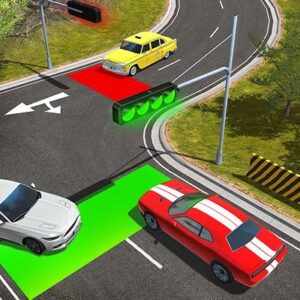
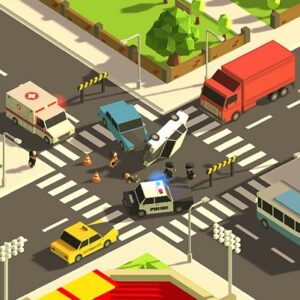
The clearest traffic-management games in the tag are built around ordering movement. Traffic Control and Traffic Mania ask players to keep vehicles moving without creating gridlock, which shifts the focus away from racing and toward coordination. The core skill is pattern recognition: seeing which lane needs to move first, which vehicle can wait, and where a small delay will prevent a larger jam.
That style of play makes traffic feel like a puzzle rather than a backdrop. Instead of chasing speed, the player is solving a congestion problem in real time. The tension comes from chains of dependency, where one mistake affects several vehicles at once. These games reward calm observation and fast prioritization rather than aggressive inputs.
Fast Roads, Tight Gaps, Constant Adjustment
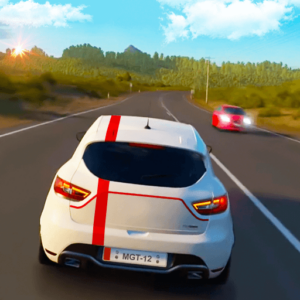
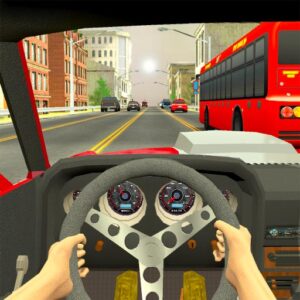
Highway Racer and Racing in City move the traffic theme into high-speed driving. Here, traffic is not managed from above; it is dodged, threaded through, and used as part of the route itself. The road becomes a stream of hazards and openings, and the player has to react to vehicles that appear at different speeds and distances.
Compared with the more controlled structure of Traffic Control, these games demand sharper reflexes and stronger spatial judgment. Lane changes matter because they create small windows for progress. A good run depends on reading the rhythm of surrounding cars, anticipating sudden changes, and keeping enough margin for recovery. Traffic in this format is less about order and more about survival through timing.
Driving Simulators Use Traffic As A Test Of Precision
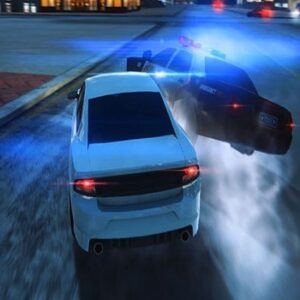
Car Driving Simulator 3 sits between open driving and traffic-heavy challenge. Rather than focusing only on speed, it uses roads, vehicles, and traffic patterns to test how carefully the player can operate a car in a believable environment. That changes the tone of the game: driving is measured by control, lane awareness, and the ability to remain accurate under pressure.
Simulator-style traffic games usually attract players who prefer steadier input and more deliberate movement. The satisfaction comes from clean execution, not from dramatic overtakes. In this context, traffic works as a discipline tool. It punishes sloppy steering, rewards steady correction, and makes basic driving decisions more important than raw pace.
Parking Challenges Make Traffic Feel Claustrophobic
Parking Fury 3 shows another side of the tag by turning traffic into a space-management problem. Parking is often a quieter task than racing, but it is usually harder in a crowded setting because the vehicle must be positioned with precision in a limited area. The surrounding traffic shapes the route, the approach angle, and the amount of room available for correction.
This kind of game uses the same spatial awareness found in the faster titles, but strips away urgency in favor of exactness. The player has to think about turning radius, stopping points, and the consequences of small steering errors. Traffic becomes a layout problem, where success depends on fitting a vehicle into the available gap without wasting movement.
What The Tag Reveals About Traffic As A Game Theme
The Traffic tag is broad, but the games in it share a clear design interest: they turn road movement into a readable system. Some entries, like Traffic Control and Traffic Mania, emphasize management. Others, such as Highway Racer and Racing in City, emphasize evasion and speed. Car Driving Simulator 3 and Parking Fury 3 push toward accuracy, patience, and vehicle handling.
That variety explains the appeal of the tag. Traffic can be a puzzle, a reflex test, a driving simulation, or a parking challenge, and the shared element is always the same: limited space filled with moving obstacles. The best games in this tag use that limitation to create pressure without needing complex rules, making every lane, gap, and pause part of the challenge.
 Police Bus Simulation
 ParkOut: Traffic Escape
 Bus Driving Master 3D
 Rooster Road
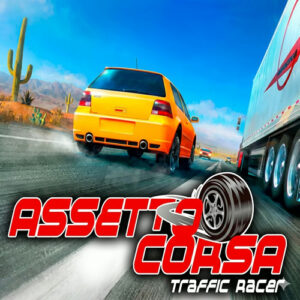 Asseto Corsa Traffic Racer
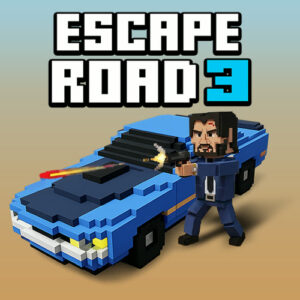 Escape Road 3
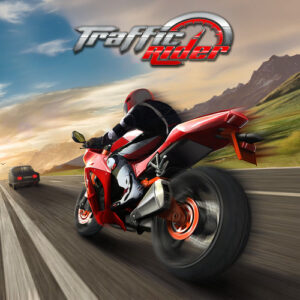 Traffic Rider
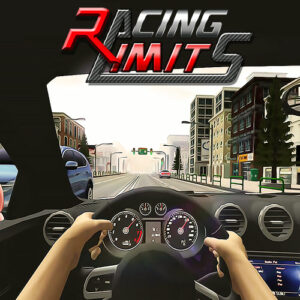 Racing Limits
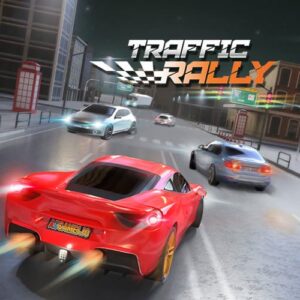 Traffic Rally
 Crazy Taxi
 Traffic Road
 Escape Road City 2
 Escape Road City
 Escape Road 2
 Escape Road
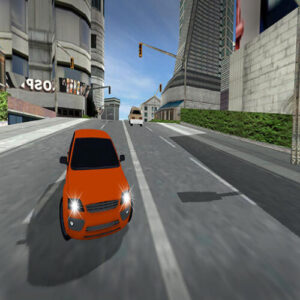 City Car Driving Simulator
 Traffic Control
 Traffic Mania
 Highway Racer
 Car Driving Simulator 3
 Parking Fury 3
 Racing in City