Soccer Games Centered on First Touch, Timing, and Pressure
The Soccer tag brings together games that strip the sport down to its most readable moments: a shot from the spot, a quick duel for control, a chaotic rebound, or a sudden break toward goal. In Penalty Shooters 3 and Penalty Shooters 2, the action narrows to the penalty arc, where prediction and timing matter more than long build-up play. Penalty Shootout: Multi League pushes that same format into a broader competition structure, while Penalty Kicks focuses on the simple tension of converting under pressure.
Elsewhere, the collection keeps soccer approachable by reducing team size and simplifying field control. 1 on 1 Soccer and Soccer Skills Euro Cup lean into direct possession battles, where positioning and quick reactions decide whether an attack develops at all. Soccer Legends and Soccer Legends 2021 add a more character-driven layer, but still keep the emphasis on immediate, readable decisions rather than long tactical setups.
Penalty Formats Turn Soccer Into a Mind Game
The penalty-focused games show how much drama can come from a single kick. In Penalty Shooters 3, Penalty Shooters 2, and Penalty Shootout: Multi League, the player is asked to alternate between offense and defense, reading movement patterns and choosing when to commit. The format rewards patience as much as technique. A rushed shot can be saved, but a delayed shot can be just as risky if the goalkeeper reacts early.
This style of soccer game appeals to players who enjoy short rounds with immediate consequences. The rules are easy to understand, yet outcomes can still hinge on timing, guessing, and consistency across repeated attempts. Penalty Kicks works in the same space by reducing the match to a sequence of decisive moments, which makes every attempt feel like a test of control rather than endurance.
Small-Sided Matches Put Positioning Ahead of Spacing
Games like 1 on 1 Soccer, Soccer Skills Euro Cup, and Foosball all compress soccer into tighter spaces, but each does it in a different way. 1 on 1 Soccer emphasizes direct duels where there is little room for elaborate passing. Soccer Skills Euro Cup still preserves the feel of moving through a field, yet the smaller scale keeps every touch meaningful. Foosball takes the idea even further, turning soccer into a table-based contest of angles, interception points, and rapid switching.
What links these games is the importance of controlling lanes rather than managing full-team systems. Defenders cannot rely on shape alone, and attackers must create space through timing and positioning. The result is a Soccer tag that often rewards quick recognition of openings more than careful orchestration.
Chaotic Variants Keep the Rules Intact but Shake Up the Rhythm
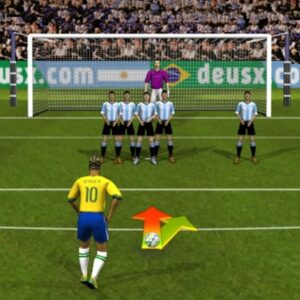
Some games in the tag introduce unpredictability without abandoning soccer’s core objectives. Soccer Random is the clearest example, using uneven movement and unpredictable outcomes to make every match feel unstable. SocCar takes a different route by blending soccer with car-driven control, which changes how players approach momentum, collisions, and ball handling. Brazil vs Argentina 2017/2018 stays closer to a traditional rivalry framing, but it still belongs with the more direct, fast-turnover entries in the tag.
These variations matter because they show how flexible soccer can be as a game format. The goal remains familiar, but the route to scoring can be comedic, physical, or highly reactive. For some players, that instability is the point: it turns routine soccer actions into situations that demand adaptation on every possession.
Head-to-Head Play Keeps Every Possession Personal
A strong thread across the Soccer tag is the preference for direct competition. Soccer Legends and Soccer Legends 2021 build on one-on-one or two-player-style rivalries where anticipation matters as much as execution. Brazil vs Argentina 2017/2018 reinforces that same spirit by framing the match as a rivalry-driven encounter, which gives every challenge a sharper edge. In these games, the opponent is not abstract; each action is a response to another player’s movement.
That head-to-head structure gives the tag much of its identity. Instead of long tactical arcs, the games focus on immediate contests for the ball, sharp changes of direction, and quick opportunities to finish. Players who enjoy reading another human’s habits tend to return to these matches, because the challenge comes from pattern recognition as much as from mechanical skill.
What Soccer Games Reward Over Time
Across the tag, progress is usually measured by cleaner execution rather than by large strategic systems. Repeated play in Penalty Shooters 3, Soccer Legends 2021, or Soccer Skills Euro Cup tends to sharpen timing, movement efficiency, and decision-making under pressure. The better player is often the one who wastes fewer touches, chooses better angles, and reacts earlier to the opponent’s intentions.
That makes the Soccer tag unusually broad in appeal. Some games, like Penalty Shootout: Multi League, are built for short-session competition. Others, like Foosball and SocCar, reward adaptation to unusual control schemes. The shared element is clarity: even when the format changes, the player always knows what success looks like, and that clarity keeps the collection grounded in fast, readable competition.
 Soccer Strike
 World Cup Soccer
 Soccer Legends 2026
 Orbit Kick
 RocketGoal.io
 A Small World
 Sports Heads Soccer
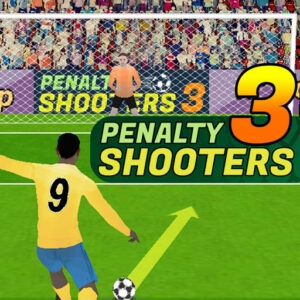 Penalty Shooters 3
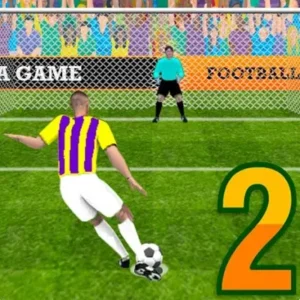 Penalty Shooters 2
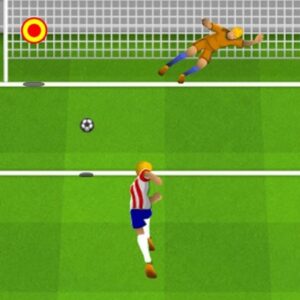 Penalty Shootout: Multi
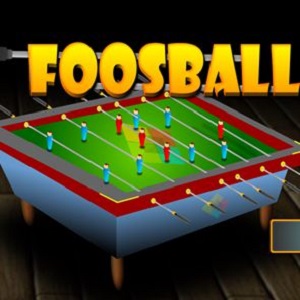 Foosball
 Brazil vs Argentina
 Penalty Kicks
 Soccer Random
 Soccer Skills Euro
 Soccer Legends 2021
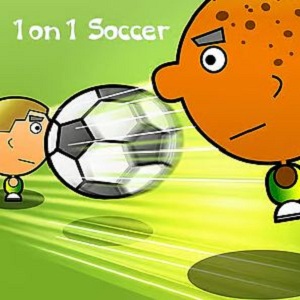 1 on 1
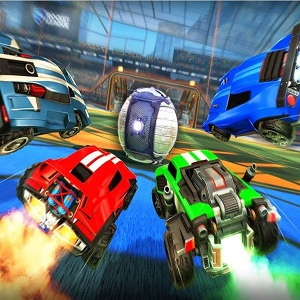 SocCar
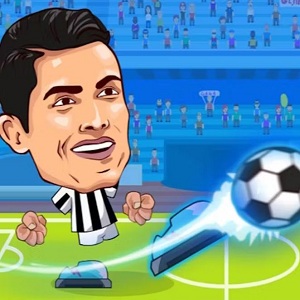 Soccer Legends
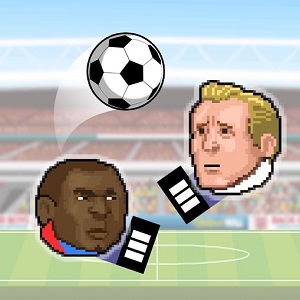 Soccer Heads