Point and Click Games Built Around Observation and Timing
Point and click games cover a wide range of structures, but the common thread is simple: progress comes from noticing details, choosing the right object or location, and acting with precision. In this tag, that idea appears in several different forms. The White Room and Charger Escape lean toward classic escape-room logic, where each screen is a contained problem with clues hidden in the environment. Blue Game and Pointer suggest a more stripped-down approach, where movement or interaction is narrowed to a few crucial inputs. At the same time, Bob the Robber 3 and Bob the Robber 4 add stealth and route planning, showing how point-and-click design can support more than just puzzle solving.
The tag also includes games that use point-and-click controls to create pressure rather than calm deduction. FNAF, FNAF 2, FNAF 3, and FNAF 4 transform simple interface actions into survival decisions. Instead of exploring freely, players monitor systems, react to audio or visual cues, and make quick judgments under stress. That contrast helps define the broader appeal of the tag: the same control style can power both methodical puzzle solving and high-tension management.
Escape Rooms, Locked Screens, and Environmental Clues
A major branch of point and click design depends on reading a space carefully. The White Room fits the familiar escape-game model, where each object matters and progress usually comes from combining clues rather than relying on reflexes. Charger Escape and Escape or Die 2 follow a similar pattern, asking players to examine the room, test interactions, and build a sequence of correct actions. These games reward patience, memory, and a willingness to revisit earlier details once a new clue changes their meaning.
Pull the Pin shifts the same logic into a more visual puzzle format. The player still studies cause and effect, but now the challenge is sequencing: release one element before another, avoid a bad outcome, and set up the board so the intended result unfolds. That makes it easier to see how point and click games often work as systems of triggers. Clicking is only the surface; underneath, the real task is understanding what each object will do once activated.
Stealth, Escape, and the Tension of Small Choices
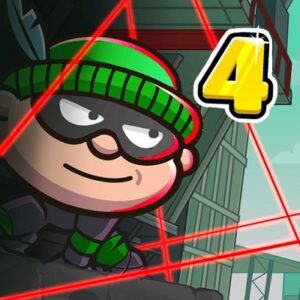
Bob the Robber 3 and Bob the Robber 4 show how point and click mechanics can support stealth routes, timing windows, and guard avoidance. Rather than solving a room all at once, players progress by reading patrol patterns, opening paths at the right moment, and managing risk in stages. That structure creates a different pace from traditional escape games. Instead of static observation, the challenge comes from moving through space without triggering consequences.
Creative Kill Chamber adds a harsher version of that formula, with interaction centered on dangerous outcomes and reactive experimentation. Kill the Ice Age Baby Adventure sits closer to puzzle-comedy territory, but it still relies on clicking the right elements in the right order to produce a result. In all of these games, the appeal is not just discovery but controlled escalation: each click can either unlock progress or force a reset.
Horror Interfaces Turn Clicking Into Survival
The FNAF series is one of the clearest examples of point and click design being used for panic management. FNAF, FNAF 2, FNAF 3, and FNAF 4 all turn interface use into a survival loop based on monitoring systems, responding to threats, and deciding when to act. The player is rarely moving through the world in a conventional way. Instead, survival depends on checking screens, handling tools, and interpreting limited information before danger closes in.
That design explains why the tag attracts players who enjoy stress-based planning as much as traditional puzzles. These games reward familiarity with patterns, but they also punish hesitation. Compared with slower escape titles like The White Room, the FNAF games are built on compressed decision-making. A click is not just an interaction; it is a commitment made under pressure.
Idle Growth and Clicking as Progression
Not every game in this tag treats clicking as a puzzle input. Realm Grinder, Tube Clicker, and Spacebar Clicker use repeated input as a progression engine, where the central activity is accumulation rather than discovery. These games shift the meaning of point and click toward growth systems, upgrades, and automation. Early actions may be simple, but they create longer-term gains that change how the game plays over time.
This branch of the tag appeals to a different kind of player than escape or horror titles. The focus is on incremental improvement, watching numbers rise, and deciding when to invest in the next upgrade. Compared with tightly designed puzzle rooms, these games stretch the click into a longer loop of resource management and efficiency.
Comedy, Misdirection, and Puzzle Logic That Refuses to Behave
Trollface: Quest Horror 2 brings a deliberately unpredictable style to point and click design. Instead of trusting obvious solutions, players are pushed to think sideways, test absurd ideas, and expect the puzzle to break its own rules. That contrasts sharply with the cleaner logic of escape-room games like Charger Escape or Escape or Die 2, where careful observation usually leads to the answer more directly.
This kind of design shows another strength of the tag: point and click is flexible enough to support both fair deduction and deliberate misdirection. When a game wants to be comic, experimental, or chaotic, the interface still works because clicking remains clear and readable. The difference lies in how much the game respects ordinary expectations.
Why the Tag Keeps Mixing Puzzles, Tension, and Progression
The games in this tag are varied, but they all depend on the same fundamental behavior: looking closely, then choosing carefully. In The Evolution of Trust, interaction is tied to decision-making and consequence rather than physical dexterity. In Blue Game and Pointer, simplicity becomes the point, with each action stripped down to essentials. In Chasm, the name itself suggests a more uncertain space, which fits the tag’s broader interest in exploration and problem solving.
That variety explains why point and click remains such a durable format. It can support puzzle rooms, stealth routes, horror systems, incremental clicking, and comic trickery without losing its identity. The control style stays consistent, while the surrounding design changes the player’s goals, pace, and level of pressure.
 Hidden Objects: Island Secrets
 Endacopia
 Zombies and Luig
 Five Nights at Trump’s
 Ice Baby Quest 2
 Five Nights at Winston’s
 That’s Not My Neighbor
 Five Nights at Freddy’s Sister Location
 Five Nights at Diddy’s
 Airport Security
 Five Nights at Epstein’s
 Poppy Playtime Chapter 5
 Ice Baby Quest
 Whack Your Ex
 Riddle School 2
 Blue Game
 Bob the Robber 4
 The Evolution of Trust
 Realm Grinder
 Cursor * 10
 Trollface Quest Sports
 Trollface: Quest Horror 2
 The White Room
![Fnaf 3 [Five Nights At Freddy’S 3]](https://hapagames.com/wp-content/uploads/2024/06/fnaf-3-unblocked-300x300.jpg) FNAF 3 [Five Nights at Freddy’s 3]
FNAF 3 [Five Nights at Freddy’s 3]
![Fnaf 4 [Five Nights At Freddy’S 4]](https://hapagames.com/wp-content/uploads/2024/06/fnaf-4-unblocked-300x300.jpg) FNAF 4 [Five Nights at Freddy’s 4]
FNAF 4 [Five Nights at Freddy’s 4]
 Hacker Simulator
 Tube Clicker
 Bob the Robber 3
![Fnaf 2 [Five Nights At Freddy’s 2]](https://hapagames.com/wp-content/uploads/2024/06/fnaf-2-unblocked-300x300.jpg) FNAF 2 [Five Nights at Freddy’s 2]
FNAF 2 [Five Nights at Freddy’s 2]
 Pointer
 Kill the Ice Age Baby Adventure
 Bad Time Simulator
 Computer Repair
 Spacebar Clicker
 Charger Escape
 Chasm
Chasm
 Pull the Pin
 Escape or Die 2
 Creative Kill Chamber
![Fnaf [Five Nights At Freddy’s]](https://hapagames.com/wp-content/uploads/2024/03/five-nights-at-freddys-unblocked-300x300.jpg) FNAF [Five Nights at Freddy’s]
FNAF [Five Nights at Freddy’s]
 Boat Simulator
 Minecraft Clicker
 Bob the Robber 2
 100 Doors
 Riddle School 4
 Black Game
 3 Pandas
 Snail Bob 8
 Riddle Transfer 2
 Find Cat