Word Games Built Around Recognition, Deduction, and Vocabulary
The Word tag covers a wide spread of browser games that all use language in different ways. Some, like Wordle Online, Disney Wordle, and Taylordle, center on guessing a hidden answer from limited clues. Others, such as Weaver Wordle and Crosswordle, turn word play into a pathfinding problem where each step must connect cleanly to the next. Then there are games like Scrabble Online and Letters Boxed, which shift the focus toward building, arranging, and squeezing value out of a fixed set of letters.
What unites the tag is not just spelling, but pattern recognition. Players are constantly checking letter frequency, word structure, cultural references, and valid connections. Even games that seem simple at first, such as Squareword or Wordle Countries, become tests of memory and logic once the first few guesses narrow the field.
Guessing Games Turn Language Into Deduction
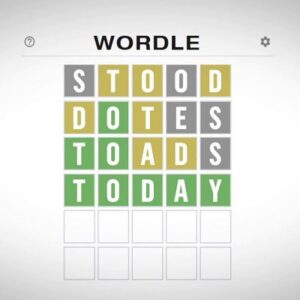
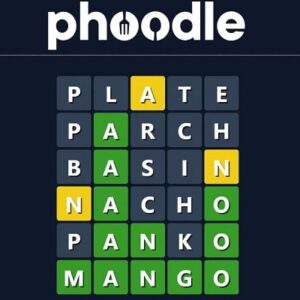
The most recognizable branch of the tag is the daily-style guessing puzzle. Wordle Online set the template, but games like Taylordle, Disney Wordle, Phoodle, and Squirdle use that structure to target specific knowledge sets. Instead of solving by vocabulary alone, players lean on familiarity with a theme: pop stars, animation, food, or a creature roster. Atlas Quiz and Wordle Countries push the same format into geography, where recall matters just as much as logic.
These games reward efficient narrowing. Strong early guesses are valuable because they expose vowel patterns, repeated letters, and likely endings. That makes the genre appealing to players who enjoy making careful deductions from partial information rather than brute-forcing answers. The best runs often come from disciplined letter testing, not inspiration.
Theme-Based Wordle Variants Add a Knowledge Layer
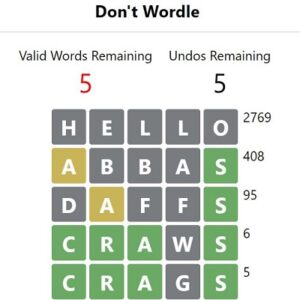
Several games in the tag borrow the Wordle structure but change the kind of knowledge being tested. Heardle 2000s and Heardle Unlimited move from text into audio recognition, asking players to identify songs from short clips. Swiftle and TayHeardle do something similar with artist-specific music knowledge, while Don’t Wordle adds a deliberate twist by subverting expectations around the familiar formula. In each case, the challenge is not simply solving a word grid, but interpreting a clue source with a specific cultural filter.
This is where the tag becomes more than a vocabulary collection. A player approaching Heardle Unlimited is working with memory, rhythm, and release-era familiarity, while someone opening Swiftle may be thinking in discographies and track order. The same guessing rhythm exists in all of them, but the knowledge base changes sharply from game to game.
Connecting Words One Step at a Time
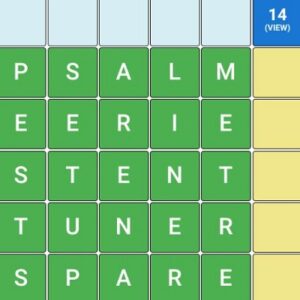
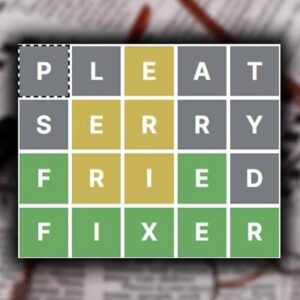
A different cluster of games focuses on transformation rather than direct guessing. Weaver Wordle asks players to move from one word to another through valid intermediate steps, and Crosswordle builds a grid where clues emerge from intersecting guesses. Squareword also sits in this territory, emphasizing arrangement and word placement as much as solving. These games make language feel like a system of routes, not just a list of possible answers.
That design creates a different pace. Instead of choosing the best opener and waiting for feedback, players must think several moves ahead. Every step can either reveal structure or trap the board into an awkward shape. Compared with the cleaner loop of Wordle Online or Disney Wordle, these games ask for more sustained planning and a stronger sense of word relationships.
Letter Management Becomes the Real Skill
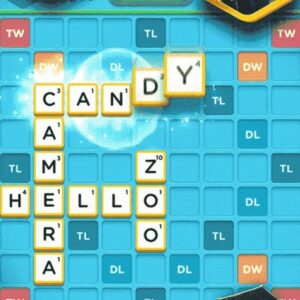
Games such as Scrabble Online and Letters Boxed place more weight on construction than on decoding. In Scrabble Online, players work with a hand of letters and a board state, looking for placements that score well while leaving room for later turns. Letters Boxed turns the puzzle inward, challenging players to chain words through a limited letter set with as few moves as possible. Both games make the player think about efficiency, not just correctness.
This part of the tag tends to attract players who enjoy tactical planning. Finding any valid word is not enough; the real question is whether the word advances the position. That is a marked contrast from pure guess-and-check games, where the main objective is identification. Here, vocabulary knowledge is only the starting point.
High-Pressure Solving and the Appeal of Streaks
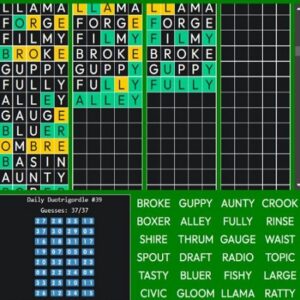
Some of the tag’s most demanding entries escalate the pressure by multiplying the number of simultaneous solutions or steps required. Duotrigordle takes the familiar word-guessing structure and scales it dramatically, turning a neat deduction game into a dense management problem. The player is no longer solving one board in isolation, but juggling many at once while preserving useful information across the entire session.
That kind of design attracts a different temperament from the more relaxed themed games. Success depends on organization, note-taking by memory, and a willingness to handle information overload. In the same tag, The Password Game stands out as a rules-heavy outlier, using escalating constraints rather than standard guessing. It shows how far word-based browser games can move from casual vocabulary play while still remaining centered on language.
Why the Word Tag Keeps Spanning So Many Formats
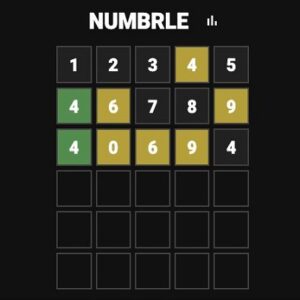
The breadth of this tag comes from how flexible word play can be. A game like Atlas Quiz tests recall and category knowledge. Wordle Countries and Disney Wordle narrow the focus to recognizable domains. Weaver Wordle, Crosswordle, and Squareword turn words into spatial or sequential logic. Scrabble Online and Letters Boxed make construction and optimization the core challenge. Even Numberle shows how the same deduction structure can be adapted beyond language while still fitting the broader pattern of clue-based reasoning.
That variety is what gives the Word tag its range. Some games are built for fast daily guessing, some for deep vocabulary planning, and some for thematic expertise. Across all of them, the central appeal stays consistent: turning familiar words into a problem that can be solved carefully, one clue, one letter, or one connection at a time.
 Wordle
 Atlas Quiz
 Taylordle
 Family Feud
 Weaver Wordle
 Don’t Wordle
 Wordle Online
 Guess the Song: Quiz Music
 Flaggle
 TayHeardle
 Guess the Country
 Swiftle
 Disney Wordle
 Squareword
 Heardle 2000s
 Crosswordle
 Numberle
 Drawize
 Squirdle
 Flags of the World Quiz
 Phoodle
 Heardle Unlimited
 City Guesser
 Duotrigordle
 The Password Game
 Wordle Countries
 Scrabble Online
 Letters Boxed
 Minecraftle
 Tridle
 Loldle
 Factle
 Antiwordle
 50 US States Quiz
 Mini Crossword
 Outspell
 Hangman
 Text Twist 2
 Word Search
 Word Wipe
 Akinator Online
 Google Feud
 Text Twist
 Who Wants To Be A Millionaire
 Akinator