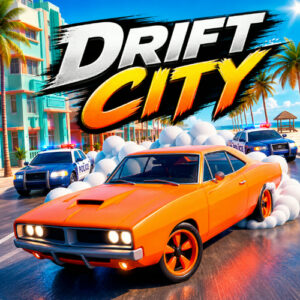
 Drift City

Top-Down Games Put Control Above Presentation
Top-down games strip play back to readable systems, clear movement, and fast decision-making. From Drift City and Soyjak Siege to PaperWar.io and Snake, the viewpoint keeps the action legible while asking players to manage positioning, timing, and risk. Even when the tone changes sharply, the camera style keeps the focus on spatial awareness rather than cinematic framing.
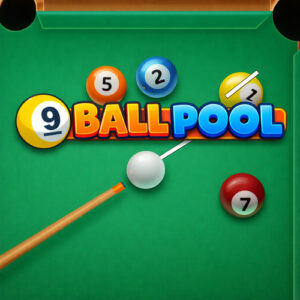
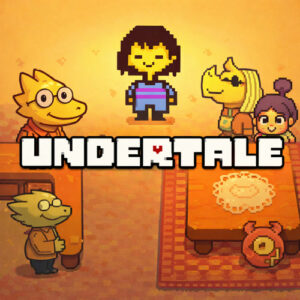
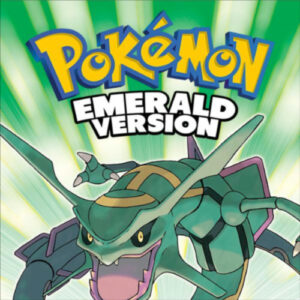
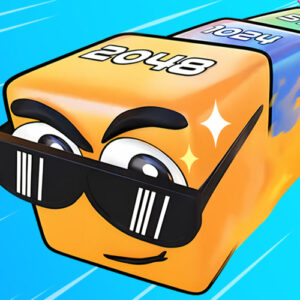
The tag covers a wide range of designs. 9 Ball Pool uses the overhead angle to emphasize angles, power, and precision. Pokémon Emerald applies it to exploration, route planning, and turn-based progression. Undertale mixes top-down movement with bullet-dodging and decision-driven encounters. Cubes 2048.io and Snake show how the same perspective can support growth systems built around movement, merging, and survival.
Movement Is Usually the First Skill
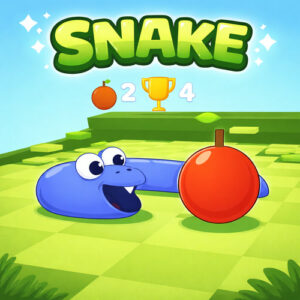
Across this tag, movement is rarely just a way to travel between objectives. It is the core mechanic. Snake turns every turn into a space-management problem, where the player must avoid trapping their own body. Cubes 2048.io builds on similar ideas, but with the extra pressure of chasing growth while staying safe in a shared arena. Drift City and PaperWar.io also depend on movement discipline, though in different ways: one leans into driving momentum, while the other is about maneuvering through a competitive battlefield.
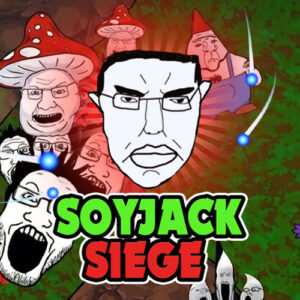
That emphasis makes top-down games appealing to players who like direct control and instant feedback. Small steering mistakes matter, but so do efficient routes and clean repositioning. In action-heavy games such as Soyjak Siege, the overhead view supports that constant adjustment by showing more of the field at once.
Competition Often Comes From Space, Not Just Opponents
Several games in the tag create conflict through territory, lanes, and map pressure rather than straightforward duels. PaperWar.io turns the arena into a contest for area control. Soyjak Siege and Drift City both benefit from wide visibility, which makes encounters feel less like isolated fights and more like contests over position. Even Snake fits this pattern in a simpler form, because success depends on leaving yourself enough room to keep moving.
This is one reason top-down games often feel tactical even when they are quick. The camera makes it easier to track nearby threats, but that also means players can more clearly see bad positioning. In many of these games, losing is less about a single mistake and more about being cornered by earlier choices.
Progression Takes Several Forms
The tag does not rely on one progression model. Pokémon Emerald uses classic role-playing structure, with exploration, battles, and gradual team growth. Undertale treats progression differently by tying encounters to choice and consequence as much as to combat. Cubes 2048.io and Snake focus on growth that happens in real time, where size and survival become the reward loop. 9 Ball Pool offers a more technical form of progression through skill refinement, where players improve by learning angles, pace control, and shot selection.
That variety shows how flexible the top-down format can be. It supports long-form advancement, match-based skill growth, and incremental power accumulation without changing the viewpoint. The common factor is that players are always reading a field, then making a choice that affects later options.
Top-Down Doesn’t Mean the Same Pace
Some of these games move quickly and reward reflexes, while others reward patience and planning. PaperWar.io and Soyjak Siege lean toward fast, reactive play. 9 Ball Pool slows things down and asks for exact execution. Pokémon Emerald sits in the middle, balancing exploration with structured encounters. Undertale shifts pace constantly, alternating between dialogue, exploration, and fights that demand careful movement patterns.
That range is part of the tag’s appeal. The perspective is consistent, but the tempo is not. Some players want a game that tests them in bursts; others prefer a steadier rhythm. Top-down design can support both without losing clarity.
Why the Viewpoint Works for Strategy, Reflexes, and Exploration
Top-down games make information easier to process, which is valuable across very different genres. Strategy-heavy play benefits because the player can see more of the battlefield at once. Reflex-based games benefit because threats are visible early. Exploration benefits because routes, obstacles, and interactive spaces are easier to parse. Pokémon Emerald, Undertale, and 9 Ball Pool each use that clarity for different goals, but all rely on the same readable frame.
That shared structure helps the tag stretch across genres without feeling disconnected. A racing-style game like Drift City, a growth game like Cubes 2048.io, and a classic like Snake may look unrelated at first glance, yet they all ask for the same underlying habits: track space, judge risk, and commit to movement with purpose.