 Alchemy


Science Games Built Around Curiosity and Systems
The Science tag brings together games that treat discovery as the main activity. Some titles focus on experimentation, like Alchemy and Little Alchemy 2, where progress comes from combining elements and learning how one idea leads to another. Others shift the emphasis toward knowledge and scale, such as Trivia Crack and Scale of the Universe 2, which use questions or visual comparison to organize facts into something playable. Antimatter Dimensions adds a different angle, turning scientific-sounding concepts into an incremental system built on growth and abstraction.
What connects these games is not a single genre, but a shared interest in structured thinking. The player is usually not asked to react quickly in the traditional sense. Instead, the challenge is to identify patterns, retain information, or understand how systems expand over time. That makes the Science tag broad, but also unusually coherent: every game under it rewards a willingness to learn rules and then push them further.
Experimentation as the Core Loop
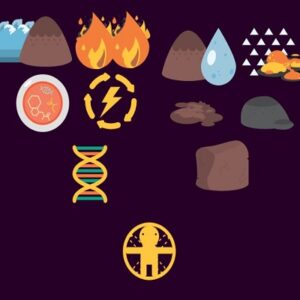
Alchemy and Little Alchemy 2 show one of the clearest science-game structures: combine, test, observe, repeat. The pleasure comes from making successful links between basic materials and then using those results to unlock more complex outcomes. This format turns trial and error into a readable process rather than a punishment. Even when a combination fails, the failure still teaches something about the logic of the system.
These games appeal to players who enjoy working from simple ingredients toward larger structures. The loop is patient and methodical, but it also supports moments of insight. The moment a useful connection clicks matters as much as the item unlocked. In that way, they resemble laboratory thinking more than action play.
Knowledge Games and the Use of Recall
Trivia Crack represents a different side of the Science tag, one built around stored knowledge instead of experimentation. Rather than discovering answers through combinations, the player retrieves information under pressure. That creates a very different rhythm: the game is less about inventing a path and more about proving familiarity with facts, categories, and subject boundaries.
Science-themed trivia also changes the kind of skill being tested. Some games in this tag ask for logic, while trivia asks for breadth. A player who enjoys Trivia Crack may be drawn to recognition, classification, and memory, which complements the puzzle-solving instincts found in Little Alchemy 2 and Alchemy. The common thread is intellectual engagement, but the means are distinct.
Scaling Up From the Microscopic to the Cosmic
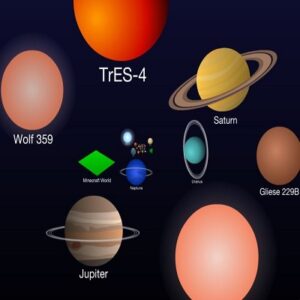
Scale of the Universe 2 gives the tag a more visual and educational shape. Instead of combining objects or answering prompts, the game presents scale as an interactive concept. That makes it less about winning and more about understanding relative size, distance, and proportion. For science-focused play, that matters a great deal, because scale is one of the hardest ideas to grasp from text alone.
This kind of design works well alongside the more abstract systems in Antimatter Dimensions. One game teaches perspective through visual comparison, while the other turns scientific terminology into an ever-expanding progression model. Both rely on gradual comprehension, not immediate mastery. They reward attention to structure, which is a major reason science games remain appealing to players who like learning through interaction.
Incremental Growth and Abstract Progression
Antimatter Dimensions stands apart from the rest of the tag because it uses science language to support an incremental framework. The appeal is not in direct simulation, but in watching numbers and upgrades build on one another. That kind of design turns scientific abstraction into a progression puzzle, where the player manages systems that become more complex as they expand.
Compared with Alchemy or Trivia Crack, the pace is slower and more structural. The challenge lies in optimization and planning rather than recognition alone. Players drawn to this style usually enjoy seeing small inputs create larger outputs, especially when those gains feed into new layers of development.
What Science Players Tend to Look For
- Discovery, as seen in Alchemy and Little Alchemy 2, where the reward is uncovering relationships.
- Recall and categorization, which define the structure of Trivia Crack.
- Perspective, especially in Scale of the Universe 2, where size becomes something to examine directly.
- Long-term growth, which gives Antimatter Dimensions its distinct identity.
- Pattern recognition, a skill that connects the entire tag even when the game formats differ.
That mix makes the Science tag unusually flexible. Some games are playful and exploratory, others are factual, and others are almost mathematical in how they structure progress. The common ground is the pleasure of understanding how something works, then using that understanding to move further into the system.