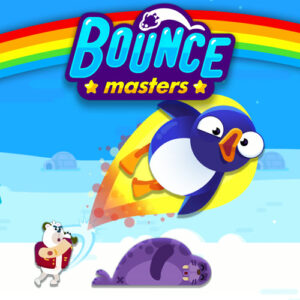
 Bouncemasters
Penguin Games Built Around Momentum, Stunts, and Survival
The Penguin tag brings together games that use a familiar character shape in very different ways. Some focus on launch power and distance, like Bouncemasters and the Learn To Fly series, where the main appeal is getting farther by improving timing, upgrades, and momentum. Others lean into survival movement and competitive positioning, such as JustFall.LOL and Knockout, which turn penguin-style movement into a test of balance, spacing, and reaction speed. Even Me and the Key fits the tag’s broader appeal through its playful problem-solving and unusual interaction design, showing that penguin-themed games can be about more than straightforward action.
Launch Power and Distance-Chasing Design
The most recognizable pattern in this tag is the launch game structure. Bouncemasters, Learn To Fly 2, and Learn to Fly 3 all center on getting a character airborne, then using upgrades or repeated attempts to push that result farther. The core loop is simple: create a better takeoff, make smarter mid-run adjustments, and turn each attempt into measurable progress. That structure keeps the focus on improvement rather than one-time success.
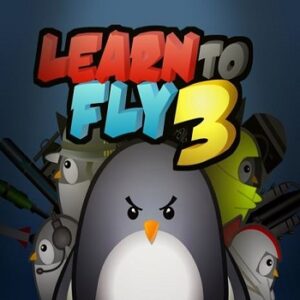
Learn To Fly 2 and Learn to Fly 3 especially show how this format can grow over time. The early runs are about basic distance, but progression systems add new layers of control and experimentation. Bouncemasters uses a more direct style, emphasizing timing and bounce-based momentum in a way that feels immediate and readable. In all three games, the player is not simply watching a penguin move; the player is actively shaping flight, lift, and distance through repeated refinement.
Physics, Timing, and the Value of Small Inputs
Penguin-tag games often reward careful timing more than rapid button presses. That is clear in Bouncemasters, where the angle and force of the launch matter, but it is also visible in the Learn to Fly games, where progress depends on understanding when to spend currency, when to retry, and how small upgrades alter the flight path. These systems make tiny decisions feel important because each one affects momentum.
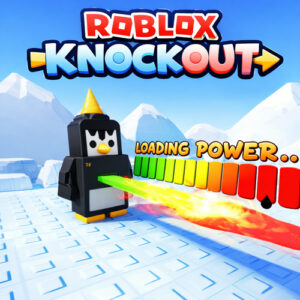
This same sensitivity appears in Knockout, though in a more competitive form. Instead of maximizing distance, the challenge comes from maintaining control while navigating opposition and hazards. The player has to read movement, conserve positioning, and avoid careless mistakes. The tag therefore includes both precision-driven solo games and faster reaction-based games, but they share a respect for control under pressure.
Balance and Elimination in the Faster Games
JustFall.LOL and Knockout shift the Penguin tag away from distance challenges and into unstable, last-one-standing play. The penguin theme suits this style well because the characters feel naturally slippery and lightweight, which fits games built around slippery platforms, sudden drops, and tight movement. Rather than optimizing a single run for distance, players focus on staying alive longer than everyone else.
That difference changes the way skill works. In the launch games, improvement is mostly about efficiency and progression. In the survival games, the pressure comes from reading space, anticipating collapse, and reacting to other players or changing terrain. JustFall.LOL favors quick adaptation, while Knockout leans into direct competition and confrontation. Both use the Penguin tag to support movement-heavy gameplay that can turn quickly from control into chaos.
Progression Keeps Repeated Runs Useful
The Learn to Fly games stand out because they turn repetition into long-term development. A failed run is not wasted; it produces information, upgrades, and a better sense of how the systems work. That structure is important in Penguin-tag games because it gives a simple premise room to grow. Instead of relying only on novelty, these games create a steady sense of accumulation.
Bouncemasters follows a similar principle, even if its presentation is more compact. The player keeps chasing stronger launches, better outcomes, and longer travel. The appeal lies in seeing an obvious metric improve. That makes the tag appealing to players who like measurable progress, especially when the mechanics stay readable from one attempt to the next. It also explains why these games remain distinct from the elimination-based titles: one rewards persistence through upgrades, the other rewards persistence through survival.
Playful Problem-Solving Beyond Movement
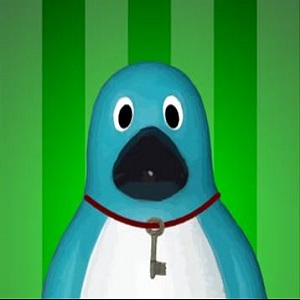
Me and the Key shows that Penguin-tag games are not limited to launch physics or competitive survival. Its presence in the group adds a puzzle-minded side to the tag, where observation and interaction matter more than momentum. That makes the collection feel broader, because it includes games that ask players to interpret unusual situations instead of simply improving performance through repetition.
This variety helps define the tag as more than a visual theme. The penguin identity can support action, physics, competition, and puzzle logic depending on the game. Some entries are built around distance and air time, while others are built around elimination, and at least one leans into a more abstract challenge structure. The common thread is a lightweight, easy-to-read presentation that leaves room for clean mechanics and quick experimentation.
Why the Penguin Tag Works Across So Many Styles
What ties Bouncemasters, Learn To Fly 2, Learn to Fly 3, JustFall.LOL, Knockout, and Me and the Key together is not a single genre, but a shared sense of movement and personality. The character theme suits games built on frictionless controls, readable physics, and immediate goals. That makes the tag useful for players who want short attempts, visible progress, or competitive rounds without heavy onboarding.
It also explains the range within the group. Some games are structured for repeated solo improvement, while others are designed around unpredictable multiplayer pressure. The Penguin tag collects all of those forms under a character style that keeps the games approachable while still leaving room for mastery.