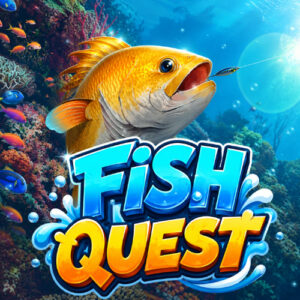
 Fish Quest

Fishing Games Mix Relaxed Casting With Tighter Arcade Pressure
The fishing tag covers more than quiet lakeside simulation. Across Fish Quest, Tiny Fishing, and Fish It Online, the core action is still about timing a cast, watching for a bite, and bringing up a catch, but the tone shifts sharply from game to game. Some titles lean into short, repeatable loops built around collection and upgrade paths, while others add competition, movement, or survival pressure that changes the meaning of every successful catch.
That variety is what makes fishing games distinct as a browser-game tag. The act of fishing is simple at the surface, yet it supports different goals: earning currency, filling a collection, surviving in rough conditions, or outpacing other players. The games in this tag use that familiar activity as a framework for progression rather than as a single fixed genre.
The Catch Loop: Timing, Patience, and Efficient Repetition
At the center of most fishing games is a loop built on patience and precision. Tiny Fishing makes this especially clear by turning each run into a controlled descent and return, where the value comes from how many fish can be gathered before heading back up. Fishing.io uses a similarly streamlined structure, emphasizing quick decisions and repeated action over complexity. In both cases, the player’s attention is pulled toward rhythm: cast, wait, react, recover, repeat.
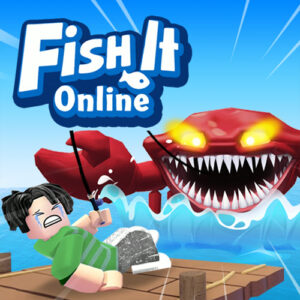
Fish It Online and Fish Quest suggest a broader version of the same loop, where the challenge is not just landing a catch but doing so efficiently enough to support ongoing progress. That makes fishing games unusually good at rewarding consistency. Small improvements in timing, route choice, or upgrade use often matter more than flashy play.
Progression Turns Fishing Into a Long-Term System
Several games in the tag use fishing as a progression engine. Tiny Fishing is especially representative, since its appeal comes from building a stronger setup over time and returning to the water with better reach and payoff. Fish Quest and Fish It Online also fit this pattern, where each session feeds a larger sense of advancement rather than ending with a single catch.
This structure gives the tag a clear replay loop. New players can understand the basics quickly, but the games create reasons to keep going by expanding inventory, improving efficiency, or unlocking access to more profitable catches. The progression is usually incremental rather than dramatic, which suits the calm, repeatable nature of fishing itself.
Competition Changes the Meaning of the Water
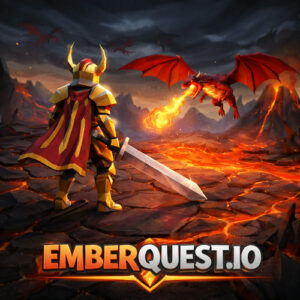
The fishing tag is not limited to solitary play. Fishing.io and EmberQuest.io point toward more competitive or shared-space design, where fishing becomes part of a larger multiplayer environment. In that setting, the water is no longer just a resource to harvest; it is a contested space where positioning, speed, and awareness shape outcomes.
Raaaaft.io pushes this idea in a different direction by combining fishing with survival and improvisation. Here, catching fish is tied to staying afloat and managing limited resources, so the act has immediate practical value. That shifts the focus from collection to survival planning. A fish is not just progress, but food, stability, and a sign that the player is managing the environment well enough to endure.
Fishing as Resource Management, Not Just a Hobby
The strongest thread running through these games is the way fishing becomes a resource system. In Raaaaft.io, fish support survival. In Tiny Fishing, they support upgrades and longer runs. In Fish Quest and Fish It Online, the catch often acts as currency or advancement material. This gives the tag a practical identity: fishing is rarely the final objective on its own, but a reliable method for creating momentum.
That design also explains why these games feel different from more open-ended simulation titles. The player is usually working toward a specific conversion between effort and reward. A successful cast leads to something useful, and that utility feeds back into the next attempt. The loop is simple, but it remains durable because it keeps turning small actions into measurable gains.
Accessible Controls, but Plenty of Room for Mastery
Fishing games are easy to start because their inputs are usually straightforward, yet they leave room for skilled play through pacing and efficiency. Tiny Fishing rewards knowing how far to push a run before returning. Fishing.io and Fish It Online depend on reading the flow of the game well enough to avoid wasted motion. Fish Quest suggests a more guided progression, but even there, success still comes from making clean decisions with limited time or resources.
That balance helps the tag reach different kinds of players. Some are drawn to the low-stress repetition of casting and collecting. Others want a light strategic layer, especially when upgrades, competition, or survival are involved. The best fishing games in browser play keep the controls simple while letting the systems underneath become more demanding over time.
Why This Tag Spans Calm Collection and High-Stakes Survival
The games grouped under fishing show how flexible the theme can be. A title like Tiny Fishing uses the activity as a compact upgrade loop. Raaaaft.io uses it as a survival tool. Fishing.io and EmberQuest.io place it closer to competitive or shared-space play. Fish Quest and Fish It Online sit between those extremes, combining collection with steady advancement.
That spread is useful because it keeps the tag from feeling narrow. Fishing can be meditative, economic, competitive, or survival-based depending on how the game frames the same basic action. The result is a tag built around one familiar verb, but shaped by very different motivations and pressures.