Drawing Games Built Around Lines, Paths, and Quick Decisions
The Drawing tag covers a surprisingly wide range of browser games, but the common thread is simple: a player turns marks on a screen into a working solution. In Draw Bridges and Car Drawing, the line itself becomes a tool for movement. In Happy Glass and Sugar Sugar, drawing is closer to engineering, where a path has to guide a fluid or falling object into the right place. Other games, like Draw Tattoo and Rollercoaster Creator, use drawing more as a test of accuracy and planning, while Line Rider, Line Rider 2, and Free Rider HD turn hand-drawn tracks into a physics playground.
That mix is what makes the tag so broad. Some games ask for clean solutions under pressure. Others reward experimentation, strange shapes, or clever shortcuts. A few lean into social play, such as Pinturillo 2, Gartic.io, and Skribbl.io, where drawing becomes communication instead of puzzle-solving. Across the group, the act of drawing is never just decoration; it is the core mechanic that decides whether a level works, a ride survives, or another player guesses correctly.
Drawing as a Physics Tool
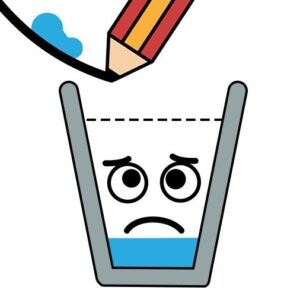
Several of the strongest examples in this tag treat drawn lines as physical objects. Draw Bridges asks players to build structure where gaps would otherwise stop movement. Happy Glass uses drawn paths to redirect liquid, and success depends on understanding angles, gravity, and timing rather than artistic quality. Sugar Sugar follows a similar logic, but with a calmer pace that still depends on precise routing.
These games are less about freeform art than about solving spatial problems. A line that is too short, too steep, or placed in the wrong spot can fail immediately. That makes the challenge easy to understand but hard to master. Players learn to think in terms of support, flow, and momentum, which gives the tag a strong puzzle identity even when the presentation stays simple.
Tracks, Stunts, and the Appeal of Motion
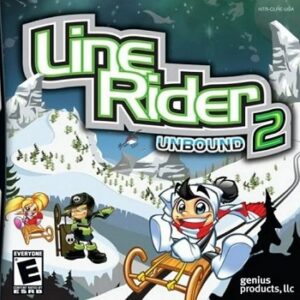
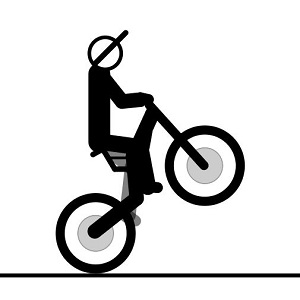
Line Rider, Line Rider 2, Free Rider 2, and Free Rider HD push drawing into a more kinetic direction. Instead of guiding a single object to a finish, the player creates a track and watches a rider or vehicle interact with it. That shift changes the whole feel of the tag. Precision still matters, but so does style, rhythm, and the ability to build something that behaves well once motion begins.
These games attract players who enjoy testing ideas through trial and error. A ramp can launch a rider smoothly or send them into a crash. A curve can create flow, while a rough section can interrupt it. Because the result is visible in motion, these games often encourage repeated editing and refinement. The drawing process becomes part construction, part performance.
Creative Challenges That Care About Accuracy
Not every drawing game is open-ended. Draw Tattoo and Car Drawing show a more controlled side of the tag, where the player has to make the right shape rather than invent any shape at all. That kind of design keeps the focus on hand control, proportion, and timing. The satisfaction comes from matching the expected form cleanly, not from improvising.
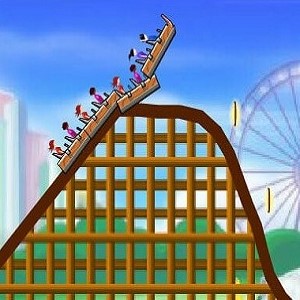
Rollercoaster Creator sits between creativity and constraint. It asks for imagination, but the creation still has to function as a ride. Games like this are common in the Drawing tag because they make players balance artistic freedom against mechanical limits. The result is a collection that rewards neat lines, deliberate curves, and the ability to adapt when a first attempt does not work.
Competitive Sketching and Word Play
Another branch of the tag turns drawing into a social guessing game. Pinturillo 2, Gartic.io, and Skribbl.io are built around speed, clarity, and the ability to communicate an idea with a few strokes. In these games, good drawing is not about detail. It is about making a clue readable fast enough for other players to catch it.
That changes the skill set completely. Players have to think about what parts of an object are most recognizable, how to simplify shapes, and when to leave out information. The fun comes from watching one person race to sketch and everyone else race to interpret. Compared with the physics-based titles, these games are more social and improvisational, but they still depend on the same core idea: a drawing can solve a problem.
Why the Tag Keeps Returning to Simple Tools
The best-known Drawing games keep the interface lean because the mechanic itself carries the interest. A single line in Line Rider can create a whole stunt run. One bridge in Draw Bridges can save a vehicle. A quick sketch in Skribbl.io can shift the outcome of a round. That simplicity makes the tag easy to approach, but the outcomes still vary sharply depending on the game’s rules.
Some titles emphasize planning before drawing, while others reward fast correction after a failure. Some ask for structural thinking, and others ask for visual shorthand. Even the more playful entries, such as Google Santa Tracker, fit the tag by using drawing as a direct interaction rather than a cosmetic feature. The collection works because it keeps returning to the same core action and then reframing it in very different ways.
What Players Get from Drawing Games
The tag appeals to several kinds of players at once. Puzzle fans get the satisfaction of finding a clean route through a problem in Happy Glass or Sugar Sugar. Physics players get to experiment with motion and momentum in Free Rider HD and Line Rider 2. Social players get fast, playful competition in Gartic.io and Pinturillo 2. Even casual players can enjoy the immediate feedback that comes from seeing a drawing fail or succeed right away.
That variety helps explain why the Drawing tag stays so flexible. It is not limited to art games, and it is not limited to puzzles either. Instead, it brings together games where hand-drawn input is the main mechanic, whether the goal is to build, guide, guess, or keep something moving.
 Haaland Coloring Book
 Mazes Draw The Path
 Draw Action
 Your AI Slop Bores Me
 Draw Tattoo
 Draw Bridges
 Sand Painting
 Drawize
 Thisissand
 Free Rider 2
 Car Drawing
 Line Rider 2
 Sugar Sugar
 Free Rider HD
 Google Santa Tracker
 Happy Glass
 Rollercoaster Creator
 Pinturillo 2
 Gartic.io
 Line Rider
 Pixel Art
 Skribbl.io