Crash Games Turn Momentum Into the Main Challenge
Crash games are built around loss of control, impact, and the messy consequences of speed. In this tag, that idea appears in several forms: ragdoll physics in Happy Wheels, vehicle wrecking and tuning in Car Smash Simulator: Crash & Tune, downhill pressure in Deadly Descent, and reckless traffic energy in Car Chaos. The common thread is not just destruction, but the way each game asks players to manage motion right up until the moment things fall apart.
That makes the tag broader than simple demolition. Some games lean into deliberate collisions, while others create crashes through unstable routes, steep drops, or vehicles that seem designed to fail. No Brakes: Total Mayhem and Slide Down emphasize momentum as a problem, while BMG: Ragdoll Car Race and Car Crash Simulator Royale use pileups and impacts as the core source of structure. The result is a collection defined by instability rather than precision.
Physics, Ragdolls, and the Humor of Failure
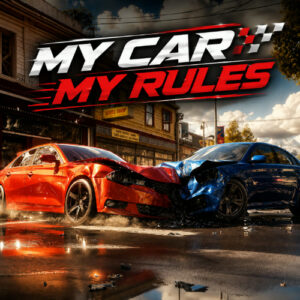
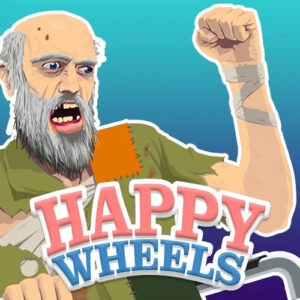
A large part of the appeal comes from physics systems that make every mistake visible. Happy Wheels remains one of the clearest examples of this approach, using ragdoll reactions to turn accidents into the main attraction. BMG: Ragdoll Car Race follows a similar logic with vehicles and bodies that respond to force in exaggerated ways, while My Car My Rules suggests a looser, more personal style of control that can still end in abrupt wrecks.
These games work because the crash itself becomes readable. A failed landing, a bad angle on a ramp, or a violent hit is not only a failure state; it is also a performance of physics. That gives crash games a distinct identity compared with standard racing or driving games. In this tag, the aftermath matters as much as the attempt.
Driving Games Where Control Is Deliberately Fragile
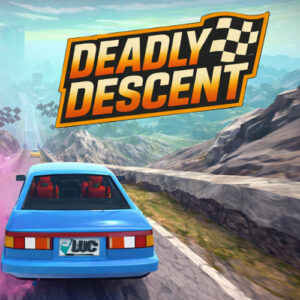
Several titles use cars, but they do not treat driving as clean lap racing. Offroad Crash Climber 4X4 focuses on rough terrain and steep, unstable climbs. Deadly Descent pushes downward movement into dangerous territory, where maintaining balance is just as important as going fast. Car Chaos and Car Crash Simulator Royale present driving as something that can break down into collisions, traffic disruption, or competitive wrecking.
This is where crash games differ from conventional racing. Instead of rewarding smooth cornering alone, they often reward survival under pressure, recovery after impact, and the ability to keep moving when the vehicle is already damaged or compromised. No Brakes: Total Mayhem pushes that idea even further by removing one of the most obvious safety tools from the equation.
Destruction as a Progression Loop
Some crash games are built around the idea that destruction is not random, but something to refine. Car Smash Simulator: Crash & Tune suggests a cycle of testing, smashing, and adjusting, which gives damage a purpose beyond spectacle. My Car My Rules also fits the same broader pattern of experimentation, where the player appears to shape the driving style rather than simply complete preset laps.
That creates a different kind of motivation from pure racing. Instead of chasing perfection, players may be trying to discover how far a vehicle can be pushed, what happens at certain speeds, or how different setups respond to impact. Even in more chaotic games, the loop often becomes about learning patterns in destruction. The crash is the feedback system.
Stunts, Descents, and the Need to Commit
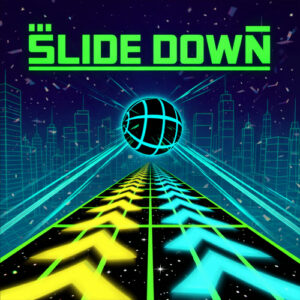
Many games in this tag reward commitment over caution. Slide Down and Deadly Descent both suggest a one-way movement pattern where hesitation is costly. Offroad Crash Climber 4X4 works in the opposite direction but still depends on commitment, since climbing rough terrain means committing to lines that may not be recoverable once a vehicle loses traction. No Brakes: Total Mayhem strips away retreat entirely, which makes every decision feel more final.
That creates a specific kind of tension. The player is often not choosing between safe and risky so much as choosing between different kinds of danger. In crash games, overcorrection can be as destructive as recklessness. The best runs usually come from controlled momentum, not perfect safety.
Why Crash Games Attract Different Kinds of Players
The tag reaches several audiences at once. Some players want the slapstick energy of wrecks and ragdolls, which is where Happy Wheels and BMG: Ragdoll Car Race stand out. Others are drawn to vehicle mayhem and collision-driven systems found in Car Chaos and Car Crash Simulator Royale. A third group may prefer the challenge of handling vehicles in difficult terrain, which is closer to Offroad Crash Climber 4X4 and Deadly Descent.
What ties them together is the appeal of watching systems fail in legible ways. Crash games are rarely about tidy mastery alone. They are about learning how speed, weight, terrain, and impact interact, then using that knowledge to survive longer, crash more dramatically, or turn damage into part of the play pattern.
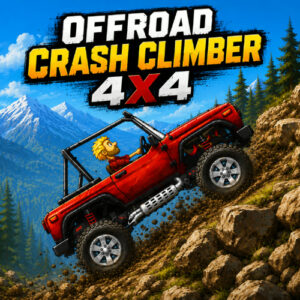 Offroad Crash Climber
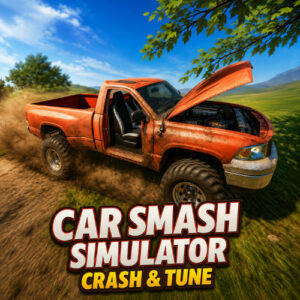 Car Smash Simulator:
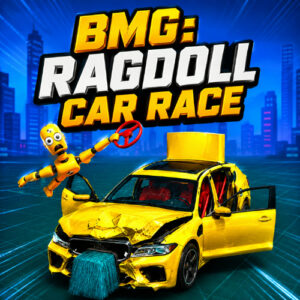 BMG: Ragdoll Car
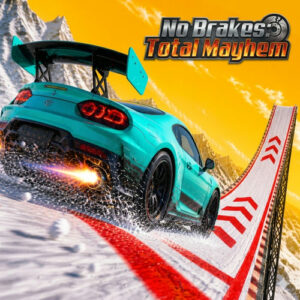 No Brakes: Total
 My Car My
 Deadly Descent
 Happy Wheels
 Slide Down
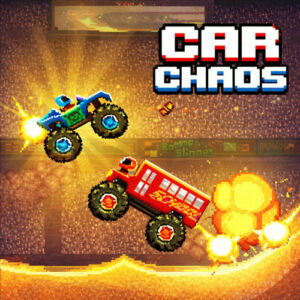 Car Chaos
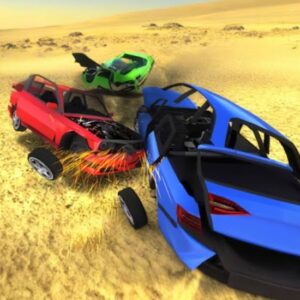 Car Crash Simulator