 Cluster Truck Online
Cluster Truck Online
Cluster Truck Online
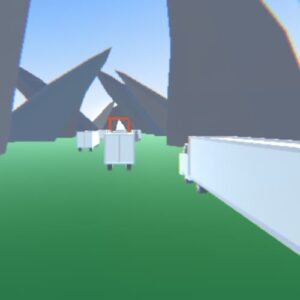
The truck tag points to a very specific kind of gameplay: vehicles are less about careful road etiquette and more about managing weight, momentum, and unpredictable surfaces. Cluster Truck Online captures that idea clearly by turning trucks into moving platforms rather than ordinary driving machines. Instead of following a route from a cab, the player is pushed into a space where trucks become part of the level geometry, and every jump depends on timing, positioning, and the ability to adapt when the environment shifts.
That makes truck games different from standard driving titles. The focus is rarely on laps or traffic rules. It is usually on moving through a dangerous setup where one mistake leads to a fall, a crash, or a failed run. The appeal comes from the tension between heavy vehicles and precise control, which creates a style of play that feels physical even when the rules are simple.
In truck-based browser games, forward movement is only part of the challenge. The real work comes from controlling momentum under pressure. Cluster Truck Online leans into this by demanding fast reactions on unstable truck chains, where the player has to read motion quickly and commit to jumps without overthinking. The trucks themselves are constantly shifting, so success depends on rhythm as much as speed.
This kind of design rewards players who can recognize patterns in movement. A truck game may look straightforward at first, but the best runs depend on understanding when to hold position, when to leap, and when to recover from an awkward landing. Even a small delay can change the outcome completely.
One of the most distinctive patterns in the truck tag is the use of vehicles as temporary terrain. In Cluster Truck Online, trucks behave like moving platforms, which changes the usual relationship between player and vehicle. The player is not trying to stay inside the truck or steer it safely to a destination. Instead, the trucks form a shifting path through space, and the challenge comes from treating them like stepping stones that refuse to stay still.
That design creates a strong sense of improvisation. Rather than relying on a fixed route, the player reads the layout as it unfolds and adjusts on the fly. It is a simple idea, but it gives truck games a very different identity from racing or simulation titles.
Truck games often ask for repeated attempts, and that is especially true in Cluster Truck Online. The structure supports short retries, which makes each mistake feel like information rather than a full setback. Players learn the spacing of the trucks, the timing of jumps, and the limits of their own reactions through repetition.
This trial-and-error structure suits the tag well because truck movement can be unpredictable without feeling random. The challenge is not memorizing a perfect route from the start. It is learning how to stay composed while the path changes around you. That makes the genre approachable for new players while still leaving room for mastery.
Truck games are usually remembered for their size and weight, but the best examples depend on precision. Cluster Truck Online shows how a heavy subject can still produce delicate gameplay. The player has to land on surfaces that are moving, uneven, or about to disappear from view, so every action is measured against a strict margin for error.
That precision creates a specific kind of tension. The game is not asking for long-term resource planning or vehicle tuning. It is asking for split-second judgment. The result is a tag that appeals to players who enjoy movement challenges, platforming pressure, and the satisfaction of surviving a risky sequence through careful control.
Within browser games, the truck tag stands out because it can turn a familiar object into an unstable obstacle course. Cluster Truck Online demonstrates how a simple concept can support a focused skill test without needing complex systems. The trucks are not decorative. They define the structure of the run, the pace of the action, and the player’s entire approach to progression.
That clarity is part of the appeal. Truck games work well when they strip the idea down to movement, timing, and survival. The best moments come from adapting to motion that never quite settles, which gives the tag a distinct identity among action and platform-style browser games.