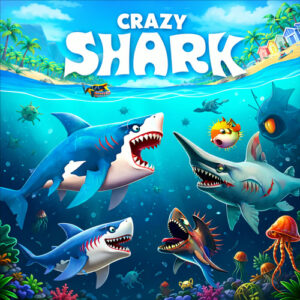
 Crazy Shark

Shark Games Lean Into Predation, Panic, and Territory
The Shark tag gathers games built around the same fundamental fantasy: becoming the threat in the water rather than the target. Across Crazy Shark, New York Shark, Hungry Shark Arena, Miami Shark, and Stabfish.io, the emphasis usually falls on hunting, collision, survival, and map control. Some titles frame sharks as uncontrollable forces of destruction, while others turn them into competitive predators that must grow, outmaneuver rivals, and stay alive in crowded environments.
That mix gives the tag a strong identity. Shark games rarely settle into passive exploration. They push constant movement, quick decisions, and a clear relationship between size and power. Even when the tone shifts from arcade chaos to multiplayer competition, the same core tension remains: every space on the map can be prey, danger, or both.
Destruction as the Core Loop
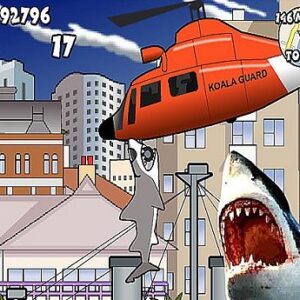
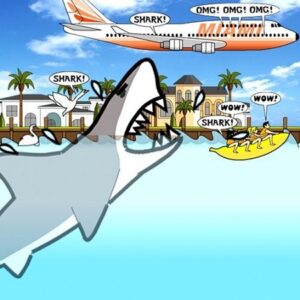
Several games in the tag use sharks as tools of large-scale disruption. Miami Shark and New York Shark are built around turning a coastal environment into a target-rich playground, where the pleasure comes from smashing through obstacles and overwhelming anything in reach. Crazy Shark follows the same broad instinct, favoring fast, direct action over careful positioning.
These games are less about realistic shark behavior than about momentum. The player is encouraged to keep moving, keep attacking, and keep chaining damage. That structure creates a rhythm that is easy to grasp quickly, but still leaves room for timing and route choice. The fun comes from how much damage can be caused before the action stalls.
Growth Turns Survival Into a Race
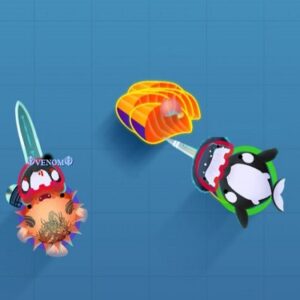
Hungry Shark Arena and Stabfish.io show a different side of the Shark tag: the shark is not automatically dominant. Instead, growth becomes the central objective, and early vulnerability matters as much as late-game power. In these games, size is not just a cosmetic change. It changes access, safety, and the range of possible attacks.
This creates a familiar but effective pattern. Small sharks must avoid stronger opponents, pick off easier targets, and search for ways to scale up without getting eliminated. Once growth kicks in, the balance shifts and the same map that once felt dangerous becomes an arena for hunting. The appeal lies in that reversal, where survival work gradually transforms into pressure on everyone else.
Competitive Waters and Player-Driven Pressure
The io-style structure of Stabfish.io and the arena format of Hungry Shark Arena make other players part of the environment rather than a separate mode. The map is not only filled with food or obstacles; it is filled with competitors chasing the same resources. That changes every movement decision, because a safe path can become risky the moment another shark enters the area.
Compared with single-player destruction games like Miami Shark or New York Shark, these titles create less scripted chaos and more adaptive pressure. Success depends on reading movement patterns, choosing when to commit, and knowing when to retreat. The pace can be aggressive, but the real challenge is tactical restraint.
Simple Rules, Constant Escalation
Shark games often work because their rules stay readable while the situation becomes increasingly unstable. Eat, attack, avoid stronger threats, and keep moving. That basic structure is present in different forms across the tag, whether the goal is city destruction, arena survival, or multiplayer dominance. The player rarely needs to manage complex systems, but the changing balance of power keeps the action from feeling static.
Crazy Shark and Miami Shark tend to favor direct spectacle, while Hungry Shark Arena and Stabfish.io ask for more awareness of opponents and positioning. The contrast matters because it shows how flexible the tag can be. One version gives immediate release through chaos; another rewards patience, timing, and opportunistic feeding.
Why the Shark Tag Works Across Different Play Styles
The strongest throughline in the Shark tag is agency. Whether the shark is smashing a city, fighting for survival, or growing into a top predator, the player is rarely stuck in a defensive role for long. That makes the games attractive to different kinds of players. Some want fast arcade destruction, others want competitive tension, and others just want the clean satisfaction of becoming larger and more dangerous over time.
- Action-focused players are drawn to the destructive pace of Miami Shark, New York Shark, and Crazy Shark.
- Competition-focused players tend to favor Hungry Shark Arena and Stabfish.io for their shared-resource pressure.
- Progression-focused players enjoy the growth curve that turns a vulnerable shark into a dominating force.
- Arcade fans often appreciate how quickly each game establishes its goals and hazards.
Movement, Positioning, and Timing Under Water
Even with different formats, shark games depend heavily on movement discipline. A shark that hesitates loses momentum, but reckless movement can put the player into danger just as quickly. In arena-based entries, this means circling targets, avoiding larger threats, and attacking from favorable angles. In destruction-based games, it means maintaining enough speed to keep the chain of damage going.
That shared emphasis gives the Shark tag a distinct feel. The player is not just pressing attack buttons; the player is steering a predator through pressure, opportunity, and risk. The best moments in Stabfish.io and Hungry Shark Arena come from efficient route choices, while Miami Shark and New York Shark reward staying in motion long enough to cause maximum disruption.