 Magic Tiles

Piano Games Turn Timing Into the Main Skill
Piano games strip the idea of a keyboard down to its most readable parts: timing, rhythm, pattern recognition, and finger control. In Perfect Piano and Virtual Piano, the instrument itself is the focus, so the challenge comes from translating on-screen notes into clean input. Magic Piano Tiles and Piano Tiles take a different route, turning performance into a fast reaction test where accuracy depends on seeing patterns early and keeping pace with the scroll. Multiplayer Piano adds a social layer, but the core appeal remains the same: pressing the right notes at the right moment without losing the structure of the piece.
That shared foundation makes the piano tag broader than it first appears. Some games lean toward learning and practice, while others emphasize reflexes or improvisation. The result is a collection that rewards players who enjoy repetition, improving through small corrections, and watching a song become more manageable over time.
Two Main Styles Shape the Tag
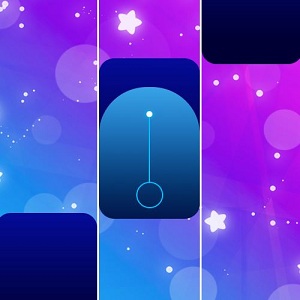
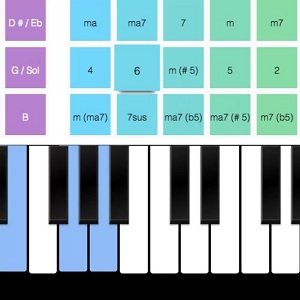
The most visible split in piano games is between note-accurate music play and tile-based speed challenges. Perfect Piano and Virtual Piano sit closer to simulation, where players work with an on-screen layout that resembles a real instrument. This style suits players who want direct note input and a clearer sense of melody. By contrast, Magic Piano Tiles and Piano Tiles reduce the piano to a lane of falling targets, making the experience more about rhythm under pressure than instrument handling.
Multiplayer Piano sits between those ideas. It still centers on the keyboard, but the live shared environment changes the tone of play. The mechanics are familiar, yet the presence of other players introduces spontaneity that the single-player titles do not require.
Rhythm Recognition Matters More Than Raw Speed
Even when the action looks fast, piano games usually reward pattern reading over frantic tapping. In tile-based titles, success depends on anticipating sequences instead of reacting one note at a time. That is why experienced players often look calm even when the screen moves quickly. The rhythm has become familiar, and the hands are following a learned structure rather than improvising from scratch.
This is especially clear in Magic Piano Tiles and Piano Tiles, where the visual stream can become dense but still follows musical logic. The player who understands spacing and cadence has an advantage over the player who only chases speed. In Perfect Piano, that same principle appears in a different form: accurate note placement matters more than forcing inputs quickly.
Practice, Repetition, and Musical Memory
Piano games often attract players who like measurable improvement. A song that feels overwhelming at first can become manageable after several attempts, and that progression is easy to feel because mistakes are immediate. Perfect Piano and Virtual Piano especially support this style of play, since they encourage familiarity with note layouts and musical sequences.
This repeated practice also gives the genre a strong memory component. Players begin to recognize recurring note clusters, hand positions, and rhythm changes. In Piano Tiles, that memory can be the difference between holding a streak and breaking it. In Multiplayer Piano, memory helps players respond more confidently when they join a live performance or improvise with others.
Competition Comes in Different Forms
Not all piano games are competitive in the same way. Some challenge players against their own previous runs, while others create direct social pressure. Magic Piano Tiles and Piano Tiles usually measure performance through accuracy and survival, which makes each attempt feel like a score chase. The goal is often to last longer, stay cleaner, or improve consistency.
Multiplayer Piano changes that dynamic by adding human presence to the keyboard. The competition is less about fixed scoring and more about reacting to other players’ timing, style, and choices. That gives the tag a wider range than solo rhythm play alone, since one title can feel like a practice tool while another feels like a shared session.
Why the Piano Tag Appeals to Different Players
The tag works because it supports several motivations at once. Some players want the feel of a digital instrument, which makes Virtual Piano and Perfect Piano the natural fit. Others want the clean pressure of rhythm tests, which is where Magic Piano Tiles and Piano Tiles stand out. Players who prefer interaction over isolation often move toward Multiplayer Piano, where the same basic mechanics become more expressive through live participation.
That variety keeps the topic from becoming one-note. The piano tag is built around a familiar musical image, but the gameplay underneath can be strict, social, fast, or exploratory depending on the game. Across the collection, the common thread is control: over tempo, over accuracy, and over the ability to keep a musical sequence intact.