Parking Games Turn Tight Spaces Into a Skill Test
Parking games focus on a simple but demanding task: placing a vehicle accurately in a confined space without scraping obstacles, missing angles, or getting boxed in by traffic. The tag covers a wide range of approaches, from the more open-ended maneuvering in Car Parking Simulator to the route-planning pressure of ParkOut: Traffic Escape. What connects the games is not speed alone, but control. Every turn, reverse, and correction matters, and the challenge usually comes from reading space before committing to a move.
That makes the genre appealing to players who enjoy precision over chaos. Parking Fury, Parking Fury 2, and Parking Fury 3 all lean into this idea by turning parking into a repeated exercise in positioning and timing, while Parking Space and Garage Parking place more emphasis on fitting a vehicle into cramped layouts. The pressure comes from geometry as much as from reaction time.
Reversing, Turning, and Correcting on the Fly
Most parking games are built around low-speed driving, but that does not make them easy. In fact, the slower pace often exposes every mistake more clearly. Players spend a lot of time backing up, adjusting steering angles, and inching forward to avoid clipping corners. Car Parking Simulator and Garage Parking reflect this style well, where clean movement is usually more important than taking the shortest route.
Bus Parking 3D pushes that challenge further by asking players to control a larger vehicle in spaces that leave less room for error. Bigger vehicles change the whole feel of the task: a turn that works for a car may fail for a bus, and narrow lanes become more difficult to manage. The result is a genre built on patience and spatial awareness rather than reflex-driven driving.
Traffic, Obstacles, and Escape Routes
Some games in the tag add a puzzle layer by making parking part of a larger traffic problem. ParkOut: Traffic Escape stands out here, since the goal is not just to park well but to untangle vehicles and create a path through congestion. That shifts the focus from one isolated maneuver to a broader layout problem. Instead of treating each car as a single parking attempt, the player has to think about order, obstruction, and which vehicle should move first.
Parking Adventure also suggests a more structured progression through parking environments, where the act of reaching the space can be tied to hazards or route choices along the way. In these games, parking becomes part of a larger navigation challenge. The player is not only controlling a vehicle but managing the environment around it.
What Makes the Tag Repeatedly Replayable
Parking games work well as short-session challenges because the rules are easy to understand but hard to execute perfectly. Success depends on clean inputs, and failure usually feels understandable. That creates a strong retry loop: if a run in Parking Fury 2 ends badly, the reason is usually visible, whether it was a late turn or a poor approach angle.
This clarity is a major reason the tag has staying power. Each attempt becomes a small test of discipline, and the games can scale difficulty without changing the core idea. A simple parking lot in Parking Space may teach basic control, while tighter stages in Parking Fury 3 demand more planning and better recovery. The structure stays familiar, but the margin for error shrinks.
From Clean Parking to Full Driving Mastery
The tag also shows how parking games can branch out from pure placement into broader driving skill. Parking Fury and its sequels often feel like compact driving drills, where the player learns to judge turning radius, vehicle length, and stopping distance under pressure. Car Parking Simulator and Bus Parking 3D sit closer to simulation-minded control, while Garage Parking and Parking Space emphasize precision in tight conditions.
Because of that range, the Parking tag attracts different kinds of players. Some want a quick challenge with obvious goals, while others enjoy refining movement until each maneuver is efficient. The best parking games in the tag are not about spectacle. They are about reading a space correctly, making careful decisions, and finding the exact line that gets the vehicle in without wasted motion.
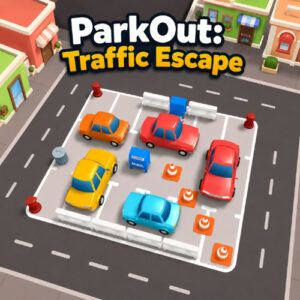 ParkOut: Traffic Escape
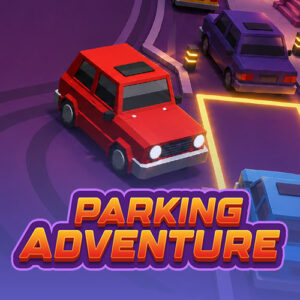 Parking Adventure
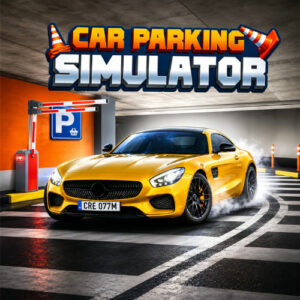 Car Parking Simulator
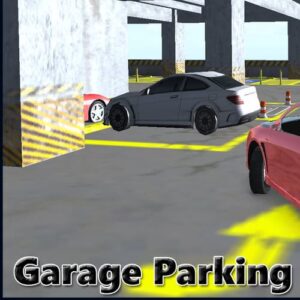 Garage Parking
 Parking Fury
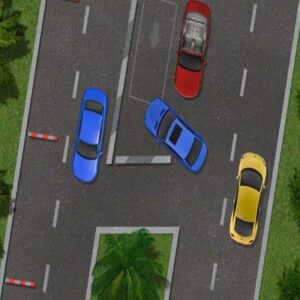 Parking Space
 Bus Parking 3D
 Parking Fury 2
 Parking Fury 3