 Food Truck: Cooking Games

Papa’s Games and the Rhythm of Restaurant Service
The Papa’s tag is built around a very specific kind of management play: fast, orderly, and heavily structured restaurant work. Across Papa’s Bakeria, Papa’s Sushiria, Papa’s Pancakeria, Papa’s Hot Doggeria, and Papa’s Burgeria, the core loop is usually the same even when the recipes change. Take orders, prepare ingredients in the right sequence, and assemble each meal with enough accuracy to satisfy demanding customers. The appeal comes from that steady pressure, where every station matters and small mistakes affect the final score.
What stands out across the tag is how the games turn ordinary food prep into layered timing tests. Papa’s Pizzeria and Papa’s Taco Mia emphasize build accuracy and cooking control, while Papa’s Freezeria and Papa’s Pancakeria push players to manage multiple steps that can drift out of sync if attention slips. Even when the setting changes from a diner to a sushi bar or burger stand, the design keeps returning to the same pattern: memorize orders, work cleanly, and move through a service rush without losing precision.
Orders, Stations, and the Pressure of Sequence
The strongest common thread in Papa’s games is the station-based structure. Tasks are divided into parts that must happen in the right order, which creates a kind of controlled multitasking. In Papa’s Cheeseria, building a sandwich and handling grilled items feels different from shaping a pancake stack in Papa’s Pancakeria, but both depend on sequencing rather than improvisation. Players are rarely asked to do one simple thing quickly; they are asked to juggle several simple things in the right rhythm.
This structure gives the tag its distinctive pace. The work becomes harder not because the rules are obscure, but because the game expects consistent execution across repeated service cycles. Papa’s Sushiria leans into careful assembly, while Papa’s Burgeria and Papa’s Hot Doggeria rely on timing and topping placement. That balance of repetition and accuracy is what makes the format recognizable from one entry to the next.
Cooking as a Timing Puzzle
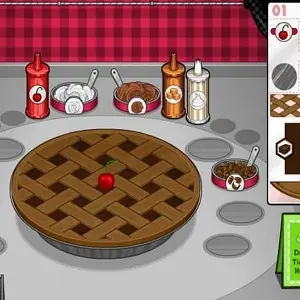
Although the games are often grouped as restaurant simulations, they behave more like timing puzzles with food themes. Grilling, pouring, flipping, stacking, and finishing all demand attention to detail. Papa’s Freezeria is a good example of how the series uses measuring and layering to create a score-based challenge, while Papa’s Bakeria adds a pastry-focused variation that still rewards consistency over speed alone.
The cooking layer is rarely about culinary knowledge. It is about reading visual cues, judging when to move, and understanding how each action affects the next one. That is why these games remain approachable for beginners but still hold up under replay for players who want cleaner runs. A well-made order in Papa’s Taco Mia or Papa’s Cheeseria feels earned because it comes from managing both timing and sequence under pressure.
Customer Scores Turn Routine Work Into Mastery
One reason the Papa’s tag has such lasting appeal is the scoring structure. Each customer is a performance check, and the game makes quality visible through ratings, tips, and satisfaction. That means the loop is not only about finishing orders; it is about improving them. The player is always balancing speed against precision, knowing that rushing can cost points and hesitation can slow service.
This is where the series becomes more demanding than it first appears. Papa’s Pizzeria and Papa’s Burgeria may seem straightforward at a glance, but repeated play reveals how much of the challenge lies in consistency. The games reward learning customer habits, reducing wasted motion, and keeping each station under control. That focus on measurable performance gives the whole tag a strong sense of progression without relying on combat or exploration.
Theme Changes, Same Design Logic
The different restaurant themes are not cosmetic in a trivial way; they shape how the gameplay feels while preserving the same structure. Papa’s Hot Doggeria has a faster, more line-driven energy than Papa’s Pancakeria, which naturally suits a breakfast-style workflow. Papa’s Sushiria brings in a cleaner, more precise presentation style, while Papa’s Cheeseria and Papa’s Freezeria lean into layered assembly. The variations keep the tag from feeling repetitive even though the underlying format stays familiar.
That consistency is part of the brand identity. Players who enjoy one game in the series usually understand what they are getting from the others: structured jobs, visible progress, and escalating order complexity. The individual themes matter because they alter the presentation and the feel of each station, but the games remain anchored by the same careful service loop.
Why the Tag Fits Both Casual and Methodical Players
Papa’s games attract a wide range of players because they are easy to begin and deep enough to refine. The basic actions in Papa’s Bakeria, Papa’s Taco Mia, or Papa’s Pancakeria are simple to understand, but the higher-level challenge comes from organizing tasks efficiently and maintaining accuracy across many orders. That makes the tag appealing to players who like relaxed repetition as well as those who enjoy chasing cleaner, more efficient runs.
- Beginner-friendly structure: clear stations and visible objectives make the loop easy to learn.
- Precision focus: timing and placement matter more than guesswork.
- Progress through repetition: familiarity with recipes and customer expectations improves performance.
- Theme variety: burgers, tacos, sushi, pancakes, hot dogs, and pastries keep the formula fresh.
Because the games share the same service-first structure, the tag works well as a catalog of related experiences rather than unrelated restaurant titles. Each entry adds a new food theme, but the deeper appeal stays rooted in workflow, order management, and the satisfaction of doing routine tasks with greater control.