MMO Games Built Around Persistent Progress
The MMO tag covers a wide range of browser and client-based games, but the common thread is persistence. Progress carries forward across sessions, and that long-term structure shapes everything from combat choices to territory control. In Genshin Impact and Tibia, advancement is tied to character growth and preparation. In Forge Of Empires and Elvenar, the focus shifts toward city development and steady expansion. Other games in the tag, such as World of Tanks, World of Warships, and Dark Orbit, use the same persistence in a more combat-driven form, where upgrades and positioning matter as much as moment-to-moment skill.
That variety is what gives MMO games their broad appeal. Some are built around long campaigns and gradual power gains, while others are about taking a place in a larger living world. Whether the goal is building an empire, leveling a hero roster, or joining large-scale battles, the format rewards players who like visible progress and long-term planning.
Strategy, Construction, and Long-Term Growth
Several games in this tag treat management as the central activity rather than a side system. Rise of Kingdoms, Call of War, and Goodgame Empire all emphasize expansion, resource use, and the timing of upgrades. Forge Of Empires and Elvenar lean even further into building design and development pacing, where decisions made early can influence the shape of a settlement for a long time. The player is not just reacting to immediate threats but managing a structure that keeps evolving.
These games often attract players who enjoy the planning layer as much as the results. Growth can be incremental, but it is rarely passive. A well-run economy, the right tech path, and carefully timed expansions can matter more than constant input. That gives the MMO tag a strong strategic branch, especially for players who like to work toward a stronger position over days or weeks instead of a single match.
Combat MMOs That Reward Position and Preparation
Action-heavy MMO titles in the list tend to combine direct control with progression systems that change how battles unfold. World of Tanks and World of Warships are clear examples: they ask for aiming, spacing, map awareness, and coordination, but they also depend on vehicle progression and equipment choices. Enlisted pushes into large-scale wartime combat with squads and battlefield objectives, while Dark Orbit and Star Trek Online use ship-based combat to create encounters built around movement and target selection.
Hordes.io and Wizard101 represent a different angle on combat MMO design. One relies on a more open, multiplayer action structure, while the other uses class identity and spell-based turn-by-turn tactics. Both still fit the tag because they turn combat into a repeated social activity with progression attached. Across these games, success usually comes from understanding range, timing, and the value of upgrades rather than from raw speed alone.
Hero Collections and Squad-Based Progression
Some MMO-tagged games build their long-term loop around assembling and improving a roster. RAID: Shadow Legends and Hero Wars are strongly associated with hero collection, team composition, and layered progression. Rather than focusing on one character, they push players to manage a group whose members fill different roles. That structure adds another decision-making level: the challenge is not just winning battles, but building a lineup that can handle different enemy types and activity demands.
This also creates a different kind of attachment to progression. Power is distributed across a roster, so upgrades have to be prioritized carefully. Players often return to refine synergy, strengthen weaker units, or prepare a second team for new content. The appeal lies in optimization, not simply accumulation. For many MMO fans, that is the most satisfying part of the format: turning a broad collection of units into a working system.
Worlds That Mix Social Play With Role Identity
Star Stable, Wizard101, and Neverwinter show how MMO games can be shaped by role identity rather than only by combat scale. Star Stable centers its world around riding, exploration, and progression through a specific social setting. Wizard101 uses magical classes and structured questing to create a more approachable fantasy MMO rhythm. Neverwinter sits closer to traditional action-RPG territory, but it still keeps the MMO emphasis on shared spaces, class building, and repeatable content.
These games are often attractive to players who want a recognizable character role inside a persistent world. The appeal is not only about leveling up, but about inhabiting a fantasy identity over time. That identity can be tied to horses, magic, or adventuring parties, yet the underlying MMO pattern stays the same: return regularly, advance gradually, and take part in a larger community structure.
Why the MMO Tag Covers So Many Different Playstyles
The games in this tag do not all ask for the same kind of commitment, but they do share a sense of continuity. Some, like Genshin Impact and Neverwinter, focus on character-driven adventure. Others, like Rise of Kingdoms, Call of War, and Goodgame Empire, are about territorial growth and management. World of Tanks, World of Warships, and Enlisted lean into large-scale conflict, while Forge Of Empires and Elvenar reward steady construction.
That range is a major reason MMO games remain flexible as a tag. They can support action, strategy, collection, exploration, and social progression without losing the core idea of a shared persistent world. Players drawn to the tag usually want more than isolated rounds or one-off missions; they want systems that keep changing, improving, and responding to their decisions over time.
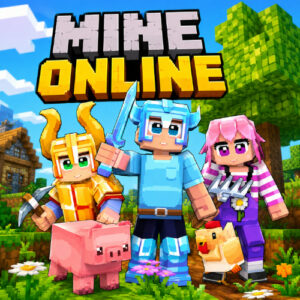 Mine – Online
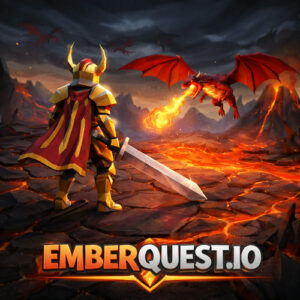 EmberQuest.io
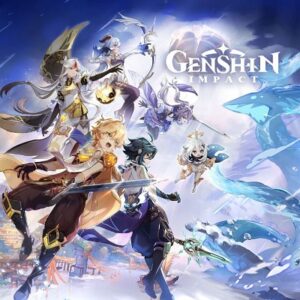 Genshin Impact
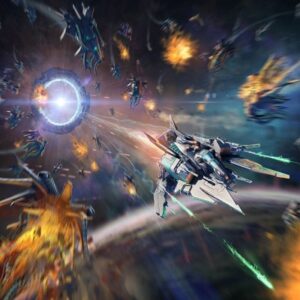 Dark Orbit
 RAID: Shadow Legends
 Rise of Kingdoms
 Star Trek Online
 Neverwinter
 Elvenar
 Fishing.io
 Hordes.io
 Enlisted
 Call of War
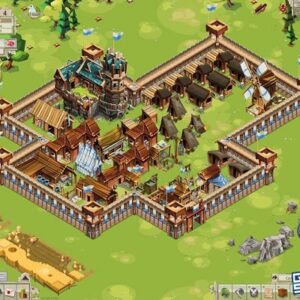 Goodgame Empire
 Snowball.io
 Hero Wars
 World of Warships
 Speedboats.io
 Tibia
Tibia
 World of Tanks
 Forge Of Empires
 Star Stable
 Brutal.io
 Wizard101
 MooMoo