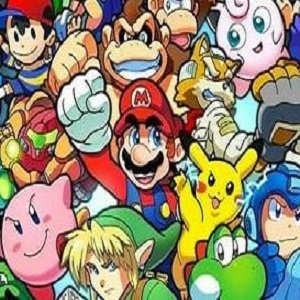
 Super Smash Flash
Mario Games Built Around Movement, Timing, and Familiar Icons
Mario games cover a surprisingly wide range of play styles, but the common thread is usually the way movement itself becomes the main attraction. Super Mario 64 turns jumping, camera control, and spatial awareness into a platforming system with room for exploration, while Super Mario Run simplifies that formula into compact stages built around automatic running and timed taps. Even Super Smash Flash uses Mario-style characters in a faster competitive format, where positioning and reaction speed matter more than traditional stage clearing. Across the tag, Mario works less as a single genre label and more as a familiar foundation for different kinds of action design.
Platforming Still Defines the Core Identity
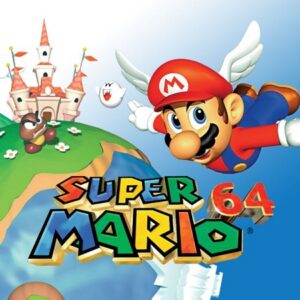
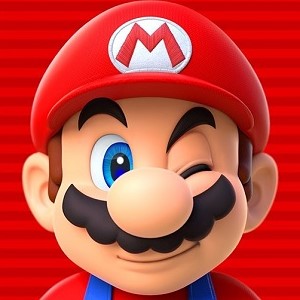
The most direct Mario-tagged games in this set focus on platforming in very different forms. Super Mario 64 is built on open-ended 3D movement, letting players approach objectives from multiple angles and learn how jumps, slides, and movement arcs interact with the environment. Super Mario Run strips platforming down to its essentials, but the core idea remains the same: players still read terrain, judge timing, and react to hazards with precision taps. Unfair Mario takes that same platforming language and twists it into trap-based trial and error, where the expected rhythm of Mario movement becomes a source of misdirection.
This range shows how flexible Mario platforming can be. It supports relaxed progression, technical mastery, and deliberate frustration, all while relying on the same basic skills of timing, route recognition, and controlled movement.
Exploration, Structure, and the Space Between Goals
Super Mario 64 stands out because it treats levels as spaces to investigate rather than linear tracks to clear. That makes exploration a major part of the experience, since players are often looking for hidden routes, collectible objectives, and alternate approaches. By contrast, Super Mario Run is much more structured, with short runs that keep attention on immediate obstacles and score improvement. The difference between them reflects two common Mario design patterns: one emphasizes discovery and flexible navigation, while the other emphasizes efficiency inside a fixed course.
That contrast helps explain why Mario-tagged games appeal to different kinds of players. Some prefer the satisfaction of learning a map and revisiting it with better control, while others want quick attempts that reward clean execution and repeated optimization.
Difficulty Can Come From Design Tricks, Not Just Speed
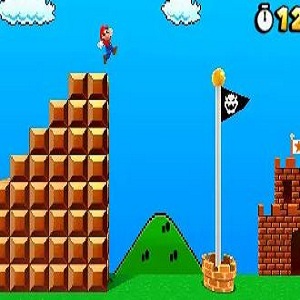
Unfair Mario is the clearest example of Mario-style difficulty being built from surprises rather than raw mechanical complexity. Instead of demanding advanced platforming fundamentals alone, it uses hidden traps and deceptive layouts to punish assumptions. That creates a very different kind of challenge from Super Mario 64, where difficulty often comes from movement precision or awkward angles, and from Super Mario Run, where the challenge is in maintaining rhythm and reacting quickly within a simplified control scheme.
Within the Mario tag, difficulty is not one fixed idea. It can mean memorizing hazards, adapting to strange level logic, or simply executing familiar actions under tighter timing. The best-known Mario mechanics are easy to recognize, but this tag shows how much tension can be created by changing the rules around them.
Competition and Chaos in Mario-Inspired Fighting
Super Smash Flash shifts the Mario tag away from stage-based platforming and into the logic of a fighter. Instead of moving toward a goal or collecting objectives, the focus becomes spacing, pressure, edge control, and survival against other players or AI opponents. The Mario connection here is not about running through levels, but about character identity and recognizable movesets being placed into a more aggressive competitive framework.
This matters because it broadens what the Mario tag can represent. It is not limited to platformers with coins and castles. It also includes games where Mario-related characters help define a cast, a tone, or a control style, even when the underlying genre is very different.
Why the Mario Tag Remains So Broad
The games in this tag show three major patterns at once: traditional platforming, experimental difficulty, and crossover competition. Super Mario 64 represents movement-driven 3D exploration, Super Mario Run condenses Mario into short mobile sessions, Unfair Mario plays with expectation and surprise, and Super Smash Flash uses Mario-linked characters in a fighting-game structure. That variety is part of the tag’s appeal, because it gives players different ways to approach familiar names and familiar movement ideas.
- Precision platforming for players who want timing and control.
- Exploration-driven progression for players who enjoy learning layouts and finding routes.
- Trap-based challenge for players who like unpredictability and pattern reversal.
- Competitive combat for players who want quick decision-making and head-to-head pressure.