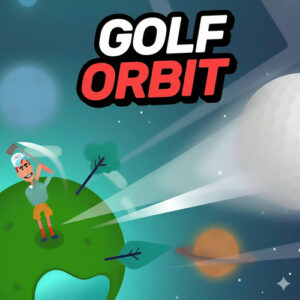
 Golf Orbit


Golf Games Built Around Distance, Angles, and Clean Contact
Golf games on browser platforms tend to split into two clear directions: arcade-style power shots and careful precision play. Golf Orbit and Golf Hit lean into launch-based progression, where the goal is not just to strike the ball well, but to send it as far as possible and keep improving the result through timing and upgrades. That is a very different rhythm from Mini Golf Club and Mini Putt 3, which place more value on reading layouts, controlling strength, and solving each hole with fewer wasted strokes. Golf Puzzle adds another layer by turning the sport into a problem-solving format, where the player is working through constraints rather than simply aiming for a cup.
That mix explains why the golf tag attracts such a broad audience. Some games are about raw momentum, some about lining up a near-perfect putt, and others about making a clever route through an obstacle. The common thread is still easy to recognize: the player is judging distance, angle, and consequence on every shot.
Arcade Golf Turns the Swing Into a Progression Loop
Golf Orbit and Golf Hit show how golf can be adapted into short-session arcade games without losing the core satisfaction of a well-timed strike. In these games, the swing is only the starting point. Distance matters, but so does the sense that each attempt can be pushed farther than the last. That creates a clear loop of repeat play, where a good hit is immediately followed by the question of how to improve it.
This style is less about hole-by-hole precision and more about building momentum through repetition. The appeal comes from visible progress, simple controls, and the way each attempt encourages small adjustments. A player does not need deep knowledge of golf rules to understand what is happening; the systems communicate success through distance, trajectory, and improvement.
Mini Golf Relies on Route Planning and Touch Control
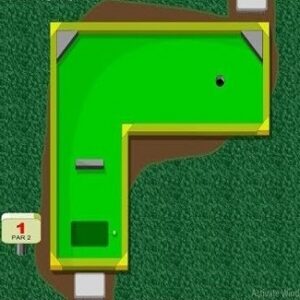
Mini Golf Club and Mini Putt 3 represent the side of the tag that is closest to traditional putting challenges. Instead of long drives, they focus on short strokes, obstacle placement, and the patience needed to recover from a poor angle. These games reward players who can think a shot ahead, because the best path is not always the most direct one.
Mini golf design often creates tension through narrow lanes, slopes, and hazards that magnify tiny errors. That makes control more important than power. Compared with the launch-heavy pace of Golf Orbit, this style is slower and more deliberate, and that difference gives the golf tag a wide range of difficulty and tone. A well-designed mini golf hole can feel like a compact spatial puzzle, especially when bank shots and careful pacing become necessary.
Golf Puzzle Treats the Sport as a Logic Problem
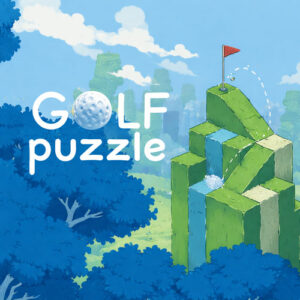
Golf Puzzle stands apart by framing golf through obstacle-solving rather than straightforward scoring. That shift changes the player’s mindset. Instead of focusing only on reaching the cup in the fewest strokes, the challenge becomes one of finding the correct sequence, path, or setup that lets the ball move through the level at all. The golfing action remains central, but the emphasis is on planning.
This kind of design works well in a browser setting because it keeps the rules accessible while still encouraging experimentation. It also broadens the tag beyond sports simulation and arcade action. Within a collection that includes Mini Putt 3 and Golf Hit, Golf Puzzle shows how golf can be reorganized around logic, not just accuracy.
The Skills That Carry Across the Tag
- Angle recognition matters in almost every golf game, from long-distance launches to tight putting lanes.
- Strength control decides whether a shot reaches the target or overshoots into trouble.
- Spatial reading is central in Mini Golf Club, Mini Putt 3, and Golf Puzzle, where the shape of the course changes the best option.
- Timing and repetition drive the arcade loop in Golf Orbit and Golf Hit.
- Problem-solving becomes more important when levels present hazards, blockers, or unusual shot paths.
Because these skills overlap, the tag remains approachable even when the gameplay style changes. A player drawn to one golf game can usually understand the logic of the others quickly, even if the scoring model or pace is different.
Why the Golf Tag Works Across So Many Paces
The games in this tag show that golf is especially adaptable to browser play because it can be simplified without becoming shallow. A fast run in Golf Orbit scratches a different itch from a careful course in Mini Golf Club, yet both depend on readable physics and immediate feedback. Mini Putt 3 and Golf Puzzle add more deliberate decision-making, which suits players who prefer accuracy over repetition. Golf Hit sits closer to the arcade side, reinforcing the idea that golf can be as much about launch power and progression as it is about finishing a course.
That range gives the tag unusually flexible appeal. Some players want short attempts with obvious improvement. Others want compact course design and exact control. A few want golf stripped into a puzzle framework where the ball is only one part of the challenge. The collection supports all of those motivations without leaving the basic identity of golf behind.