 Fireboy and Watergirl
 Games
Fireboy and Watergirl
 Fireboy and Watergirl
 Fireboy and Watergirl
 Fireboy and Watergirl
 Fireboy and Watergirl
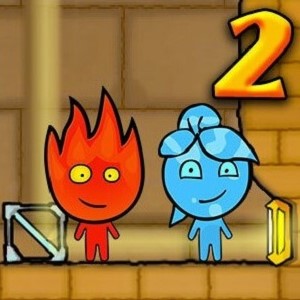
The Fireboy and Watergirl tag centers on co-op puzzle design where two characters must be managed together, even when one person controls both. Across Fireboy and Watergirl 2, Fireboy and Watergirl 3, Fireboy and Watergirl 4, Fireboy and Watergirl 5, and Fireboy and Watergirl 6, the core challenge stays consistent: move carefully, separate tasks, and keep both characters safe while solving rooms built around switches, hazards, and timing.
What defines these games is not speed alone but coordination. Fireboy and Watergirl often need to travel in different directions, collect different items, and trigger mechanisms at the right moment. That makes every stage a small planning exercise. Even when the controls are simple, the level structure pushes players to think in terms of sequence, placement, and shared responsibility.
The series relies on maps that divide attention. One character may need to hold a button while the other passes through a door, or both may need to stand on different platforms to open the next route. This creates a rhythm where movement and problem-solving are inseparable. In Fireboy and Watergirl 2 and Fireboy and Watergirl 3, that structure is especially clear because stages often depend on exact timing and movement order rather than complex combat or exploration.
Later entries such as Fireboy and Watergirl 5 and Fireboy and Watergirl 6 continue that pattern with more layered stage layouts. The appeal comes from reading the room quickly, understanding what each character can safely touch, and then deciding which route should be handled first. Players who like puzzle games with visible logic tend to return to this series because the solutions are usually earned through observation rather than guesswork.
The fire-and-water setup is more than a theme. It is the framework that gives the tag its identity. Fireboy can handle fire-related hazards, while Watergirl can handle water-related hazards, which immediately creates asymmetry in movement and risk. That contrast forces players to treat the same room in two different ways, often in the same minute.
This kind of elemental restriction keeps the puzzles from becoming repetitive. A path that is safe for one character may be dangerous for the other, so progress often depends on alternating control and building a route that respects both sets of rules. The result is a style of puzzle game where awareness matters as much as execution.
One reason the tag remains popular is that it supports both shared play and single-player control. In co-op, communication becomes part of the puzzle, with each player handling one character and reacting to the other’s moves. In solo play, the challenge shifts toward multitasking and memory, since the player must mentally manage both characters and switch between them efficiently.
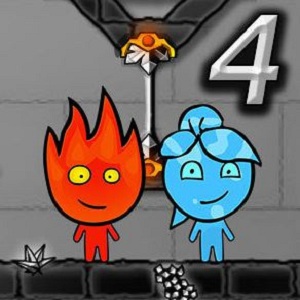
That difference changes the feel of the same level. A stage in Fireboy and Watergirl 4 may be straightforward when two players coordinate cleanly, but it becomes much more demanding when one person has to plan a full sequence alone. The design works well because it rewards patience in either mode, while still leaving room for faster, cleaner runs once the layout is understood.
These games are closely related, but each entry adds small shifts in structure that keep the formula from stagnating. Fireboy and Watergirl 2 and Fireboy and Watergirl 3 focus on refining the shared movement and puzzle structure, while Fireboy and Watergirl 5 and Fireboy and Watergirl 6 extend the series with new environments and puzzle variations that still depend on the same fundamental cooperation.
That approach appeals to players who prefer consistent rules with gradual complexity. Instead of learning an entirely new system every time, they can build skill through repetition, then apply that knowledge to more demanding arrangements. It is a progression model based on confidence, not novelty.
The Fireboy and Watergirl formula fits well into browser-game play because each level functions as a compact problem. A player can attempt one room, reset quickly after a mistake, and try again with a better route in mind. That makes the tag useful for short sessions, but also for longer stretches of refinement when the goal becomes cleaner execution or faster completion.
The best part of the format is the balance between accessibility and precision. New players can understand the basic goal almost immediately, while experienced players start looking for smoother handoffs, tighter timing, and fewer wasted movements. Across Fireboy and Watergirl 2, Fireboy and Watergirl 4, and Fireboy and Watergirl 6, the collection stays focused on that mix of simple input and careful coordination, which is what gives the tag its lasting appeal.