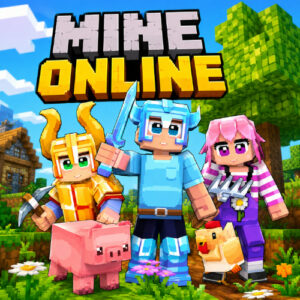
 Mine – Online
Crafting as a System of Building, Repair, and Survival
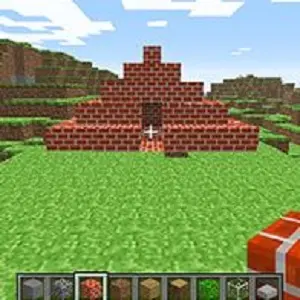
Crafting games tend to center on a simple but demanding loop: gather materials, turn them into tools or structures, then use those results to reach a deeper layer of play. In the Crafting tag, that pattern appears in several forms. Jacksmith turns production into the main activity, with equipment assembly sitting at the center of progression. Craftmine and Mine – Online lean into resource collection and construction, where shaping the environment becomes part of the challenge. EmberQuest.io brings crafting into a broader online survival setting, where building and upgrading are tied to movement, danger, and competition rather than isolated production.
What connects these games is not just making objects, but using crafted results to alter the player’s options. A better tool can improve gathering speed, a stronger item can support combat, and a structure can create safety or access. Crafting becomes a progression language: the player starts with limited means and gradually turns raw materials into control over the world.
Resource Gathering Shapes the Pace
Most crafting-focused games live or die on the rhythm of collection. In Mine – Online and Craftmine, the act of gathering materials gives the genre its structure. The player is not simply moving from one objective to another; each trip to collect resources changes what can be built next. That creates a steady cycle of short-term effort feeding long-term expansion.
EmberQuest.io uses a similar logic, but in a more exposed environment. Gathering is rarely just a quiet preparation phase when other players or threats can interrupt it. The result is a different kind of pacing: decisions have to be made quickly, and the value of each material depends on how safely it can be brought into the next phase of play.
- Mine – Online emphasizes extraction and construction in a straightforward loop.
- Craftmine suggests a more open-ended approach to resource use and transformation.
- EmberQuest.io links gathering to survival pressure and online competition.
Jacksmith and the Appeal of Production-Focused Play
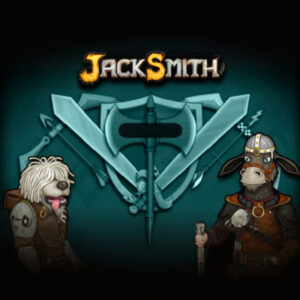
Jacksmith stands out because crafting is not supporting action; it is the action. Instead of treating production as a background system, it makes the player responsible for creating the gear others will rely on. That changes the usual relationship between crafting and combat. The outcome of the workshop matters because it determines performance later, so the quality of assembly is part of the strategy.
This kind of design attracts players who like precision and sequencing. Materials, assembly steps, and final use are tightly connected. Compared with the more exploratory feel of Craftmine or Mine – Online, Jacksmith places more emphasis on making correctly under pressure rather than simply collecting more. Crafting here is measured by usefulness, not decoration.
Building as Territory Control
In crafting games, construction often does more than create a base. It defines where the player can work safely, where resources can be stored, and how future actions will unfold. Mine – Online and Craftmine both point toward this broader use of building, where the map is something to reshape rather than just traverse. Walls, structures, and placed objects become part of progression.
That is especially important in games where the world can be expanded through player effort. A crafted shelter is not only a reward; it is an anchor for the next stage of planning. In that sense, crafting rewards players who think ahead and understand how one improvement changes the value of the next.
Online Pressure Changes Crafting Priorities
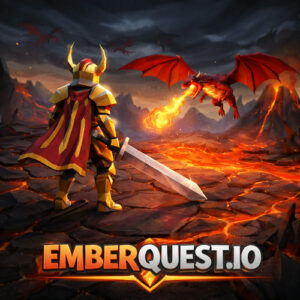
EmberQuest.io shows how crafting shifts when other players share the same space. In single-player or more self-contained systems, crafting can be methodical. In an online setting, the same activity becomes more tactical. Materials may be scarce, movement matters more, and the decision to craft now or later can affect survival. The system becomes less about perfect efficiency and more about timing.
This pressure also changes what players look for in the genre. Some want fast access to useful tools, while others prefer a longer progression path with more room to specialize. Online crafting games often blend building, survival, and combat because each layer keeps the others from becoming predictable. That is part of the appeal of EmberQuest.io within the Crafting tag.
Why Crafting Supports Both Planning and Experimentation
The Crafting tag works well because it can support very different player motivations. Some players enjoy optimizing routes and understanding material chains. Others enjoy the simple satisfaction of turning basic ingredients into something stronger or more useful. Jacksmith speaks to the first group through controlled production. Craftmine and Mine – Online lean toward open-ended construction and discovery. EmberQuest.io adds urgency and unpredictability to the same core idea.
That range helps explain why crafting remains such a flexible topic across browser games. It can be a calm loop of gathering and building, or it can sit inside survival and conflict. Either way, the core promise is the same: the player’s effort is visible in the world, and every crafted result changes what comes next.