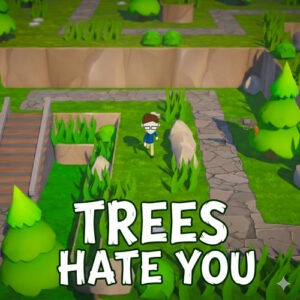
 Trees Hate You
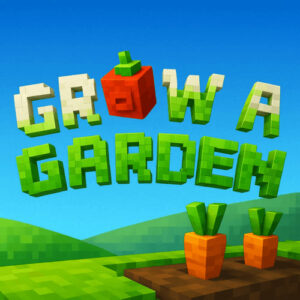
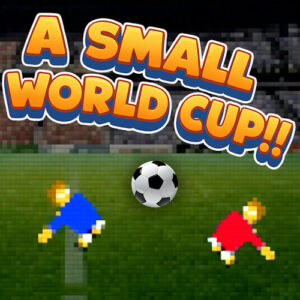
Controller Games Center on Simple Inputs With Clear Physical Results
The Controller tag usually points to games that feel good on a gamepad because movement, timing, and direct handling matter more than menu-heavy systems. In this group, A Small World Cup stands out as a compact sports game built around quick reactions and tight directional control, while Trees Hate You and Grow a Garden show how controller-friendly design can also support slower, more deliberate play. The common thread is immediate feedback: a single movement, turn, or button press changes the state of the game in a way that is easy to read.
That responsiveness is what makes Controller-tagged games appealing across different styles. Some ask for sharp movement under pressure, others reward steady input and repeatable actions, and some blend both by making the player balance precision with timing. The format works well when a game wants controls to feel direct rather than layered.
Movement Is the Main Skill, Even When the Goal Changes
In a game like A Small World Cup, control is about positioning, reaction speed, and reading how the playfield changes in real time. The player is not managing a large system; the challenge comes from getting the body or object where it needs to be at the right moment. That same emphasis on movement can appear in very different forms elsewhere in the tag. Trees Hate You suggests a more obstacle-driven approach, where navigating space matters as much as any score or objective, while Grow a Garden leans toward measured movement and planning rather than constant motion.
What links these games is the sense that the controller is not just an interface. It is the primary way the player solves problems. When movement feels precise, even modest objectives become more skill-based.
Short Sessions, Fast Decisions, and Immediate Feedback
Games in this tag often fit naturally into short play sessions because they rely on quick decisions rather than long setup. A Small World Cup works well in that format through its compact match structure, where every touch and deflection matters. Trees Hate You appears to use a similarly concentrated design philosophy, where a clear obstacle or hazard pattern can be understood quickly but still demands attention. Even Grow a Garden benefits from this style when its actions create visible change with minimal delay.
This is one reason Controller-tagged games can feel approachable without being shallow. The rules are usually easy to grasp, but the player still needs timing, rhythm, and consistency to keep making progress.
Action-Oriented Play and Patient Systems Can Share the Same Tag
The tag is broader than fast arcade movement. A Small World Cup represents the action side clearly, with direct control and competition-like pressure. Grow a Garden, by contrast, points to a calmer structure built around growth, tending, and incremental change. Trees Hate You sits somewhere between those poles if its challenge comes from surviving or working around environmental pressure. That range matters because it shows the tag is not tied to one genre.
What matters is that the player’s input feels central. Whether the task is defending space, shaping a garden, or surviving an unfriendly world, the game still depends on hand skill and readable control.
Designs That Reward Consistency More Than Complexity
Controller games often succeed by keeping the rules compact and asking for clean execution. A Small World Cup is a good example of a game where a small set of actions can create a lot of variation. Trees Hate You likely draws interest for the same reason if its challenge comes from repeated hazard management rather than complicated command trees. Grow a Garden fits the pattern from the opposite direction: repeated, measured actions can feel meaningful because they visibly build toward something over time.
That consistency can be more demanding than it first appears. When a game strips away clutter, mistakes become easier to notice, and skill shows up in the player’s ability to stay accurate under pressure.
Why the Tag Attracts Different Kinds of Players
Some players look for fast control tests, and A Small World Cup serves that audience directly. Others prefer games where the controller supports gentle repetition and steady progress, which is where Grow a Garden fits naturally. Players who enjoy obstacle-focused or survival-style movement will be drawn to a title like Trees Hate You if it asks them to react cleanly in a constrained space. Taken together, the tag shows how controller-based games can support competition, routine, and precision without losing clarity.
That variety is part of the appeal. A Controller game does not need a complex system to feel skillful; it just needs input that matters every time the player touches it.
