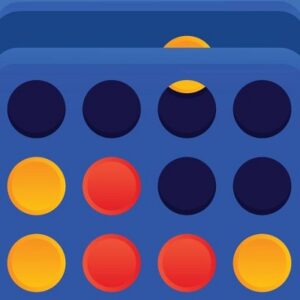
 4 in a
Connect Games Built Around Pattern Recognition
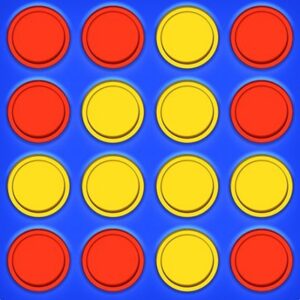
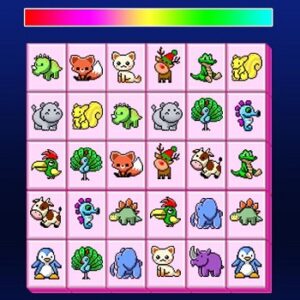
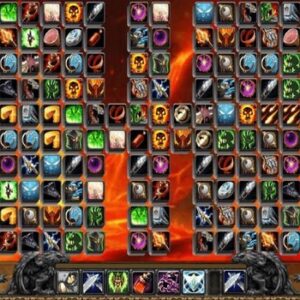
The Connect tag groups games that ask players to link matching pieces, align symbols, or clear boards through careful pairing. In some cases the connection is literal, as in 4 in a Row and Connect 4 Online, where the goal is to build a line before an opponent does. In others, such as Onet Connect Classic and WOW Connect, the challenge comes from tracing valid paths between identical tiles. Word Wipe pushes the idea in a different direction, turning the act of connecting letters into a fast-moving word-building puzzle. Across the tag, the core appeal is the same: spotting relationships quickly and acting on them before the board fills up or the opponent gains control.
From Lines to Links
The strongest divide in Connect games is between positional play and matching play. 4 in a Row and Connect 4 Online are built around placement, spacing, and anticipation. Every move changes the board for both sides, so the player is thinking several turns ahead while also watching for immediate threats. By contrast, Onet Connect Classic and WOW Connect are more about scanning the board for viable pairs and managing open routes between them. The challenge is not blocking an opponent, but reading the layout efficiently and clearing it in the right order.
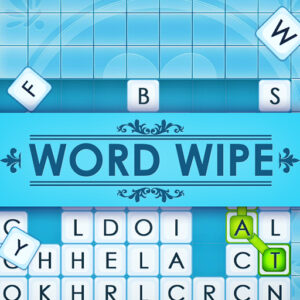
Word Wipe sits between those ideas. It still rewards quick pattern recognition, but the connection being formed is linguistic rather than visual. Instead of matching tiles, players pull together adjacent letters to make words, which adds a planning layer that can shift rapidly as the board changes. That mix gives the tag a wider range than it first appears to have.
Board Control Is Often More Important Than Speed
Even in the faster titles, raw speed is rarely enough on its own. Connect 4 Online is a clear example: winning often depends on controlling central spaces, forcing pressure points, and setting up unavoidable forks. The same principle appears in 4 in a Row, where a simple placement can have long-term consequences several turns later. The board may look straightforward, but successful play usually comes from understanding which moves create future options and which ones close them off.
That same sense of control shows up in tile-matching entries like Onet Connect Classic. Clearing one pair can expose or block other pairs, so the order of moves matters. A careless match can leave awkward layouts behind, while a smart sequence opens the board and makes later connections easier. WOW Connect uses the same kind of logic, encouraging players to read the board as a system rather than a collection of isolated pieces.
Clearing Boards Creates a Different Kind of Pressure
Connect games often become more intense as space disappears. In Word Wipe, the board constantly changes as words are removed and new possibilities appear, which can lead to fast decision-making under pressure. The same sense of narrowing options appears in tile-linking games, where each cleared pair changes the shape of the remaining puzzle. Instead of simply chasing points, players are trying to prevent the board from turning awkward or impossible.
This is one reason the tag works well for short sessions. A round of Onet Connect Classic can be understood immediately, but the board state keeps evolving in ways that reward concentration. WOW Connect uses similar tension, and even the more deliberate structure of 4 in a Row can produce sudden pressure when a single move threatens multiple outcomes at once.
What Different Players Look For Here
Some Connect games appeal to players who like direct competition, while others attract puzzle fans who prefer steady board reading. Connect 4 Online and 4 in a Row suit players who enjoy reading an opponent’s intentions and planning traps. Onet Connect Classic and WOW Connect are better for those who prefer clean rule sets and a focus on visual sorting. Word Wipe adds a vocabulary layer for players who want the same sense of pattern hunting with language-based decisions.
- Competitive minds often gravitate toward line-building games with blocking and counterplay.
- Puzzle-focused players usually prefer tile-linking games that reward scanning and sequence planning.
- Word game fans may prefer letter-based linking because it combines speed with vocabulary recall.
- Casual players tend to appreciate the simple rules and immediate readability of the tag.
Simple Rules, Layered Decisions
The Connect tag stays approachable because the basic objective is easy to grasp in every format represented here. Link, align, match, or clear. The depth comes from the conditions around that objective. In 4 in a Row, the puzzle is hidden in an opponent’s response. In Onet Connect Classic and WOW Connect, the difficulty lies in board reading and move order. In Word Wipe, it comes from assembling words quickly enough to keep momentum alive. That combination of clarity and variety is what gives Connect games their staying power.
Small Moves With Long Consequences
What unites this tag is the way one decision can shape several future turns. A single placement in Connect 4 Online can create a winning threat or expose a weakness. A single pair removed in Onet Connect Classic can either simplify the board or leave behind a stubborn cluster. WOW Connect and Word Wipe both reward players who think beyond the immediate match and consider how the board will look after the next clear. That focus on chain reaction, spacing, and timing is the defining feature of the Connect collection.