Brush Jjaemu









Cat Games Blend Cute Presentation With Very Different Play Styles
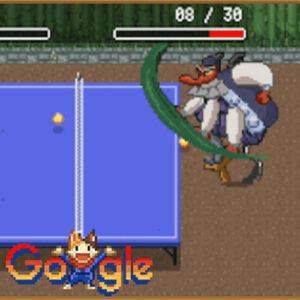
The Cat tag covers far more than simple animal-themed collecting. The listed games range from action-heavy platformers like Cat Ninja and Cat Mario to relaxed management in Cat Coffee Shop, from skill-based reaction games such as Magic Cat Academy to quirky physics play in Kitten Cannon. That spread shows why cat-themed games stay popular: the subject is familiar and approachable, but the mechanics can move in almost any direction.
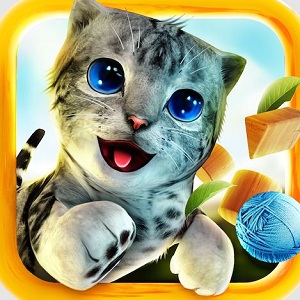
Some entries lean into comedy and surprise, while others use cats as the central character in a more structured system. Cat Simulator focuses on movement and playful behavior, StrikeForce Kitty turns cats into a progression-driven team, and Find Cat frames the theme around observation. The common thread is not one specific genre, but a flexible theme that can support action, puzzle solving, idle play, and light strategy.
Platforming, Timing, and Slapstick Failure
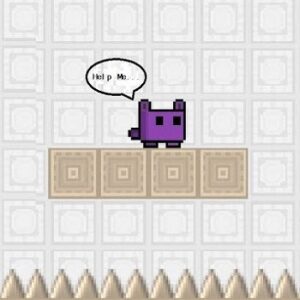
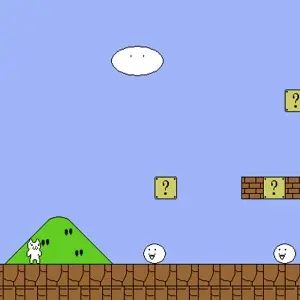
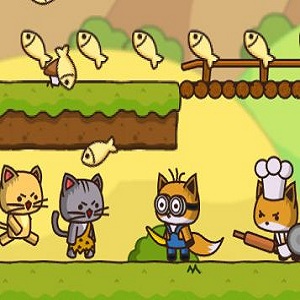
A clear cluster in the tag comes from games that use cats in demanding movement challenges. Cat Ninja and Cat Mario both rely on precision, momentum, and learning the layout through repeated attempts. In that style of cat game, the fun comes from adapting to hazards rather than simply moving forward. Mistakes are often part of the design, and the player is expected to read traps, react quickly, and improve through memory as much as reflexes.
Magic Cat Academy adds a different kind of pressure to a similar action space. Instead of platforming, it focuses on drawing or tracing patterns under attack, which gives the cat theme a spell-casting tone. The result is a collection where cats are often placed in situations that test timing, accuracy, and composure under pressure rather than raw speed alone.
Idle Systems and Management Give the Tag a Slower Side
Not every cat game in the group is built around reflexes. Idle Miner and Miner Cat 4 point toward progression loops where resource gain and upgrades matter more than moment-to-moment control. Even when the theme is playful, these games are structured around growth over time, which appeals to players who prefer planning and accumulation over constant action.
Cat Coffee Shop fits this side of the tag as well, with its emphasis on running a business-like space rather than surviving hazards. That kind of game usually asks players to manage flow, order, and efficiency, making the cat theme feel cozy without removing the need for decision-making. StrikeForce Kitty sits between these extremes: it has a cute surface, but its team-building and progression elements give it a more layered structure than a simple mascot game.
Clicking, Collecting, and Small-Scale Interaction
Several cat-tagged games revolve around quick interactions rather than broad systems. Bongo Cat is built around repeated input and playful audiovisual feedback, while Kitty Cats suggests a lighter collection or interaction loop centered on cat behavior and presentation. Find Cat uses a more observational approach, asking players to scan a scene and notice what stands out.
This group highlights a major strength of the tag: cat games often work well as compact experiences because the subject itself communicates personality immediately. A cat does not need a complex setup to be recognizable, so designers can spend more of the design budget on a single mechanic. That is why these games can feel very different despite sharing the same theme.
Physics, Mischief, and Controlled Chaos
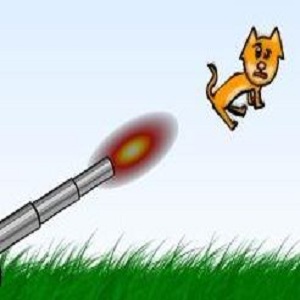
Kitten Cannon and Cat Simulator represent a more chaotic branch of the tag. One uses exaggerated launch physics and distance-based outcomes; the other turns ordinary cat behavior into a playground for movement and mischief. Both depend on systems that are funny precisely because they are unpredictable or loosely controlled.
Creatur.io also fits this broader pattern of action with a wild edge, even though its focus is more on survival and interaction than on cat-specific behavior. In games like these, the appeal comes from experimentation. Players are not only trying to win or complete objectives; they are testing what happens when they push a system in unusual directions.
Why the Cat Tag Works Across So Many Genres
The collection succeeds because the cat theme is adaptable without becoming vague. Cat Ninja, Magic Cat Academy, and Cat Mario show how easily the tag supports precision action. Cat Coffee Shop, Idle Miner, and Miner Cat 4 show that it also works in slower progression games. Bongo Cat, Find Cat, and Kitten Cannon prove that the same subject can support everything from tiny interaction loops to outright absurdity.
That range gives the tag a broad audience. Some players want cat games because they are relaxed and friendly; others enjoy them because the contrast between cute presentation and difficult mechanics creates a sharper edge. The strongest examples in the tag use cats not as decoration, but as a way to make very different kinds of play feel instantly readable.