Card Games Built Around Rules, Odds, and Recognition
The card tag brings together games where the main challenge comes from reading values, arranging suits, judging probability, and making decisions with incomplete information. Some entries, such as Classic Solitaire, Klondike Solitaire, FreeCell, and Spider Solitaire, focus on order and planning. Others, including Governor of Poker 3, Poker With Friends, and Blackjack, are built around betting logic, risk assessment, and the tension of hidden cards.
This collection shows how broad card games can be. A single tag can include quiet solo puzzles, competitive table games, trick-taking classics, and hybrid designs such as Poker Quest or Mahjong Cards. The shared language is familiar: hands, suits, ranks, draws, discards, stacks, and turns. The difference lies in what each game asks the player to control.
Solitaire as a Test of Sequencing
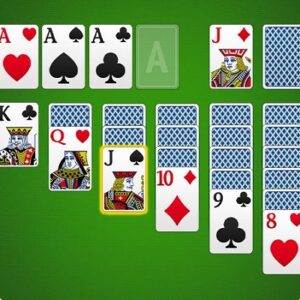
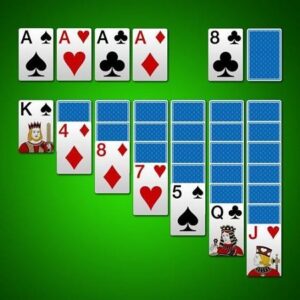
Solitaire variants form the largest part of this card selection, and they highlight how much variety can come from a standard deck. Klondike Solitaire, Classic Solitaire, Solitr, and Solitaire FRVR all revolve around uncovering hidden cards, building foundations, and managing tableau space. The challenge is rarely about speed alone. It is about choosing which move opens future options rather than simply making the first legal play.
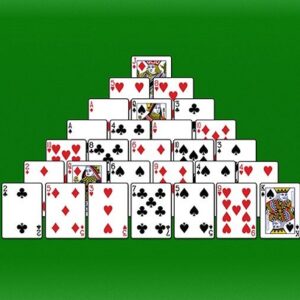
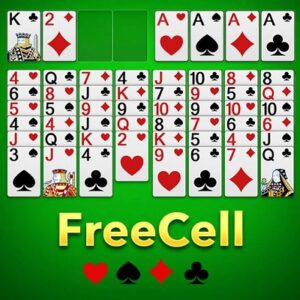
FreeCell changes the feel of solitaire by making nearly every card visible from the beginning. That turns the game into a more transparent planning puzzle, where temporary storage spaces become the key resource. Pyramid Solitaire uses matching and removal instead of descending stacks, while Magic Towers Solitaire leans into ascending and descending card sequences. Each version keeps the one-player structure but shifts the mental skill being tested.
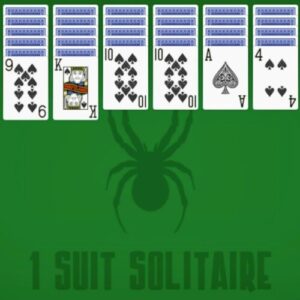
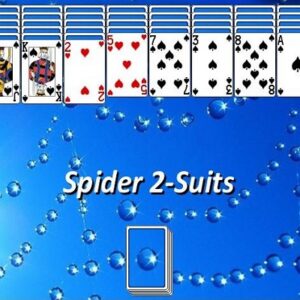
Spider Solitaire, Spider Solitaire 1 Suit, and Spider Solitaire 2 Suits show progression through complexity inside the same design family. One suit is more forgiving because sequences are easier to complete. Two suits add friction by forcing players to think harder about mixed stacks and blocked cards. That kind of scaling makes solitaire approachable for casual play while still offering room for more deliberate problem solving.
Poker and Blackjack Center on Uncertainty
The casino-style card games in this tag rely on decisions made before all information is available. Governor of Poker 3 and Poker With Friends place attention on hand strength, betting choices, and how players react to one another. Poker is not only about the cards shown at the end; it is about what each action suggests before that moment arrives.
Blackjack uses a simpler structure but a sharper decision loop. The player compares their total against the dealer’s likely outcome, choosing whether to draw or stand based on probability and risk. Unlike solitaire, where the board can often be studied at length, blackjack decisions are compact and repeated quickly. The appeal comes from making consistent choices under changing card conditions.
Poker Quest points to a different direction for card mechanics, where poker-style values and hands can support a broader adventure structure. It reflects a common design pattern in card games: familiar ranks and combinations are often reused outside traditional table formats because players already understand their meaning.
Trick-Taking and Partnership Logic
Hearts and Spades represent another major branch of card play. Instead of building foundations or betting on hidden strength, these games revolve around tricks, suit-following, and controlling when certain cards are played. Timing matters more than forming a single strong hand.
In Hearts, avoiding unwanted points changes the usual instinct to win every round. In Spades, bids and partnerships introduce a planning layer before the trick-taking begins. Both games reward memory, prediction, and awareness of what cards have already appeared. Compared with solitaire, the player is not just solving a layout; they are responding to opponents whose choices alter the value of every card.
Traditional Card Systems Beyond the Standard Deck
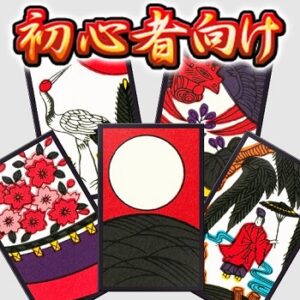
Not every game in this tag depends on the familiar four-suit deck. Hanafuda brings a different card tradition, with its own seasonal and visual associations rather than standard ranks from ace to king. Its presence broadens the tag beyond Western card formats and shows how card play can be built around matching, collection, and pattern recognition in different cultural systems.
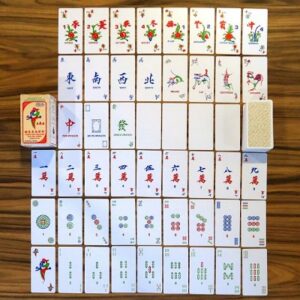
Mahjong Cards also sits slightly outside the usual card-game structure, borrowing the recognizable matching logic associated with mahjong-style play and presenting it through a card format. Alongside Cribbage, which combines card selection with scoring combinations, these games show that card mechanics are often strongest when arithmetic, memory, and pattern reading overlap.
What Players Usually Practice in Card Games
Across this tag, the main skills shift depending on the format. Solitaire games train sequencing, patience, and board evaluation. Poker and blackjack emphasize probability, restraint, and risk control. Trick-taking games ask for memory, timing, and prediction. Matching-based games such as Mahjong Cards rely more on visual scanning and recognizing available pairs or patterns.
The range also explains why card games suit different moods. Microsoft Solitaire Collection and Classic Solitaire fit players who want structured solo play with familiar rules. Governor of Poker 3 and Poker With Friends appeal to those who prefer social pressure and table dynamics. FreeCell attracts players who like solvable logic, while Spider Solitaire 2 Suits suits those looking for a more demanding version of a known format.
Rules That Stay Simple While Decisions Multiply
A recurring strength of card games is that the basic actions are usually easy to understand. Draw a card, play a card, match a value, follow a suit, build a sequence, or decide whether a hand is worth backing. The depth comes from consequences. Moving one card in Klondike Solitaire can block a future reveal. Taking a trick in Hearts can create unwanted points. Standing too early in Blackjack may protect a weak total, while drawing too late may break it.
That balance between simple rules and layered decisions is what connects such a varied list. Whether the game is Spider Solitaire, Cribbage, Spades, or Pyramid Solitaire, the player is constantly weighing what is visible, what is likely, and what move leaves the most useful position for the next turn.
 1 Suit Solitaire
 Get Yoked
 Clash of Vikings
 Golf Puzzle
 Pokémon Overlord
 Governor of Poker 3
 Poker With Friends
 Mahjong Cards
 Poker Quest
 Blackjack
 Classic Solitaire
 Spider Solitaire 2 Suits
 Pyramid Solitaire
 Cribbage
 Google Solitaire
 Magic Towers Solitaire
 Microsoft Solitaire Collection
 Klondike Solitaire
 FreeCell
 Solitr
 Hanafuda
 Spider Solitaire 1 Suit
 Hearts
 Spades
 Solitaire FRVR
 Spider Solitaire
 Uno Online
 Governor of Poker